Jiminy Peak Readies Slopes, New Skiers For Season
 The snow making machines have been working at Jiminy Peak Ski Resort for the Thanksgiving weekend kickoff of the season. |
They do not need the added intimidation of hanging around with expert skiers and boarders, many of whom look barely old enough to be walking, let alone hurtling down the mountain with ease.
At Jiminy Peak, the first-timers have a place of their own and a newly enhanced learn-to-ski program to get them up to speed.
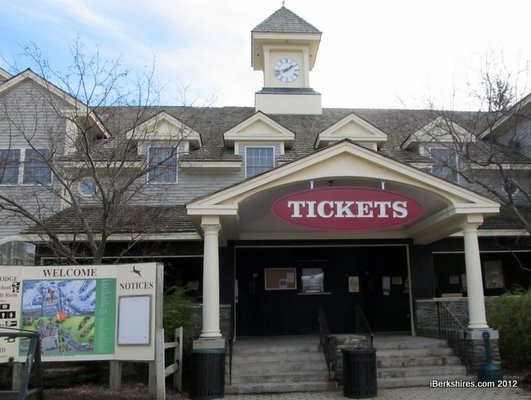
"The whole system is taught out of the Doc Maynard building," explained Rob Roest, the supervisor of Jiminy's Guaranteed Easy Turns (or GET) Skiing/Snowboarding program. "We have our own equipment, our own cashier. Rather than put them in the main rental scenario in the big building, they're in their own space.
"It can be very intimidating for a lot of beginners. There's a comfort factor here that people like in this building. We don't serve food (like in the main lodge), but we do have hot chocolate. The instructors are hanging out with them if they have any questions. We have a rental technician in the building."
And for the first time this year, Jiminy has a special deal for skiers who participate in the GET program. Included in the $89 price of the GET ticket ($79 if you book online), guests will receive a card entitling them to $25 off lift tickets, $15 off group lessons and $15 off rentals for the rest of the 2012-13 season.
"Primarily, this is for retention to get them back to the mountain and get them to like the sport right away," Roest said. "It's a real encouragement. As you know, skiing is not a cheap sport anymore, but $25 off a $65 lift ticket is really nice."
Thanksgiving weekend is the traditional seasonal kickoff for the North American skiing and snowboarding industry. As usual, area resorts are touting a number of new offerings to entice guests from around and beyond the region.
Last year was rough for the industry, whose national trade group reported a 15 percent decline in skier/snowboarder visits for the 2011-12.
In a May news release, the National Ski Areas Association said U.S. ski areas had 51 million visitors for the season — the lowest number for the industry since the 1991-92 season, when areas reported 50.8 million visits.
Not surprisingly, the unusually snowless winter of 2011-12 was blamed for dropoff. Fifty percent of the nation's ski areas opened late, and 48 percent closed early, the NSAA reported.
Also not surprisingly, snowmaking was very much on the minds of ski areas this summer.
At Charlemont's Berkshire East, manager Jon Schaefer this fall announced that area added a new snow-making pond and "lots of new snow guns."
"After last winter's stinker, Berkshire East did the logical thing and massively updated our snowmaking system," Schaefer wrote in a winter preview posted on the resort's website.
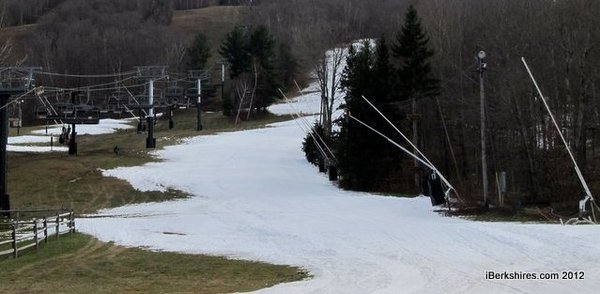
Likewise, Jiminy Peak announced that it spent $300,000 on snowmaking improvements over the summer, including the acquistion of 40 new snow guns to up its "arsenal" to 441 guns on 39 trails.
Ski Butternut in Great Barrington increased its ability to pump water up the hill by 42 percent with the addition of two new pumps and added 20 more snow guns. Spokesman Matt Sawyer said the mountain already had 100 percent snowmaking coverage, but the new equipment will help Ski Butternut produce more snow when the temperature is very low — the most efficient time to do so.
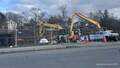
 Jiminy is among a number of ski resorts that have recently invested in snowmaking equipment. Below left, grooming the trails on Nov. 7; at right, investing in a new customers through the GET ski/snowboard learning program. |
|
 |
 |
Some of those young boarders likely will be the products of program's like Jiminy's GET Center, which has been so successful it is being expanded this year to the Hancock hill's sister mountains: Peru, Vt.'s Bromley Mountain and North Conway, N.H.'s Cranmore Mountain Resort.
"Introducing new participants to our sports is vital for our industry, and we have always been passionate about our learning programs," Jiminy President Brian Fairbank said in a news release about GET.
Roest has been at Jiminy for 15 years in different capacities and for the last five or six has devoted his time to GET, which got under way about seven years ago.
"It's pretty much designed for people who have never skied or snowboarded or people who haven't skied in eight or 10 years or more — people who had kids and didn't have time to ski and are coming back to the sport," Roest said.
GET skiers start their 90-minute lessons by getting used to the feel of snow boots and doing exercises in the snow. They then put on one ski (or put one boot on their board), using equipment that is shorter in length and, therefore, easier to manage.
"For skiers, we go to two skis and do really shallow traverses across the slope, progress to making the first turn and then link turns after an hour or so," he said. "They learn to use the chairlift with either a board or skis, and we teach them how to use it properly.
"We guarantee that on skis, they'll be able to turn right, left, stop and ride the chair lift. For boarders, it's pretty much the same thing. Sometimes they finish with two feet strapped in, sometimes they only get one, but they can turn."
About 25 percent of the students take advantage of the "G" in GET and return for a second lesson at no charge. Either way, at the completion of the lesson, students walk away with a lift ticket for the rest of the day and a discount card for the rest of the season.
Instructors like Roest walk away with the satisifaction of introducing someone else to the sport they love.
"It's nice when you see the big smiles on people's faces," he said. "You can see the confidence building throughout the course of the day."
Tags: ski resort, skiing, winter sports,