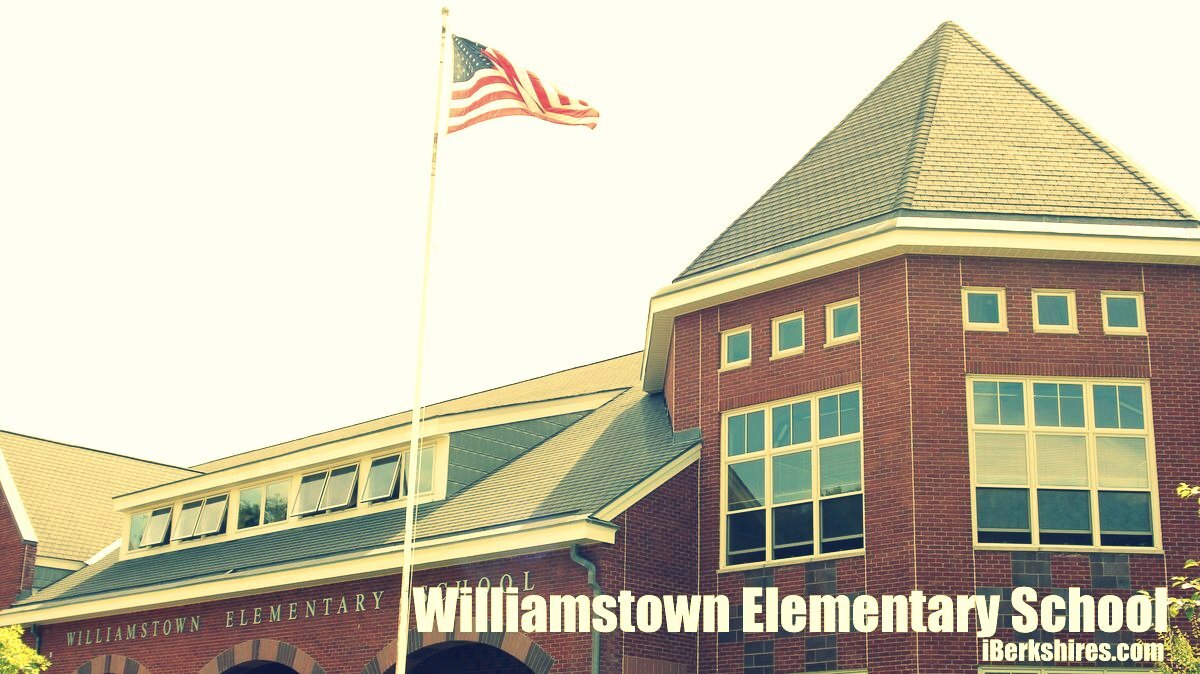
Town Meeting Floor Fight Brewing on Williamstown Elementary School Budget
WILLIAMSTOWN, Mass. — In January, the Williamstown Select Board decided to move town meeting back to the Williamstown Elementary School gymnasium.
On Wednesday, it became clear that the elementary school budget could be one of the biggest issues before the meeting.
Residents concerned that WES is underfunded and "slipping" said Wednesday that they will seek to amend the Mount Greylock Regional School District budget on the floor of town meeting to increase the district's assessment to the town.
"We are going to go to town meeting and propose, actually, an addendum to increase the budget and hopefully pass that to support not just a level service but to actually include some school improvement," Jenna Hasenkampf said Wednesday at a meeting of the town's Finance Committee.
"We also think we are long overdue to invest in your schools. We've shown, as a town, that we can spend that money when it comes to services like the Fire Department that we view as essential. We think our public schools are just as essential, if not more.
"I think that more students pass through those halls than we see a fire per year here."
Hasenkampf, a member of the School Council at WES, spoke from the floor at the Fin Comm meeting on the night the panel was reviewing the budget requests from both the Northern Berkshire Vocational Regional School District (McCann Tech) and the Mount Greylock district, which operates elementary schools in Lanesborough and Williamstown and the Mount Greylock Regional School, a middle-high school serving Grades 7 through 12.
Each of Mount Greylock's three schools is represented by a School Council, an advisory group of community members and school staff charged with making budget recommendations to the elected School Committee, which is responsible for the budget sent to each member town's annual town meeting each spring.
Hasenkampf repeated the plea she made to the School Committee at its March 19 public hearing on the budget, saying that the school district should honor the School Council's budget priority of adding a full-time math interventionist at Williamstown Elementary.
She was joined at the podium Wednesday by another WES parent, Devan Bartels, who also spoke at the March 19 meeting, as well as Thomas Bartels, a grandfather who also raised children educated in Williamstown, and Briee Della Rocca, one of several residents who lobbied for more staffing the the middle-high school two years ago, and several elementary school-aged children, who offered brief remarks to the committee.
Hasenkampf pointed to state Massachusetts Comprehensive Assessment System data that shows WES has been "falling in math since 2021." While she said the i-Ready math curriculum the district implemented this year is an improvement, "at least a third of students per grade are at least one level below grade in math. We also know that that compounds over time."
Superintendent Joseph Bergeron at the March 19 meeting talked about how WES could consider adding the math interventionist position within the current budget, if the district considers larger class sizes, and he laid out his reasons why he made the difficult decision not to add a full-time position at WES to the fiscal year 2027 spending plan.
He did go on record at that meeting saying that, between salary and benefits, the additional full-time equivalent position, or FTE, would add $120,000 to the budget and raise the FY27 assessment to Williamstown from $16,843,270 to $16,963,270 — making a 13.61 percent increase from FY26 to FY27 a 14.42 percent increase.
On Wednesday, Hasenkampf did not say exactly what increase she would propose on the floor of the May 19 annual town meeting, but in order to achieve the end sought by the School Council — and not cut staff somewhere else — the district would need about an additional $120,000.
It was not immediately clear on Wednesday evening whether town meeting could, in effect, exercise line-item approval on what is presented each spring as an omnibus school budget. Town Manager Robert Menicocci, asked by the Fin Comm to comment on that issue, said it was a question for counsel.
A potential targeted increase in the WES operating budget would not necessarily have to impact the Lanesborough Elementary School operating budget, which will be before that town's town meeting on June 9.
While the regional agreement makes each member town responsible for operational funding for its own elementary school, district officials have worked to ensure that each K-6 school has equitable programming.
A confluence of budget challenges this year — including a spike in health insurance costs, lower state and federal aid and the intentional depletion of reserve funds that could have offset higher costs — led the district to present a "level services" budget that nonetheless carries significant increases in the assessment to each member town: 13.61 percent in Williamstown and 10.99 percent in Lanesborough.
Recognizing that his own body was one of the voices calling for the district to spend down reserves the last few years, Williamstown Fin Comm Chair Frederick Puddester on Wednesday praised the School Committee for employing that strategy.
.jpg)
"I think the superintendent and the School Committee should be congratulated for that. I think that's a remarkable thing they did for the town and taxpayers of the town."
Thomas Bartels told the Fin Comm that now is time to invest in the public schools and asked the committee to support the budget meeting.
"Let's not be fearful," Bartels said. "Let's make an investment in our future."
Fin Comm member Margo Neely said she understood that argument but recognized there are other arguments to be made.
"I did grill Joe [Bergeron] last year … being the lone parent of young kids on the Finance Committee, about the things that seemed to not be mentioned that we all talk about when we see each other at pickup at the school, on the playground, while the kids are swimming," Neely said. "We all know it's all the stuff that's missing that we want to see for our kids.
"And, at the same time, I get literal phone calls and texts from people who also have kids at the school who say if the taxes go any higher, they're going to have to leave Williamstown."
Two days earlier, in the same meeting room, Menicocci told the Select Board that, given the proposed 13.61 percent increase in the Mount Greylock assessment for FY27, a December conversation about needing a Proposition 2 1/2 override vote within 10 years, "becomes sooner, a four- or five-year horizon, potentially."
With the proposed schools' assessment factored in, Williamstown is looking at a 10.4 percent tax levy increase in FY27.
For years, the members of the Finance Committee have been watching the town's "excess levy capacity," the amount it can raise through property taxes without an override vote, dwindle and have encouraged other members of the community to support economic development that could grow the tax base — a message that Fin Comm members reiterated on Wednesday night.
Hasenkampf, while arguing that Williamstown is, "not a resource-poor town," said that investing in the public schools is an economic development strategy.
"As we are looking at expanding our tax base and growing our town, we need to be very, very conscious of the fact that many families like myself moved ere or do move here because of school quality," Hasenkampf said. "And if we continue to let it slip, we put that at risk.
Devan Bartels told the Fin Comm that more and more families are "dissatisfied" in the local public schools, and she sent a message to the seven-member School Committee, which has four seats on the November election ballot.
"There's this growing understanding among the family that the School Committee budget that they presented to you really made [the Finance Committee's] job easy, to OK it," Devan Bartels said. "They are running it so lean. And we are starting to see it objectively, now, in the scores, and also in the sense that the family members are getting that we're dissatisfied with the level of service, and we need to up our game. … I was concerned, listening in to the School Committee meetings, that there was more of a concern to present a budget that will just pass at town meeting than actually meeting the needs of our students.
"The sense of dissatisfaction, the sense that we could be doing better, that we need to be getting more aspirational, is real. … I think we're going to see it at town meeting this year, and I think we're going to see it in the election for [School Committee] next fall as well."
Tags: MGRSD_budget, school budget, WES, williamstown_budget,