Crane & Co. Harnesses Housatonic for Power
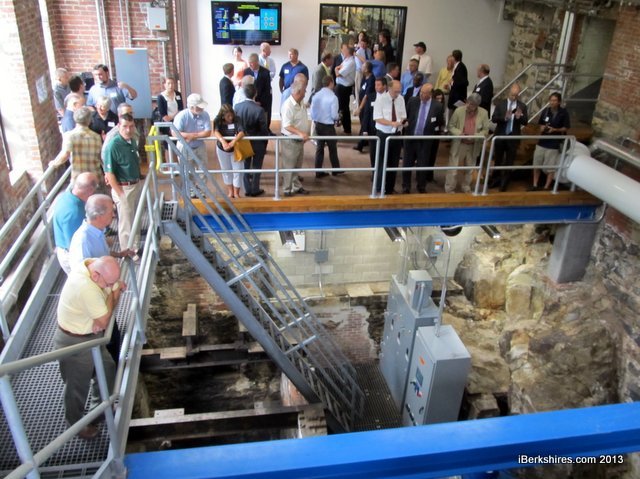
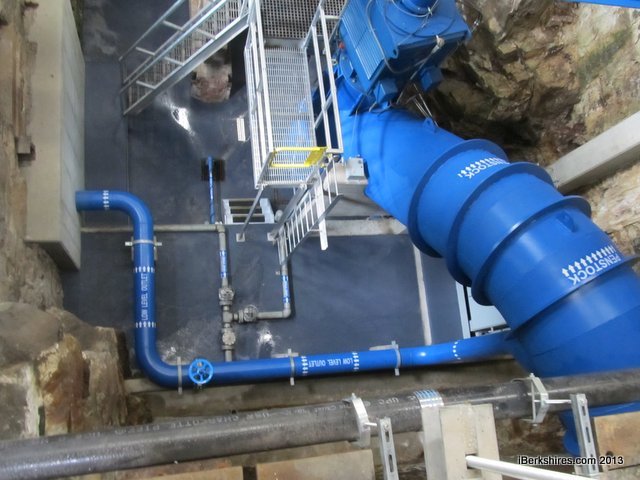
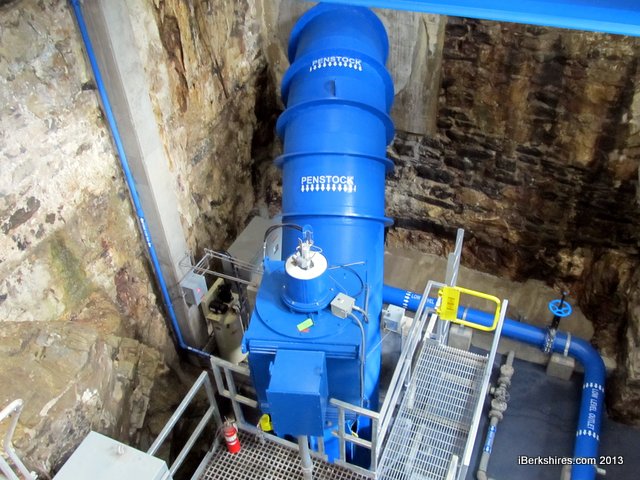 The blue piping and high-tech turbine co-exist with the the stone walls laid down a century earlier. The blue piping and high-tech turbine co-exist with the the stone walls laid down a century earlier. |
|
 |
 |
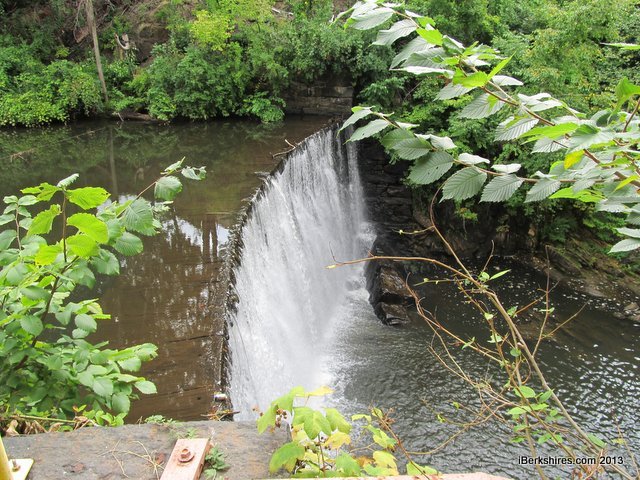
DALTON, Mass. — With the push of a virtual button, the natural force of the Housatonic River was once again harnessed to power the 150-year-old Byron Weston Mill.
The $1.5 million hydroelectric project will generate a million kilowatt-hours annually directly to the raw materials plant where the nation's currency paper begins its journey toward the nation's pockets.
But it's taken a decade to get the water flowing again after nearly a half-century.
"When the Lord said, 'Let there be light,' is about when we began the permitting processes for this project," joked CEO Stephen DeFalco, addressing dozens of workers and guests invited to the commissioning ceremony on Tuesday. "It was nearly 10 years ago, with our sights set on a more diverse energy supply, and a component that is renewable, basically in perpetuity."
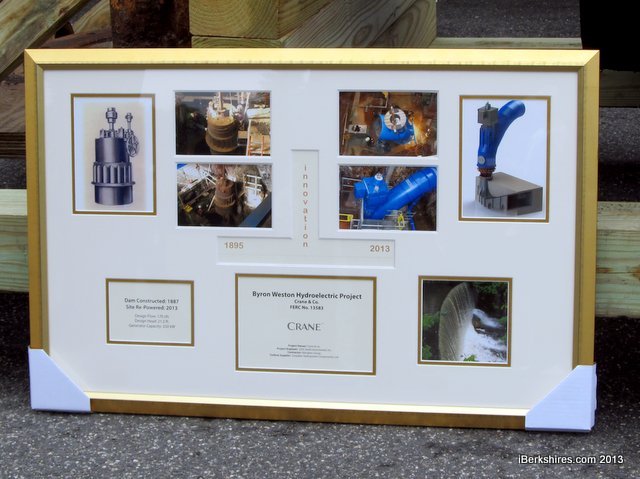
The sleek, bright blue intake tube and turbine, with their accompanying digital flow charts, were supplied by Canadian Hydropower Components and installed by contractor Abington Group and GZA GeoEnvironmental Inc. Their contrasting stone wall enclosure gives a sense of the history of the mill, as do the rusted pipes and gates just outside that once controlled the diverted flow from the 1887 dam into the turbine room.
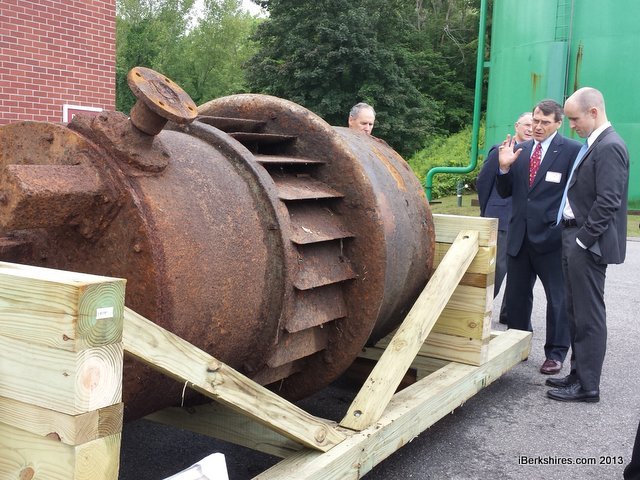
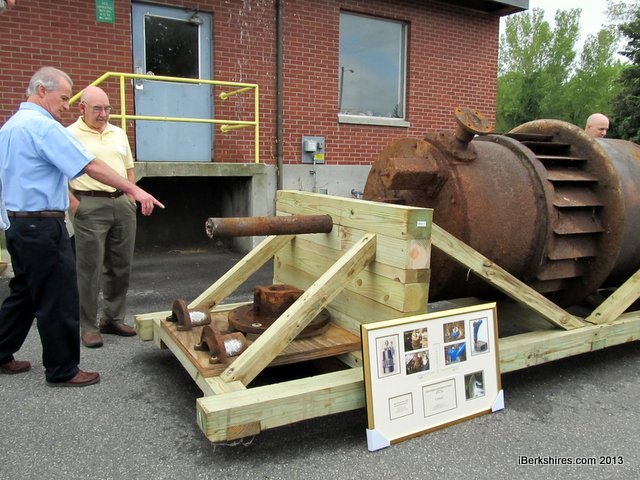
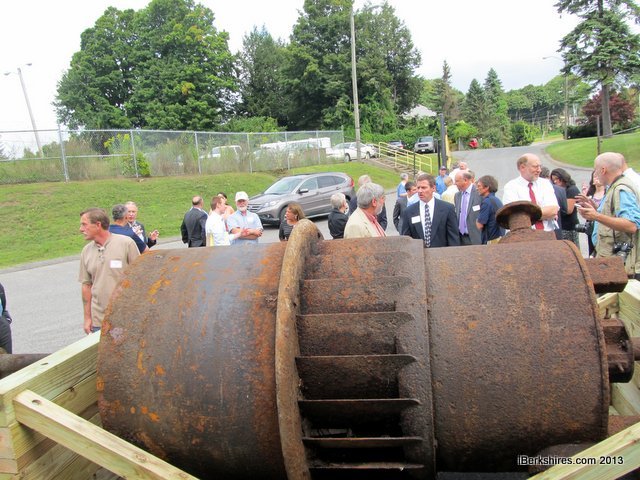
The two massive turbines it replaced had been there for more than a century — the last half of that sitting in the mud after they stopped operating in the 1950s.
Dennis Amlaw, who had taken part in their decommissioning not long after joining Crane, recalled how inefficient they were at the time. "We had to shut them down for a day or more, because of the river flow," he said, looking over one of the rust-encrusted machines put on display for the event.
Project Manager Jim Beaudin said the turbines dated to 1896 and were built in Holyoke. "At first they were used for mechanical power and then they were switched over in the early 1900s to electric," he said.
One will be placed on display at the Crane Museum, he said. "We're not quite sure what we're going to do the with the other one yet."
The permitting and design for the new hydro generator took years but the actual installation took months — from January to July.
"For all of us here, for everyone who worked on it, it's been tremendous," said a smiling James Noel, Crane's environmental manager. He was ready to get the turbine online — cautioning there had been some sparks and smoke during trials last month.
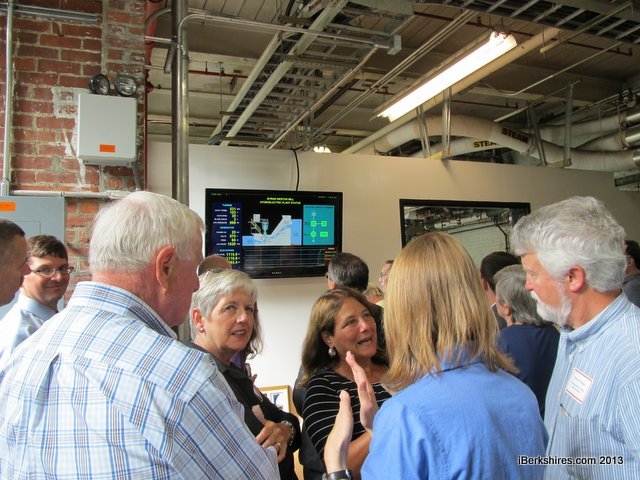
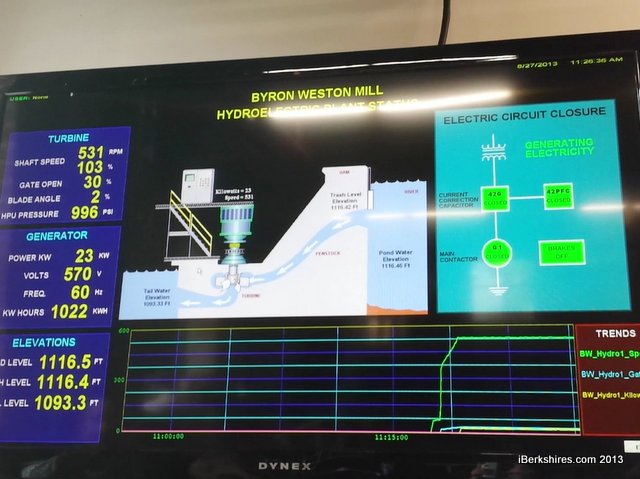
But everything went smoothly: The only indication it was working was the spinning top, a low hum and a flashing "Generating Electricity" on the digital monitor.
 The project was aided in part by $500,000 from the Massachusetts Technology Collaborative's Large Onsite Renewables Initiative grants in 2007 (now the Massachusetts Clean Energy Center) and help from the U.S. Treasury. The company was also provided technical assistance through the state Energy and Environmental Affairs' Office of Technical Assistance and Technology.
"This is the future of business in Massachusetts, it can stand as an example to others," said Gus Ogunbameru, an OTA team leader who has been working with the company.
The 250 kW facility could power 80 homes, said DeFalco, pointing to the high-energy needs of the plant. It is expected to reduce its emissions of sulfur dioxide and nitrous oxide by 12,000 pounds and greenhouse gas emissions by 1.4 million annually.
(For an idea of what the plant does, read the first part of Esquire's article on the $100 bill.)
Environmental concerns have been a legacy of Crane — both the family and company. "It's just there," said Douglas Crane, vice president of business development and government relations. "It's always been a part of our business involvement in our objective to trying to promote forward, sustainable technology."
In addition to this latest eco-friendly generator, the company also operates two steam turbines and donated land to Covanta Pittsfield LLC to build a steam facility and then buy back the energy.
"It's not just the Crane family, it's the entire work force," said Crane. "It's incredible when you walk around and start talking about sustainable energy and being good to the environment — everybody in this company gets it and they want to do it.
"That's a powerful motivator."
Tags: Crane & Co., hydro, sustainability, turbine, water,