Williamstown Houses Were Often on the Move
 |
|
(1).jpg) |
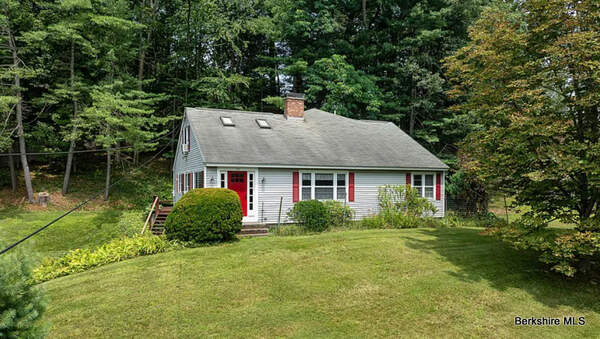
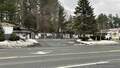
The Walden House was moved from Spring Street to Main Street in 1987 to become part of the Harsch Associates offices. |
WILLIAMSTOWN, Mass. — When Paul Harsch needed a larger space for his real estate business in 1987, his affinity for historic houses led him to Walden House on Spring Street.
There was just one problem — location. The 1860s home was not where it needed to be.
Undeterred, Harsch moved the 75-foot-long structure to 311 Main St., where it still stands as the home of Harsch Associates Berkshire Real Estate.
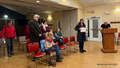
The realtor shared his experiences of the move last week as the second talk in the Williamstown Historical Museum's Fall 2013 Lecture Series at the Milne Public Library. In addition to Walden House, Harsch discussed a sampling of the more than 80 Williamstown houses that have moved from one place to another.
"In Colonial New England the cost of labor was very high compared to England, and there was a lot of space on which houses could be relocated," said Harsch. He spoke of Rick Wheeler, a resident of Concord whose family connection with Concord extends back to the English settlement of the town, being fond of quoting his grandfather Wilfrid Wheeler on the most popular winter activities of the 19th century. "Grandfather Wheeler identified the favorite winter sport of Concordians as 'moving houses and suing the neighbor.'"
Why move, or really recycle, a house to begin with? The attendees offered their own suppositions: older homes are well constructed, there could a lack timbers, or perhaps owners want the land but not the house — and someone else willing to take it off their hands. One woman thought that it was nice to live in a place where old houses are preserved: "Where I used to live they were pulled down."
But moving a big building is not that easy, said Harsch, particularly in the present day. "Was there ever a point when you said to yourself 'What have I gotten myself into?,' " asked one attendee. Harsch smiled and said, "Oh ... yes."
"While it's physically possible to move almost anything, it isn't always economically feasible," he said. "The cost of disconnecting power lines, moving traffic signals and street lights and trimming overhanging tree limbs mounts quickly. For these reasons, the cheapest homes to move are those that are small and have a short, clear route to travel."
Among additional expenses are buying the land on which the home will be placed, building a new foundation, permitting and inspection costs and fees for plumbers and electricians to disconnect and reconnect major utilities in the home.
"I bought Walden House for one dollar," said Harsch. "It cost $30,000 to move the house and $150,000 to renovate it ."
"The real action occurs once the house has been cut loose from water, sewage, electricity and other utilities. The crew punches holes through the foundation, slides steel beams under and alongside the house and uses hydraulic jacks to lift the structure onto this steel frame," he said. "Since the jacks are not tall enough to raise the house in one pass, it's jacked up and supported on cribbing, then the jacks are positioned on the cribbing and the house is raised again."
In April 1987, when Walden House traveled from Spring Street to Main Street, Harsch did not have to pay to have power lines in its path disconnected and reconnected. He had found out that under Massachusetts' law, utility companies absorb that cost.
"But they tried to bully me and the mover into paying it," he recalled.
The late James Drummond filmed the moving of the house, and Harsch's wife, Joyce, converted it to video and added music. The video offered a glimpse of the past, including, noted one woman, the presence of Joseph J. Zoito Jr.
Harsch confirmed that it was Zoito, then chief of policc. "He oversaw the move," Harsch said. Zoito retired two years later after 35 years with the Police Department; he died last year at age 88.
The video also showed that there were many spectators watching the Mass Electric Co. crew, composed of 24 men using 14 cherry pickers, cut the power lines. The power outage affected 1,500 homes and 31 classes at Williams College had to be moved. According to local news reports, the detour from Main Street was the most annoying problem of the day for drivers.
Many of those in attendance remembered other houses that have been; in the case of Kellogg House, someone that the college was moving it again.
Kellogg House, built in 1794, has been moved three times, most recently to make way for construction of Williams College's Stetson-Sawyer library.
Buildings moved for "artistic" reasons include the Masonic Temple and the Botsford House, former home of the Williamstown Library, which were moved back from Main Street. Williams College's Griffin Hall, built in 1828, was moved in 1904 to bring it in line with the then new Thompson Memorial Chapel.
To make room for the White House that has been occupied by Williams College presidents since 1858, the Mehitable Bardwell house, now owned by Henry and Mary Flynt, had to be moved. "Eight spans of oxen bought it to South Street," said Harsch.
In the 1880s and 1890s, Jim Fitzgerald, then the owner of the house, ran a rum hole in the building.
"Those were the days of prohibition and puritan residents of the town vainly attempted to put him out of business," said Harsch. "John Fitzgerald, a son of Jim Fitzgerald, used to tell how he ran across the street and buried jugs of hard stuff in Leake's Pond when his father feared a raid. Judge John Bulkley dubbed the building 'House of the Spirits.'"
Some houses were relocated to create space for commercial enterprises: The brick house at 62 Stratton Road was moved to make room for the Orchards Hotel, Harsch said, adding that the house, owned by Margaret Casting, is currently for sale with Harsch Associates. And the Reinard house at 30 Sunset Drive was moved so that the Dunkin' Donuts could be built on Main Street.
The Lieberman/Krall house at 34 Moorland St. was moved in conjunction with the the opening of Moorland Street between Cole Avenue and Southworth Street.
"The Kassin house at 9 Lynde Lane was moved just a short distance along Lynde Lane by the college, as was the house now at 221 Park St.," said Harsch. "The owners wish to move again, and I am looking for a site to move the houses."
Rita Watson, a member of the museum's board of trustees, lives in a house that was moved from Jerome River in 1908.
"There are at least 80 houses in Williamstown that still stand where they were moved. Several have been torn down," Watson said
"Around 270,000 homes are torn down annually in the United States, and most of the debris goes to dumps or landfills," said Harsch. "That's enough timber to make tens of thousands of homes. In other words, one year's demolition debris is enough to build a wall 30 feet high and 30 feet wide around the entire border of the continental United States."
Harsch is available to give his talk to other groups. Call 413-458-5000 for more information.
Tags: historical building, lecture, local history, museum,