Pittsfield's Mayor Bianchi Launches Re-Election Campaign
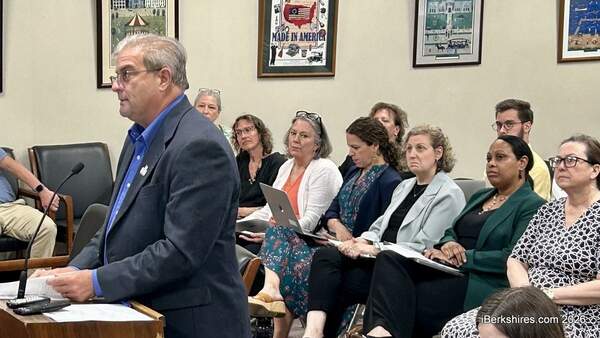
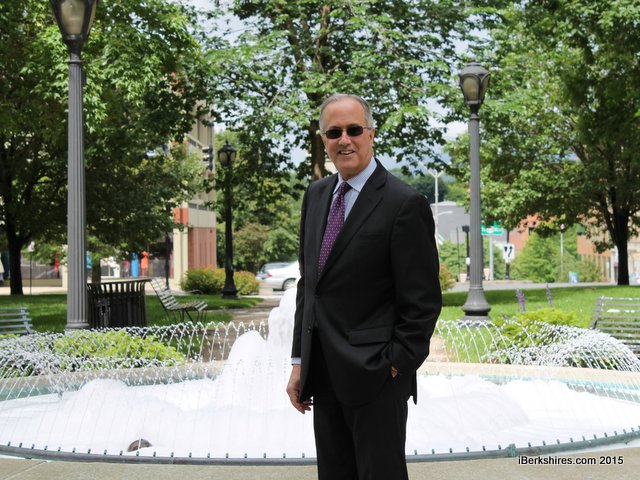  Mayor Daniel Bianchi sent out a statement Monday morning announcing his candidacy for re-election. Bianchi is running for a third term; November's winner will be the first mayor to serve a four-year term as outlined in the new city charter. Mayor Daniel Bianchi sent out a statement Monday morning announcing his candidacy for re-election. Bianchi is running for a third term; November's winner will be the first mayor to serve a four-year term as outlined in the new city charter. |
Now, Taconic High School is on its way to being built and the city won a $9.75 million grant to build the Berkshire Innovation Center at the business park.
Those two major initiatives are the start of an "economic and educational dynamic" to bring more jobs to the city, the mayor said.
On Monday, Bianchi said those are just two of a number of initiatives he helped put in motion and that he would like to see completed as he kicks off his re-election campaign.
"I want to run again because there are so many things that we are working on that I think can really have such a tremendously positive impact for the city, for young people, and for the businesses, that I would like to continue," Bianchi said.
"I am extremely optimistic about the future of the city and the future of Berkshire County."
Bianchi is being challenged by City Clerk Linda Tyer and residents Craig Gaetani and Eric Bassett for the corner office. Bianchi took office in 2011 after defeating Peter Marchetti by a narrow margin. He ran unopposed in the 2013 election and now, with the new city charter, the position is a four-year seat.
"It took be a few years to get my bearings and get focused on some of the programs that will make sense. In my fourth year, we were able to secure the grant for the innovation center, we were able to get a positive vote on the new high school. And, we are seeing more market rate housing, more interest in small business, and we need to keep that going," Bianchi said.
The mayor boasts of his ability to bring various groups together to execute a plan to improve the city. When it comes to Berkshire Innovation Center and Taconic, he said he wants to focus on the "nitty-gritty" of developing the curriculum of job training in conjunction with Berkshire Community College.
"I want to see more and I wanted to see greater progress. What we are doing at the BIC has a strong connection with what we are doing with the new Taconic High School and also a collaboration with BCC, which I don't think is as strong as it can be and will be," Bianchi said.
"I see that we can put together and economic and educational dynamic with those institutions that can make a tremendous difference."
The plan is eyed to create a pathway for young students to graduate from Taconic with the skills needed to fill jobs created at the innovation center. Bianchi said he will focus on trying to greater buy-in at the center from additional educational organizations and businesses.
Beyond that, he is focusing on improving both the downtown and the neighborhoods. He said he's been able to attract contractors who develop market-rate housing to help young people live and work downtown - particularly with the Howard Block and the Onota Building, which is under construction. He says there are other contractors looking to do more.
Meanwhile, he cited the private investment of Hotel on North in the downtown. Next, he is eyeing the Morningside neighborhood, where the city was able to secure a Transformative Development Initiative to kick start the revitalization there. Bianchi's vision is to turn Tyler Street into a "unique, hip, place to live and work."
"I do have a business background and I have managed the business operation of city government in the past. I've had experience doing it now as mayor as well as director of administration and finance. I have the capacity to sit down with a developer, to sit down with unions, to sit down with citizens groups, and create a collaboration," Bianchi said.
The City Council recently passed his 2016 proposed budget with little changes. The $146.2 budget raised the taxpayer's contribution by an estimated 3.61 percent. Bianchi said the biggest contribution to that was the school's $1.9 million increase that included some "extraordinary expenses."
"From the city side, the budget increased so we can maintain services that people find very important - certainly protecting people's lives and property with increases to the police budget and the fire budget. That made common sense while the school department was looking for somewhere in the neighborhood of a $4 million increase and I felt they could get by with a $2 million increase, which many departments would love to have," Bianchi said.
"We put together a budget that is responsible and will allow us to continue to provide critical services."
The capital budget does include various items like money for the Transformative Development Initiative on Tyler, planning for Springside Park, a new fire truck among the initiatives.
Bianchi said next year will be "tight" and that the initiatives he began will help increase the commercial base.
"We want to control any increase and keep it reasonable. We do want the city of Pittsfield to be livable for everyone," Bianchi said. "With some of the increases we have going on, with the increase in market-rate housing in the downtown area, with interest from small businesses to invest, I think we are going to strengthen our tax base. By strengthening our tax base, we should be alleviation some of the burden for folks."
Bianchi had taken some criticism for the maintenance of the roads and recently Tyer held a press conference saying the city needs to do more to tackle blight. Bianchi said there is going to be a "tremendous" amount of road work done this year and the winter was extraordinary so that criticism is just "cheap shots."
For blight, he said that is a priority of his as well and there is a system in place to tackle it.
"Every community of our size is going to have a turnover of commercial properties and a turnover of residential. I think we've put together programs that will address that. We've put together a task force of operational groups within city hall to address those issues. So, I don't think those are well-founded blames," Bianchi said.
Tags: #PittsfieldElection, Bianchi, election 2015,