Williamstown Woman Writes About Her Diplomat Father in World War II
WILLIAMSTOWN, Mass. — Not all heroes wear uniforms.
That truth is not lost on Adriana Millenaar Brown.
As author of "An Unlikely Hero: Adrianus Millenaar," Brown shares with readers her memories of her father, a Dutch diplomat who put his life in jeopardy to help thousands of his countrymen survive the Nazi regime during World War II.
Millenaar was posted to the Netherlands' embassy in Berlin in the late 1920s as an agricultural assistant. When Germany invaded his country in 1940, he reluctantly volunteered to stayed on in Berlin with the Swedish delegation, which was acting as the Netherlands' diplomatic protecting power.
He did what he could to help Dutch nationals over the next five years, visiting concentration, labor and death camps. By 1944, he was under threat of arrest and forced to stay within the city; his wife and three children fled to Stockholm. Millenaar was able to escape to Sweden only days before the Russians entered Berlin.
John Chandler, former Williams College president, wrote that the book a "gripping and inspiring story of the towering courage and indefatigable resolve of Adrianus Millenaar ... .
"The book shines revealing light on both the depths of depravity to which humans sometimes sink and the heights of nobility to which they are capable of climbing."
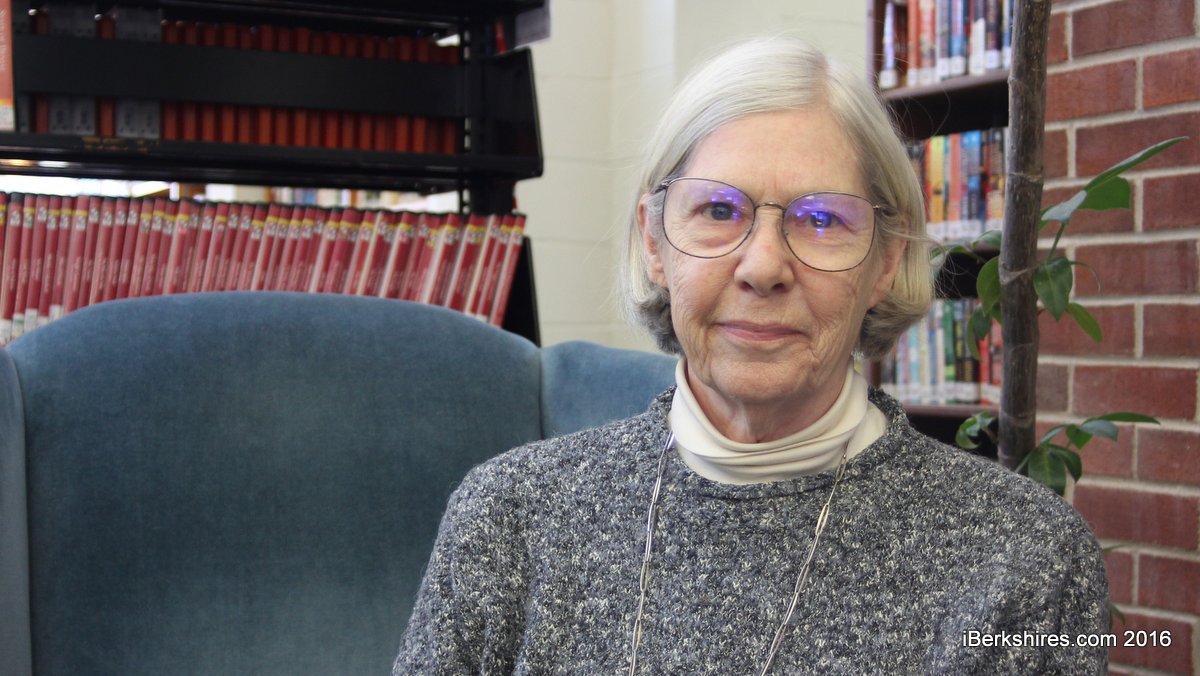
Brown will give a talk on her book on Saturday, March 26, at 1 p.m. in the Milne Public Library. She sat down for interview with iBerkshires on Tuesday.
Q: How old were you when World War II broke out?
A: My father went to Berlin in 1928 as agricultural attache of Dutch embassy. I was born in Berlin in 1938.
Q: Did you have any siblings?
A: I was the oldest of three children. Father was Dutch and mother was a German but got Dutch citizenship when she married.
Q: Did your father ever live apart from the family because of his work?
A: When father's position was endangered and he was called state enemy of Nazi Germany, we (three children and mother) got out of Berlin in November 1944. We went to Stockholm, Sweden, but father was not permitted to leave Germany.
In May 1945, when the Netherlands were liberated, my father came briefly to Stockholm, and then went to London to wait until he re-entered West Berlin as acting head of the Netherlands Military Mission under (Gen. Dwight) Eisenhower's SHEAF (Supreme Headquarters Expeditionary Force). We then reunited with my father in Berlin in 1947.
Q. Did you ever say goodbye to your father and fear you would never see him again?
A: Somehow he must have instilled in me to be strong and take care of my mother and brothers.
Q: Did you ever feel neglected because your father gave so much time and effort to helping others?
A: Somehow I never felt neglected, but when I hadn't seen him for a long time after we had gone to Sweden, I think I felt he had become a stranger. But once we were reunited, we became a very close family even though my parents were constantly out performing their duty representing the Netherlands at all the international affairs, which were endless in the East Berlin of the '50s and early '60s.
Q: As a child did you ever experience a happy Christmas or summer vacation with your family ?
A: After the war in Berlin once the family was reunited in late 1947, we celebrated "Sinterklass" — Santa Claus — with all the Netherlanders still in Berlin ... and at home, Christmas was from then on always joyful. I learned to play Christmas carols and we would sing, we'd tell the Christmas story in Dutch and have a fancy evening meal and then unwrap miraculous presents.
Q: Was your schooling affected by your father's situation?
A: I went to more than six different schools with four different languages. I went to high school in Netherlands and worked as a secretary for two years, and went to university in Amsterdam at age 23. I trained and studied translating and interpreting.
Q: What motivated you to come to Williamstown?
A: I was a translator for the Roper Public Opinion Research Center affiliated with Williams College. During that time I met my husband, and the following year we married.
(Brown's husband, MacAlister Brown, a Williams professor of political science, died in 2006.)
Q: Does Williamstown remind you of any place in your childhood?
A: During the war, Biesenthal was a little village northeast of Berlin. We went on the advice of a Dutch woman who told my parents to go there with the family if bombing got bad. Half of Biesenthal was farmland and it was beautiful. But there was still bombing and a concentration camp there.
Q: What do you remember as being most important to you in those years?
A: Trying to survive. Even now when a plane flies low, I am scared.
Q: Why did you wait so long to write a book about what happened back in World War II ?
A: I couldn't come to terms to being born and living in Germany when they were at war with the Allies. I couldn't talk about my childhood.
Finally, I realized writers write about their lives. I started writing short stories about my early childhood. In the 1990s, I started to write seriously. When I started working on the book, I went back to Sweden to find a woman who could help me.
Where had we lived? What places had Mother taken us? I was 6 then.
Published last December by Northshire Bookstore, Brown's book is available at Amazon.com.
Tags: authors, Milne Library, Q&A,