Pittsfield Considering Community Preservation to Raise Revenues
PITTSFIELD, Mass. — With the city approaching its debt ceiling in the coming years, it is likely some things will be put on the backburner — parks, open spaces, historic preservation, and affordable housing to name a few.
That's where advocates say the Community Preservation Act can come into play. The act allows cities to levy a surcharge on the tax bills to pay for items in those specific areas. The fee isn't included in the debt ceiling calculation and comes with a small match from the state.
A group of citizens under the banner of Preserve Pittsfield are pushing the adoption of the act, which must be approved via a ballot vote in November, in hopes to generate revenue.
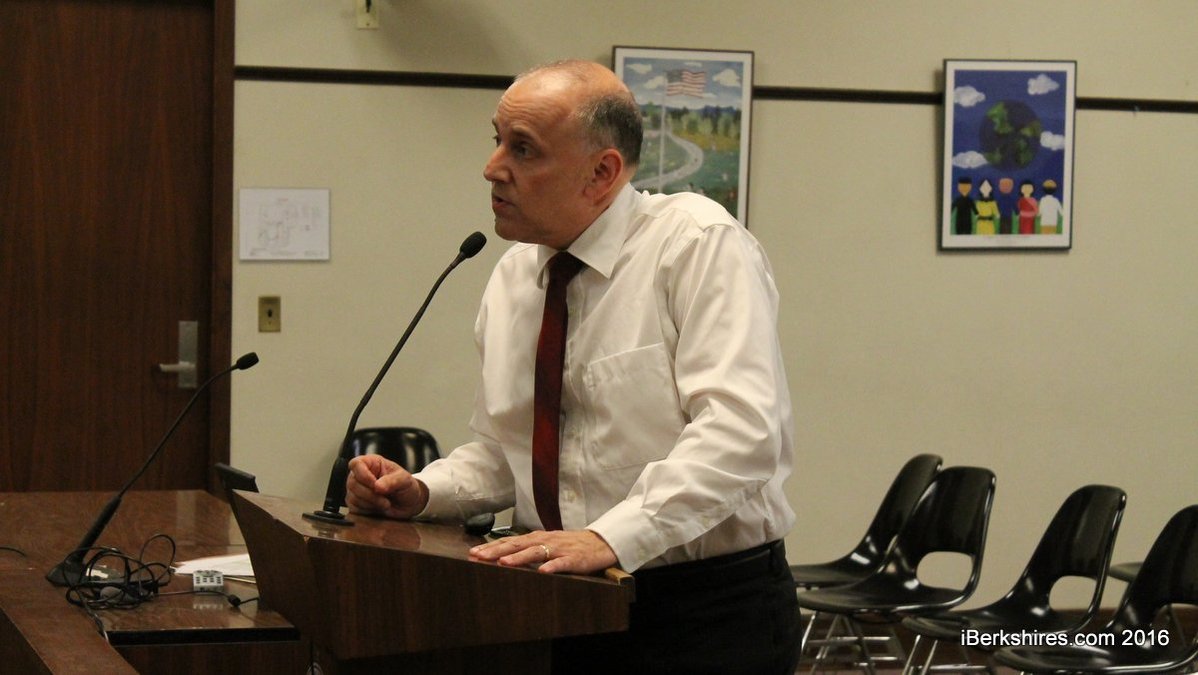
"The more we looked at the Community Preservation Act the more it seemed like a fit for the city of Pittsfield," said John Dickson, who urged the placing of the act on the ballot at the City Council's Ordinance and Rules committee meeting on Tuesday.
The proposal calls for a 1 percent surcharge on top of the annual tax bill. The first $100,000 of assessed value is exempted from that 1 percent calculation — meaning the 1 percent figure is derived from all values above that threshold — and the state divvies up fees from registry of deeds filings to all of the communities using it on a percentage basis. Last year, the state matched Community Preservation Act contributions at a rate of 29.7 percent.
Beth Van Ness said some $43,180 was generated from those fees from Pittsfield last year and so far this year, $17,170 has been raised. That money is all going to other communities that have adopted the act, she said.
According to Stewart Saginor of the Community Preservation Coalition, in Pittsfield that 1 percent would have generated $383,613 from local taxpayers last year. That would be matched by $113,933 by the state for a total of $497,546. He estimates it would cost the average single-family homeowner $14 a year.
"It is a steady source of funding that happens every year," he said.
With those funds, a Community Preservation Committee would recommend how the money will be allocated with the only restriction being 10 percent goes toward open space and recreation, 10 percent for affordable housing, and 10 percent for historic preservation. The City Council would then be asked to make the allocations. The Community Preservation Committee needs to consist of representatives from the Conservation Commission, Historical Commission, Planning Board, recreation, and the Housing Authority. From there, the city has the option of appointing up to four at-large seats.
"The city really is in complete control. It is a local program, not a state program," Saginor said.
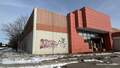
For Dickson, pursuing the act stemmed from concern over the future of the former St. Mary's Church on Tyler Street. CPA funding could be used to help a developer to turn it into housing, or a facade project in which the city could retain a historic preservation easement, or any number of reuse projects.
Since its inception, there have been some 8,100 projects funded throughout the state, Saginor said. The majority of the projects were for historic preservation but recently recreation has seen an uptick because of changes to the law in 2012. The changes now allow for renovation of playgrounds and other recreation assets and not just building new. A total of 161 towns have adopted the act which has raised $1.6 billion. More than a dozen more are considering putting it on the ballot in November.
What stands out for Saginor particularly is the few restrictions on how the money is spent. It can be used for rental assistance, first-time homebuyer programs, building brand-new affordable housing units, or demolishing or repurposing dilapidated buildings for housing. It can be used to clean up the site of an old gas station and turn it into a park. In Westfield, a historic whip factory, the only one remaining in the "whip city," is being redeveloped by a private developer into a museum with the help of CPA funds. The Academy of Music in Northampton renovated its facade with CPA money in exchange for a preservation restriction. It's been used to preserve historic documents of a municipality.
Williamstown voted in a 2 percent surcharge in 2002, at a time when the state was matching 100 percent. Since then, it has invested hundreds of thousands of dollars in preservation, community and housing assets, including pledging $1.5 million toward affordable housing at the Cable Mills project.
It's created dog parks and hiking trails. It's built community gardens and veterans housing. In Nantucket, the money was used to build affordable housing units as a recruitment tool for teachers. The money can also be used as a match for state grants.
"The only restriction on the spending is no project can occur without the City Council's vote," Saginor said.
For Ward 6 Councilor John Krol, the fact that it doesn't count against the city's levy ceiling is a reason behind such a tax. He said there are a number of playing fields that could be renovated, the track at Taconic High School, or St. Mary's could benefit from such a revenue stream.
"It seems as though there are many constituents that will come onto this," Krol said.
The Ordinance and Rules committee approved putting the question to the ballot but it still needs approval from the full City Council. That has to be done by Sept. 8 and City Solicitor Richard Dohoney is crafting the article to do so.
"I like that we are able to put it on a ballot," Councilor at Large Melissa Mazzeo said.
This would be the second time the item has come up for consideration. In 2006, the city opted not to enter the program.
Tags: Community Preservation Act, election 2016, ordinance & rules ,