North Adams Schools Find Taps With Elevated Levels of Lead, Copper
NORTH ADAMS, Mass. — An extensive testing of water delivery points in the city's schools has turned up elevated levels of lead and copper.
Some 353 bubblers, faucets and other water taps were tested in September through a state grant through the Massachusetts Clean Water Trust. The results were received this week, with about 50 points identified as exceeding state levels for lead and copper.
Only a handful drinking water taps tested high and those were immediately shut off and warning signs put up, said school officials.
The city has also been in discussions with the state's Departments of Health and Environmental Protection on next steps.
"The results are not unanticipated results, they are part and parcel of having plumbing that included having these elements," said Superintendent of Schools Barbara Malkas. "Looking at all results in comparison to what we're seeing from locations across the state, we're in good shape."
Drinking water taps were tested twice and non-drinking water — faucets, bathrooms — tested once.
According to the state, 164 school buildings statewide have had at least one tap exceed lead action levels and 76 have at least one tap exceeding the copper levels.
Malkas and Mayor Richard Alcombright, along with others in the city's health, water and maintenance services, held a press conference at Central Office early Wednesday morning to explain the steps being taken.
"The water access points are shut off and labeled," said Alcombright. "We're making other sources available for water ... the next step is to fix the infrastructure."
A letter specific to each school, with the testing results and information on the elements, is being released to parents Wednesday; faculty and staff were being informed that morning as well.
"I would urge parents not to be distressed but to be informed by reading these FAQ sheets because it's very straightforward as to the risk to your children's health," said Maris Owczarski, the district's heath administrator and a registered nurse. "Because the amount, the levels, is just not excessive."
The actionable level for lead is .015 milligrams per liter and 1.3 milligrams per liter for copper, both of which are naturally occurring elements. The tests that showed higher levels were not that far above the actionable levels: around 1.5 for copper and .017 for lead for water fountains.
"It is highly unlikely that somebody would develop poisoning by drinking such small amounts but it is a cumulative effect," said Malkas. "So if someone has other sources of exposure this would be additive to that."
Commissioner of Public Services Timothy Lescarbeau, who oversees the city's water supply, said the water source itself is completely safe and its lead and copper contamination levels so low that the state actually allows three-year rather than annual testing.
"It's not a source issue, it's a tap issue," he said.
The culprits are likely older fixtures with lead soldering and the number of access points differs between schools. Brayton, rebuilt in the 1990s, and the older Greylock School both have greater numbers of fixtures testing for lead levels, although the oldest, Johnson School, only had one bad test result for a sink in the boiler room. Drury High tested for lead and copper in a few sinks. Colegrove Park, on the other hand, had exclusively higher levels of copper.
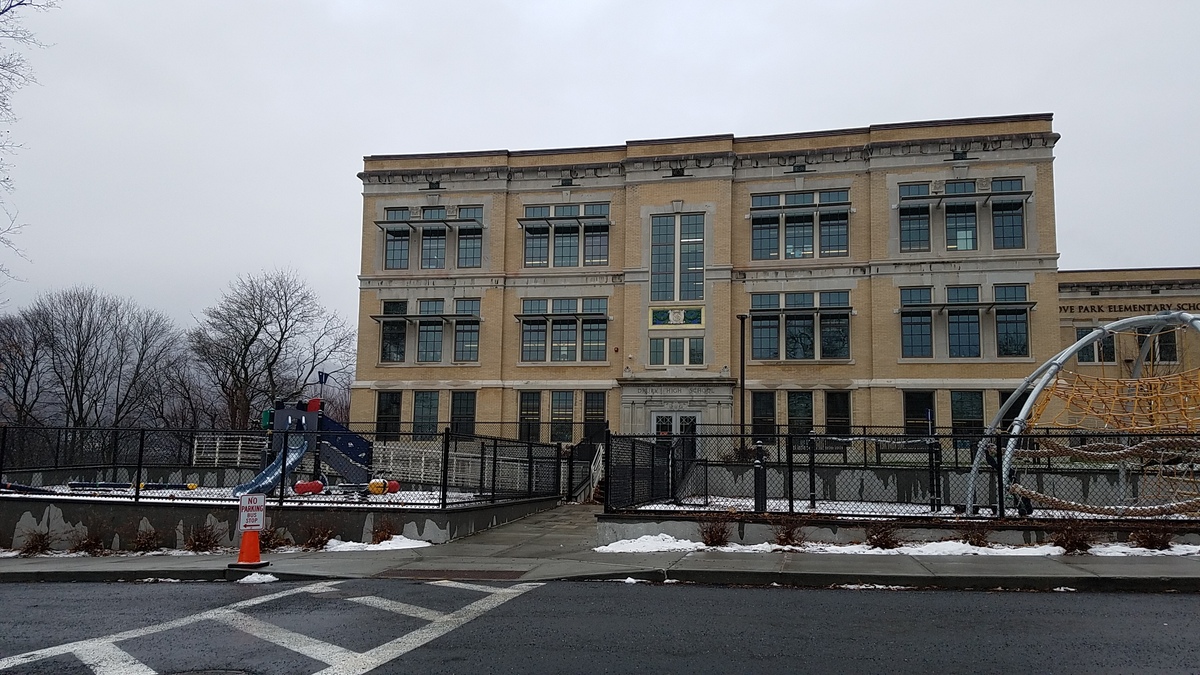
The Colegrove results at first surprised officials. The century-old former high school was recently renovated for $30 million and reopened as an elementary school last January.
"Every pipe was changed," said Matt Neville, the district's director of facilities.
The issue appears to be the newness of the pipes after discussions with both the DEP and the contractor. The new plumbing systems are in the flushing out stage and identified areas will require the water being run for a few minutes at the beginning of the day until the levels drop.
Flushing may also solve some of the other tested sites; water fountains, however, are expected to be replaced. Neville did not have a time frame for when everything would happen.
"We will be retesting after repairs or flushing are done," he said, following directions by the DPH and DEP. "Whatever they need, we'll take care of the kids."
The city currently tests 36 points for lead and copper from throughout the municipality, including the schools and private taps. The mayor said discussions began earlier this year about doing more extensive testing after areas in the eastern part of the state, Bennington, Vt., and Hoosick Falls, N.Y., found contaminants in their drinking water.
The state provided $2 million in grant funding through the water trust last spring for testing in cities and towns and added another $750,000 in funds last month.
"Our community made a commitment to do that so we would, in fact, have the information we needed to improve the drinking water in our schools," Malkas said. "We are not alone ... 108 cities and towns, multiple schools, have been identified with this issue. It's not just a North Adams issue."
Alcombright said the grant funding "dropped from the sky" at the just the time it was needed to do the test the systems.
"It was just a good opportunity for us to be able to come and do this type of testing," the mayor said. "We've done everything to this point as laid out by the DPH and DEP and the next mitigation plan is to swap out bubblers and those types of things as we need to."
North Adams Public School Water Delivery Testing by iBerkshires.com on Scribd
Tags: drinking water, NAPS,