Williamstown Resolution Looks to Change Bee-havior
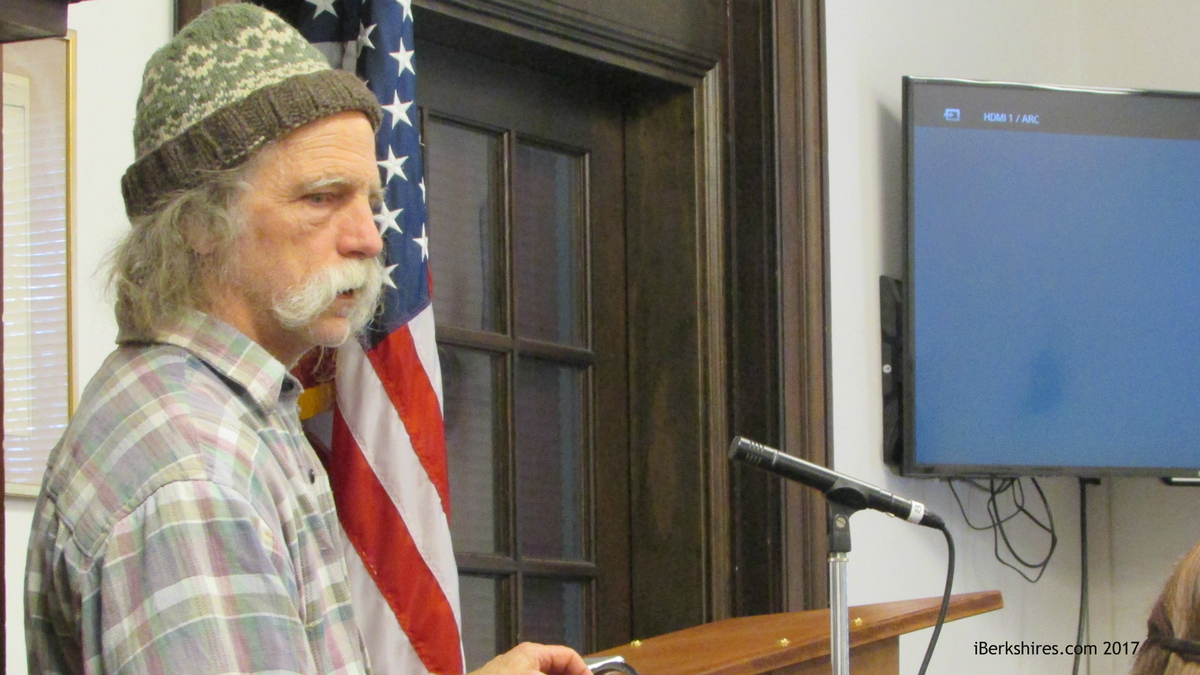
North Adams beekeeper Tony Pisano talks about declines in the local bee population.
What homeowners think of as weeds are actually an integral part of the food web that sustains human life, and a group of residents want to help change the way town residents think of lawn care in light of the that fact.
A non-binding resolution at May's annual town meeting will ask Williamstown voters to declare the Village Beautiful a "pollinator-friendly community" that "encourages the adoption of policies and practices that support pollinator health."
On Wednesday, supporters of the resolution addressed the town's Agriculture Commission, which voted its support for the idea.
The outgoing director of the Williamstown Rural Lands Foundation, a beekeeper from North Adams and the chair of Williams College's biology department each addressed the importance of bees, butterflies and other pollinators and how human behavior threatens those insects.
"There is no question that pollinators are very much a part of what local author Elizabeth Kolbert is calling 'The Sixth Extinction,'" Williams professor Joan Edwards said, referring to Kolbert's Pulitzer Prize-winning book. "Bumblebees are threatened globally, and we're seeing it in spades in New England."
Edwards outlined three main drivers to the worldwide decline in pollinator populations: habitat fragmentation, climate change and pesticides — both insecticides and herbicides.
The first is an inevitable outcome of human civilization. The second is an issue that can be addressed but not necessarily solved at the local level. The third is an issue that is within the power of any individual landowner to address.
"I know [pesticides] are important in some cases, but if we can minimize their use, it's a great thing to do," Edwards said.
The resolution, placed on the town meeting warrant by citizen's petition, calls on residents to avoid "the planting of flowering plants which are treated with systemic insecticides and [avoid] the use of seeds coated with systemic neonicotinoids," and to avoid, "homeowner applications of pesticides that require a neighbor notification flag ... [and] non-agricultural usage of glyphosate products (e.g. Roundup)."
The impact of insecticides is self-evident. Many of the insects that mankind tries to kill for the sake of convenience are the very insects that pollinate the fruits one which we depend to live.
"Pollinators are required for about 1,500 crops worldwide," Edwards said. "In 2012, the value of pollination services in the United States was $29 billion. Globally, it was $200 billion.
"Pollination also maintains biodiversity. I am a huge lover of biodiversity. We have the most amazing insects and flowers in the local flora and fauna. If we have no pollination, we'll have fewer species. Species will go extinct."
In small towns like Williamstown, pollinators are threatened not only by insecticides but also by the things people do to maintain what they think are "healthy" lawns: application of synthetic herbicides and regular mowing schedules.
The pollinator-friendly community resolution, which is being advanced in towns throughout Western Massachusetts, asks homeowners to rethink those practices as well.
"[Plant] diverse grass mixes for lawns that include low flowering ground covers such as clover while welcoming the presence of naturally occurring, low-growing wildflowers," the petition reads. "[Reduce] lawn mowing schedules so as to allow these flowering ground covers to bloom to provide an important food resource for pollinators throughout the seasons and to reduce overall maintenance costs."
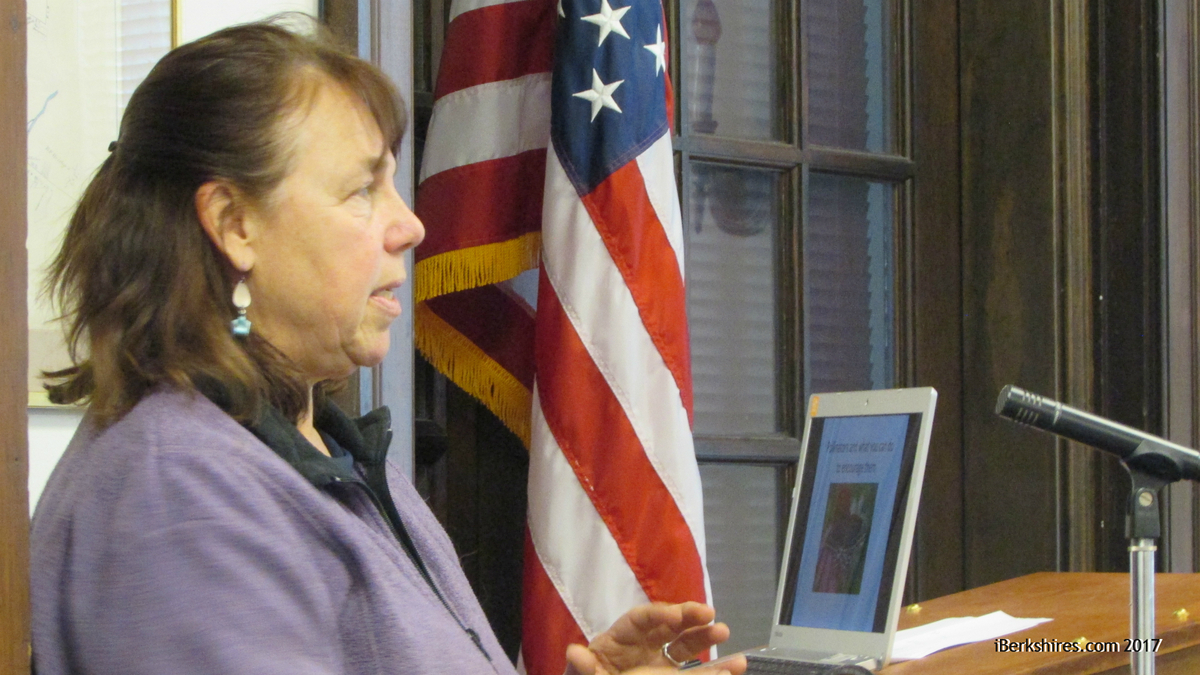
Leslie Reed-Evans of Williamstown Rural Lands Foundation addresses the town's Agriculture Commission.
Local pollinators thrive on native plants such as asters, butterfly weed and bee balm, Williamstown Rural Lands' Leslie Reed-Evans told the Ag Commission.
"Another example of a nice native plant, goldenrod, is not wind pollinated so it can't cause allergies, and it's a really really important late-season plant for all sorts of bees," she said.
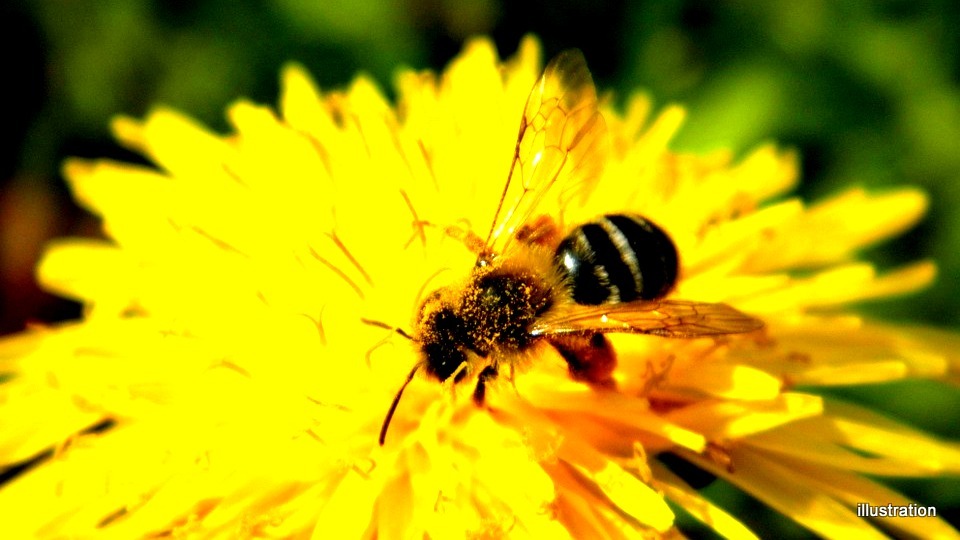
Then there are dandelions, which are not native but also are not considered an invasive species, Edwards said.
"They're one of my favorite flowers, and they do amazing things," she said. "Don't get rid of them because of the forage. ... And they're good to eat, too."
In general, the members of the Agriculture Commission were sympathetic to the aims of the resolution which is intended, after all, to protect the pollinators that help farmers grow food. Richard Haley, an alternate to the commission who participated in Wednesday's hearing, said he spoke to a local farmer who was concerned the resolution was a step toward prohibiting the pesticides that make commercial agriculture viable.
"In the resolution, it says 'non-agricultural' homeowner use of Roundup," Commissioner Kim Wells said. "It's an educational tool, primarily directed not even at landscapers, per say, and certainly not farmers. All the things I've been reading are directed more typically at the homeowner."
Representatives of two of the town's landscaping companies attended Wednesday's hearing, and neither expressed serious reservations about the non-binding resolution.
Herb Severs, who directs the herbicide and insecticide program at Countryside Landscaping, expressed sympathy for the resolution's aim but emphasized that it is the homeowner who needs to be educated about the potential impact of landscape practices on pollinators.
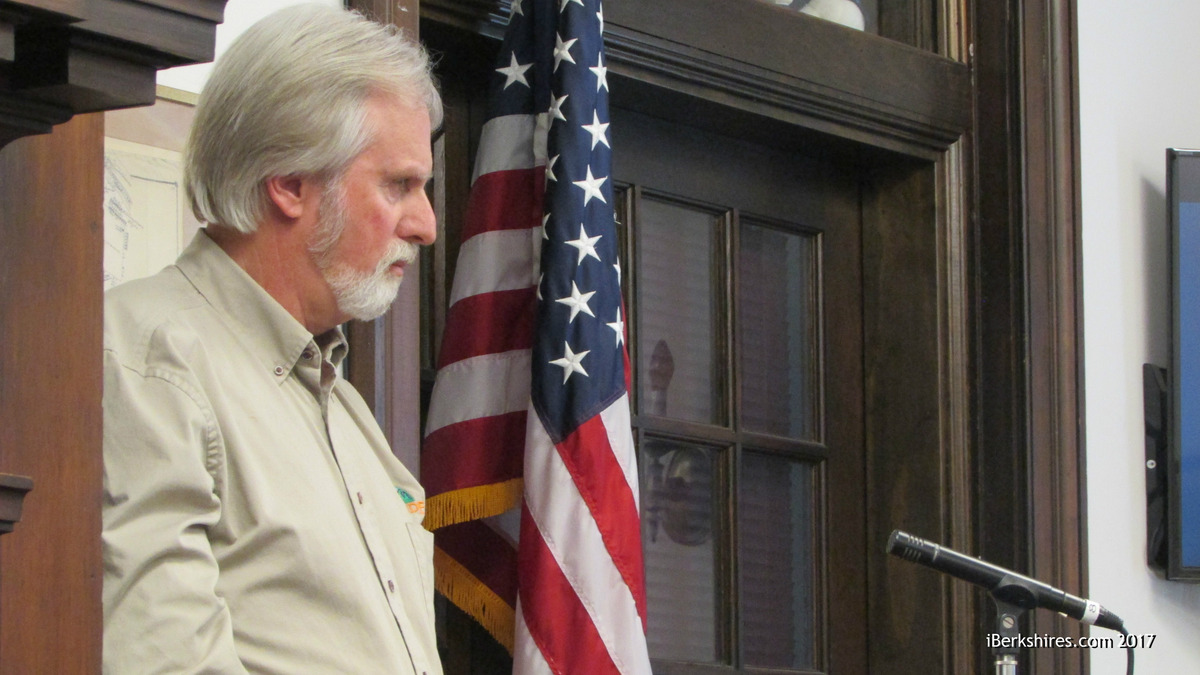
Herb Severs of Countryside Landscaping told the commission education is the key to changing homeowners' expectations for their land.
Organic pesticides are considerably more expensive than their synthetic alternatives, and practices like less frequent mowing are at odds with the demands of many contemporary homeowners, Severs said.
"We try to encourage cultural ways to discourage weeds," he said. "We ask them to mow the grass higher. If you can tolerate 3 1/2 to 4 inches in height, it's a wonderful way to discourage weeds. And it's better for the grass.
"We make these types of suggestions to people, and they might try it, but they don't like it. They like it for a time, and then we get a week of rain and the grass shoots up ... and they change their mind. I'm not saying all people are like that, but I'm telling you what it's like when you to convert people. I want to be honest and realistic with the expectations."]
Tags: bees, town meeting 2017,