image description
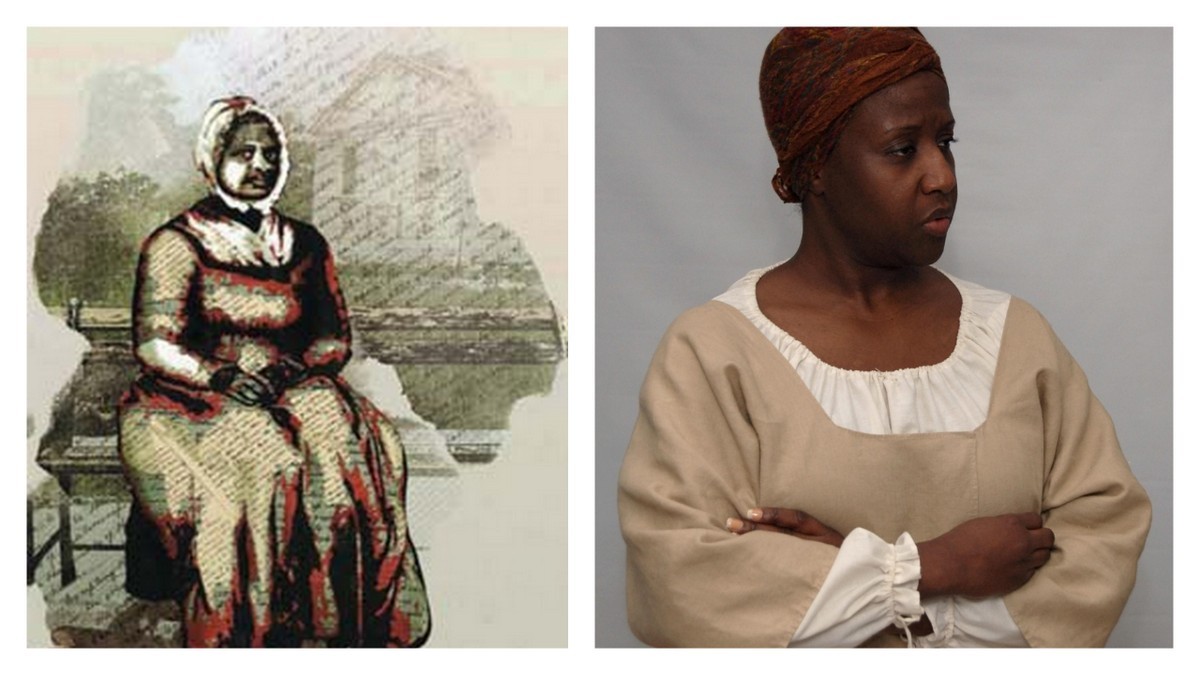
Tammy Denease, right, will perform a dramatic re-telling of 'Mumbet's Story,' the story of Elizabeth 'Mumbet' Freeeman, left, as part of Mumbet Day on Aug. 20.

Crumbling of Slavery in Massachusetts Celebrated on 'Elizabeth Freeman Day'

Print Story | Email Story

SHEFFIELD, Mass. — On Aug. 21, 1781, in Sheffield, slavery began to crumble in the Commonwealth of Massachusetts when Elizabeth "Mumbet" Freeman successfully sued for her freedom from slavery more than 80 years before the Emancipation Proclamation.

On Sunday, Aug. 20, The Trustees of Reservations will host a day of activities to celebrate the story of Elizabeth Freeman at the Ashley House in Sheffield. Activities will include guided tours of the Ashley House and a performance by storyteller and actress Tammy Denease, with her dramatic re-telling of "Mumbet's Story."

Preceding the afternoon performance, the public is invited to follow in the footsteps of Elizabeth Freedom on her walk to freedom. At 10 a.m., the annual "Walk to Freedom," co-sponsored by Crow Flies Press, will depart from the Ashley House and walk north to the historic home of Theodore Sedgwick in the village of Sheffield, where, at 11:30 a.m., state Rep. Smitty Pignatelli will read the proclamation that freed Mumbet from slavery. Shuttles will return walkers to the Ashley House for the afternoon activities.

At noon, barbecue and refreshments will be served at the Ashley House, and guided house tours will run from noon to 2 p.m. At 2:15 p.m. Denease will perform a dramatic re-telling of Elizabeth Freeman’s story.


The Colonel John Ashley House, where Elizabeth Freeman was enslaved, was built in 1735 and is the oldest house still standing in the Berkshires. It came into the care and protection of The Trustees, the nation's oldest statewide land conservation organization, more than 40 years ago. With it came one of the most incredible stories of liberty and freedom to come out of Massachusetts: the intertwined lives of Col. John Ashley, a patriot and author of the Sheffield Resolves – a pre-revolutionary petition against British tyranny and manifesto for individual rights – and Elizabeth Freeman, an African-American woman enslaved in the Ashley home from the time she was a child, and who was inspired by that same manifesto of equality and freedom.

It was while she worked in the Ashley household that Freeman first overheard the ideals compelling the American Revolution through conversations between Col. Ashley and his political colleagues. She eventually sued for her own freedom with an argument based on those same ideals, and the court decision that freed her also set a legal precedent to ultimately end the institution of slavery in Massachusetts.

The Ashley House is open for tours during July and August on Sundays at noon and 1 and 2 p.m., or by appointment for groups larger than 10. Check out the self-guided exhibit in the Interpretive Center next to the house, which is open daily. Visitors can also walk the trails of nearby Bartholomew’s Cobble, a National Natural Landmark and which was once owned by Col. Ashley.


Tags: Trustees of Reservations,   

If you would like to contribute information on this article, contact us at info@iberkshires.com.

Berkshire Towns Can Tap State Seasonal Communities Resources

BOSTON — Governor Maura Healey announced that 18 additional municipalities across Massachusetts have been designated as Seasonal Communities, opening up new tools, support and grant funding to help them manage seasonal housing pressures. 
 
Created as part of the historic Affordable Homes Act signed into law by Governor Healey in 2024, the Seasonal Communities designation was designed to recognize Massachusetts communities that experience substantial variation in seasonal employment and to create distinctive tools to address their unique housing needs. The law also established the Seasonal Communities Advisory Council (SCAC).  
 
The Affordable Homes Act identified several communities to automatically receive the designation, including:   
  • All municipalities in the counties of Dukes and Nantucket;   
  • All municipalities with over 35 percent seasonal housing units in Barnstable County; and   
  • All municipalities with more than 40 percent seasonal housing units in Berkshire County. 
  •  
To identify additional communities, the Executive Office of Housing and Livable Communities (HLC) reviewed available data, specifically focusing on cities and towns with high levels of short-term rentals and a high share of second- or vacation homes.
 
In Berkshire County, Egremont, Great Barrington, Lee, Lenox, New Marlborough, Richmond, Sandisfield, Sheffield, West Stockbridge and Williamstown have been designated. 
 
"Our seasonal communities are a vital part of Massachusetts' cultural and economic fabric, but they're also home to essential workers, families, seniors, and longtime residents who deserve a place to live year-round," said Governor Healey. "That's why we're committed to supporting these communities with innovative solutions like the Seasonal Communities designation to meet their unique needs, and I'm thrilled that we're offering this opportunity to 18 additional communities across the state. Everyone who calls these places home should be able to live, work and grow here, no matter the season." 
 
As with the statutorily identified communities, acceptance of the designation for municipalities is voluntary and requires a local legislative vote. HLC will open an application for newly eligible communities that haven't accepted the Seasonal Communities designation to request consideration. 
 
The Affordable Homes Act created several new tools for communities who accept the Seasonal Communities designation to be able to:  
  • Acquire deed restrictions to create or preserve year-round housing 
  • Develop housing with a preference for municipal workers, so that our public safety personnel, teachers, public works and town hall workers have a place to live 
  • Establish a Year-Round Housing Trust Fund to create and preserve affordable and attainable housing for year-round residents 
  • Create year-round housing for artists 
  • Allow seasonal communities to develop a comprehensive housing needs assessment 
  • Permit tiny homes to be built and used as year-round housing 
  • Permit year-round, attainable residential development on undersized lots 
  • Increase the property tax exemption for homes that are the owners' primary residence 
 
View Full Story

More Sheffield Stories