Clarksburg Planners Question Tiny Home Proposal
CLARKSBURG, Mass. — If a local woman wants to create a bed and breakfast made up of tiny houses, she'll have to convince voters to approve new zoning bylaws.
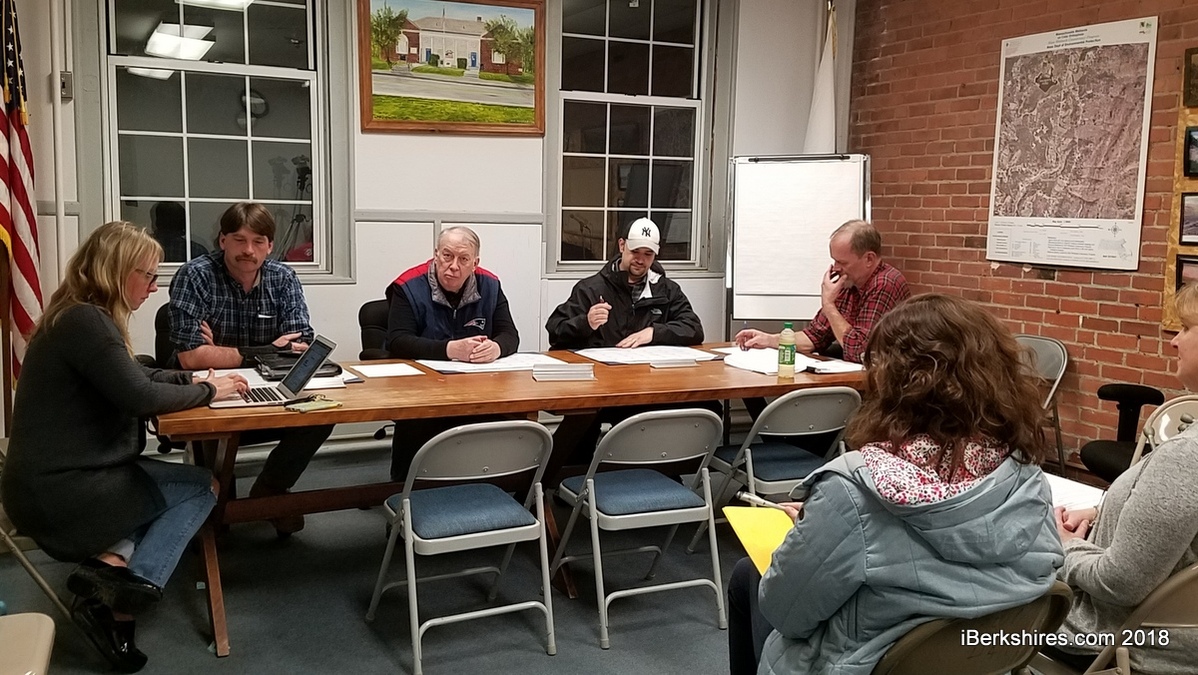
Resident Molly Guest and Katie Jackson, business and community development manager for tiny home builder B&B Micro Manufacturing of North Adams, tried to convince the Planning Board on Wednesday that it would be a benefit to the town to allow the popular little houses to be sited in the rural town.
"I live on Cross Road and we have all of this property and it dawned on me, we haven't done much with it," said Molly Guest. "I think it would bring people to Clarksburg and I think it would be an addition to Berkshire County."
The town's bylaws have prohibited the siting of mobile homes — and of renting them out — for decades. The most recent iteration defining mobile homes as structures with chassis and wheels dates from 1993 but probably goes back to the 1970s, said Planner Carl McKinney.
McKinney, also the town administrator, read off a lengthy chapter in the zoning bylaws of the definition of mobile homes, the restrictions related to their use as temporary facilities related to construction, and regulations regarding structures existing at the time the bylaw was enacted. Specifically, the bylaws say mobile homes cannot be sited or rented and that no land can be used as a mobile home park and existing ones cannot be expanded.
"All of those items would have to be changed," McKinney said.
Jackson was optimistic that the definition, perhaps, could be changed, noting that tiny homes are built in the same way as stick-built homes. She thought the material and type of manufacture would be enough to set tiny houses apart from conventional mobile homes and recreational vehicles.
B&B builds its structures to the standards of the Recreation Vehicle Industry Association, she said, and the company and each of its products are inspected and certified. "They are not shoddily built by any means."
Jackson said her company is looking to develop some type of tiny home community based on the amount of queries they've had since opening almost two years ago.
"We've had a ton of interest in tiny houses but they don't know where to park them," she said.
Guest said her vision of three to five self-contained units would allow people to try on tiny house living for size before making an investment. She anticipated that some of the houses would sell and she would replace them as that happened.
The planners, however, pointed out that that would constitute a business that would not be allowed in the residential zone. In addition, another hurdle would be the requirement of hookups for plumbing, water and electric, and a foundation.
"I wouldn't be opposed to a permanent foundation but it sort of changes the feel and the quirkiness of it," Guest said. She and Jackson said there were other options for plumbing such as composting toilets, water tanks and RV electrical plugs.
Jackson provided some material on how communities, largely in the West, had integrated tiny house living. Massachusetts so far has only one community that allows tiny houses. Nantucket passed a zoning amendment in 2016 specifically for tiny houses in part as a solutions to its limited real estate stock and lack of affordable housing. That bylaw requires tiny houses to have foundations. Chilmark, on Martha's Vineyard, is considering tiny houses for the same reasons.
"I'm not against small houses. They are a way to live efficiently," McKinney said. "I don't see any financial or other benefit to the town of Clarksburg unless they are attached to a foundation."
Planner Erin Scott also questioned how tiny houses, which would be taxed as personal property left on wheels, would help the town. There was nothing in Clarksburg for guests to spend money on, she said.
"I like the idea of bringing people here," she said. "But we don't have a ton of real estate."
Guest agreed that the town had little in business, but her idea was a start.
"There aren't any other communities out here doing this ... it's a draw for people," she said, adding the town could get rooms taxes. "Maybe they buy an acre of land and bring their home here. ... I think it would give us an edge."
The planners said they would not develop a bylaw amendment but if Guest and Jackson brought one forward, they would begin the public review. It would take the signatures of 200 registered voters to get it on the town meeting warrant in May by citizens' petition.
In other business, the planners got an update on the Clean Energy Collective solar array on River Road.
A representative had come before the board in early January saying he felt the project was being held up and wasn't getting answers as to why.
McKinney said the issue had been screening. When some of the original trees that were supposed to be 8-10 feet high died, they were replaced with inferior plantings.
"Just comply, it's not going to cost them a fortune," he said.
The planners also accepted a perimeter plan for A.J. Randall for area projected to be used for an agricultural solar array off Daniels Road. The board had been leery of accepting it in December because it had been submitted to the town two days before a special town meeting that prohibited the installation of the array. McKinney said it will be up to the court to determine if the date makes a difference.
Tags: Planning Board, tiny homes,