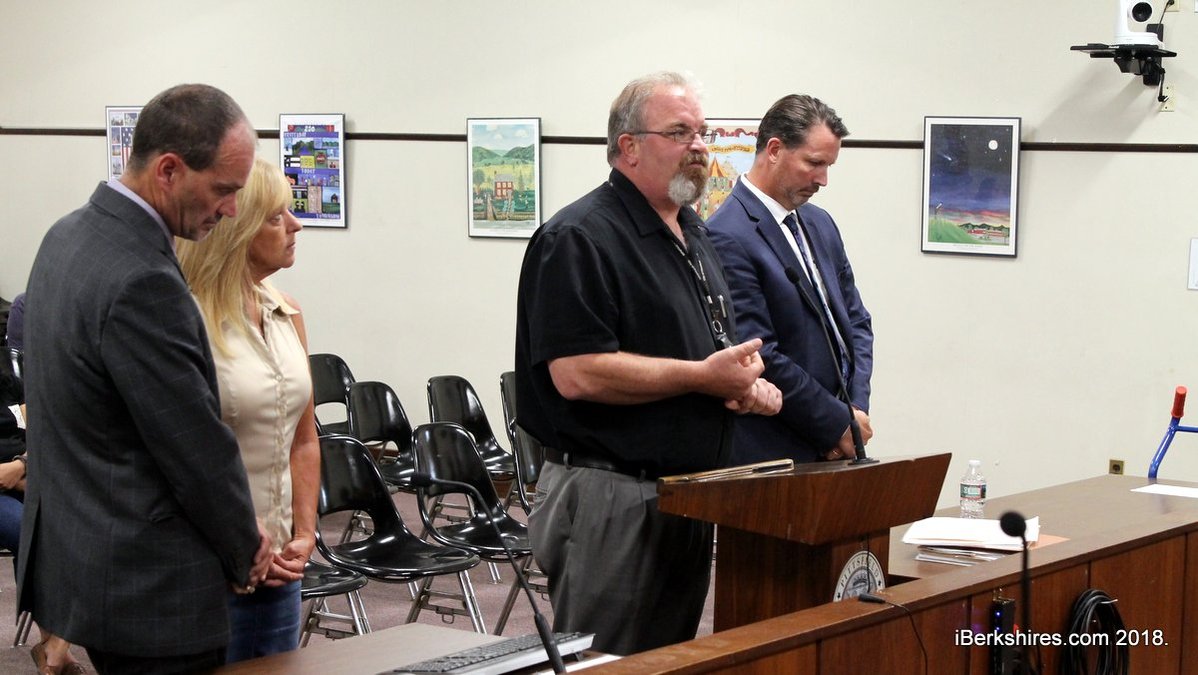
Rusty Anchor Challenging Pittsfield Building Inspectors' Ruling
PITTSFIELD, Mass. — The Rusty Anchor is appealing to the state after local building inspectors have characterized its second floor as a nightclub.
Owners Scott Graves and Paula Messana had just finished renovating the second-floor space at the private marina and are hoping to use it for such events as baby showers or anniversary get-together.
But the city's Building Department says it needs to make significantly more investments in the fire safety system because by definition the use of that space is for a "nightclub."
The Rusty Anchor is now appealing to the state, saying that classification is "unfair."
"He doesn't want to be a nightclub. He never applied to be a nightclub," attorney Darren Lee said, later adding, "It is new construction and we've been tagged with this unfair label."
Building Inspector Albert Leu, however, said the state revamped its definition of what qualifies as a nightclub in 2004 following a deadly fire in a Rhode Island nightclub.
He outlined a handful of criteria, used to determine whether or not an establishment needs to meet those increased thresholds. Those include late night hours, high occupancy, service of alcohol with minimal food options, and loud music. There are triggers such as raised platforms, the way the seating is arranged, and space for dancing as well.
Leu said according to the paperwork filed for the Rusty Anchor, more than two of those requirements were met. That means the owner will have to put in a fire protection system that shuts down all sounds and visible distractions, activates all of the house lights, and illuminates the entire path out of the building. Those building code protections were put in place to make it easier for a larger group of people to exit in case of a fire.
"I believe the description of the use of that space complies with the requirements of a nightclub," Leu said.
Building Commissioner Gerald Garner said the term "nightclub" is just that, a term. He said a number of private clubs such as Berkshire Hills and the GEAA have had to meet the same criteria to be able to hold events in those spaces. He said it isn't a subjective matter, but rather specific criteria placed in the state building and fire codes.
"We don't have the right to say you are not a nightclub, because they are," Garner said.
Garner said the city doesn't know what type of events it will hold there in the future. It is expected to have an occupancy of 100 people and liquor is expected to be served there.
Messana said the only entertainment planned there is for somebody to play music on a phone and Graves said the current entertainment license only allows for "minor amplification" and is no plans to change that into a loud spectacle.
"We don't want extremely loud music. We don't want a five-piece band," he said.
Nor do the clientele of the club. Multiple club members spoke on behalf of the Rusty Anchor saying it is a tranquil and tame place to be.
"It is a very quiet group, an older group, the noise level is very, very low," member Peter Ochs said.
Downtown business owner Steven Valenti is also a member there and said the space was constructed in a very tasteful fashion and at no point has he ever heard about plans for a nightclub. He sees the space as a perfect place for retirement parties or bridal showers, which is what Graves and Messana had designed it to be.
Council on Aging Director James Clark is also a member and he said it needs to be considered a banquet hall, rather than a nightclub.
The inspectors have reached some type of agreement with the club. The Rusty Anchor is being denied a certificate of occupancy, which it will appeal to the state. Once that appeal is granted, the city will allow for that second-floor space to be covered by its existing licensing.
That doesn't allow for more occupancy all of the time, but the club can use the space for larger crowds provided it files for a special event so inspectors know what is happening there -- Police Capt. Michael Grady said there have already been a few events held in the new space without the proper permits in place.
Once the state settles the appeal, then there will be a determination as to whether the owners need to put in the more expensive fire system or the occupancy will simply be expanded and a new certificate of occupancy will be granted.
This isn't the first time the Rusty Anchor clashed with the city. Last year, the city's Licensing Board had argued with the company over its signage. The Rusty Anchor is a private, membership-based marina on Pontoosuc Lake. But, Licensing Board members felt it was advertising too much as if it were open to the public.
At the same time, the board felt the private club was offering a one-day membership option to circumvent laws.
The board had cited an e-newsletter released by the city listing bands playing there and signage close to Route 7, specifically a sign reading open, as evidence that it was operating as more of a traditional bar than a private club.
The newsletter was done without Graves' knowledge and he said the limited music offerings are done for the club members. The company scaled back its signage to appease the board. The one-day options could only be done once a year and was a way to attract new members.
Graves said he was trying to grow his membership base. The company had revamped its membership system in order to comply with the Licensing Board's wishes.
Tags: appeals, building inspector, license board, nightclub,