Swallowtails and Purples Abound at Stoney Ledge
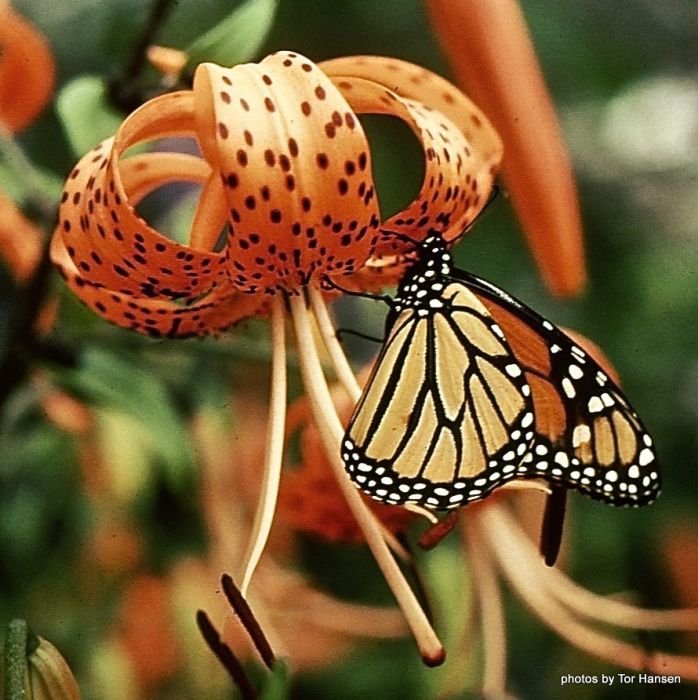
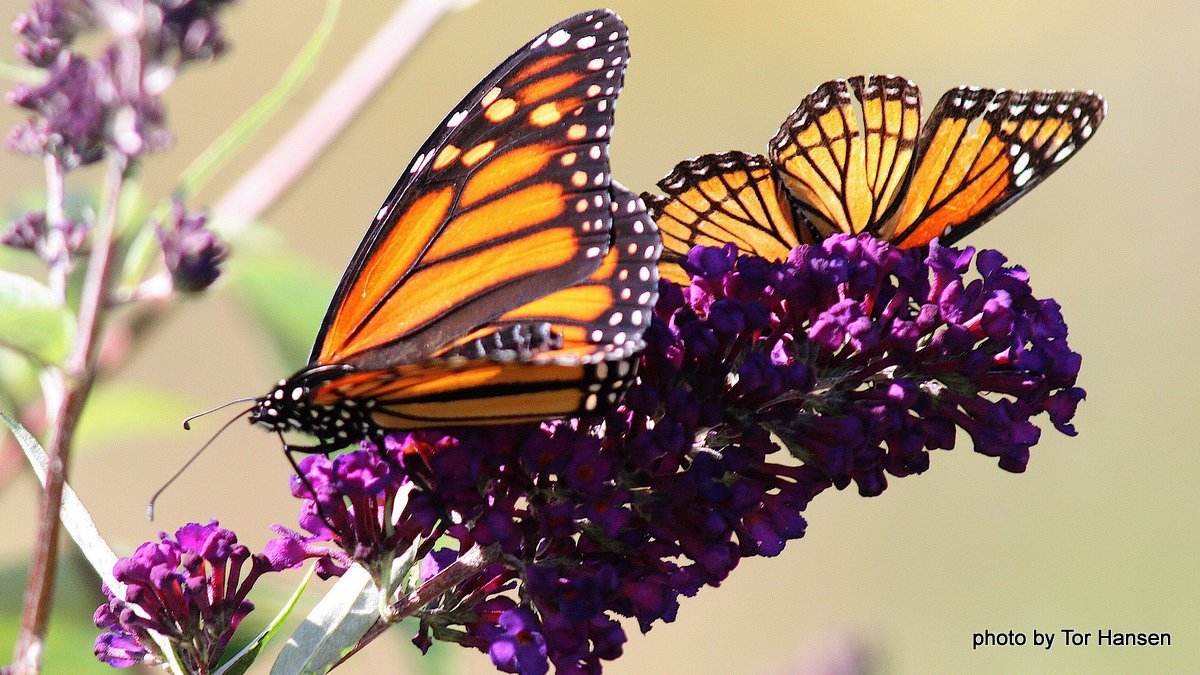
A monarch sips nectar from a lily. Its wings can brush against the flower's stamen and anthers, spreading its pollen to the next flower.
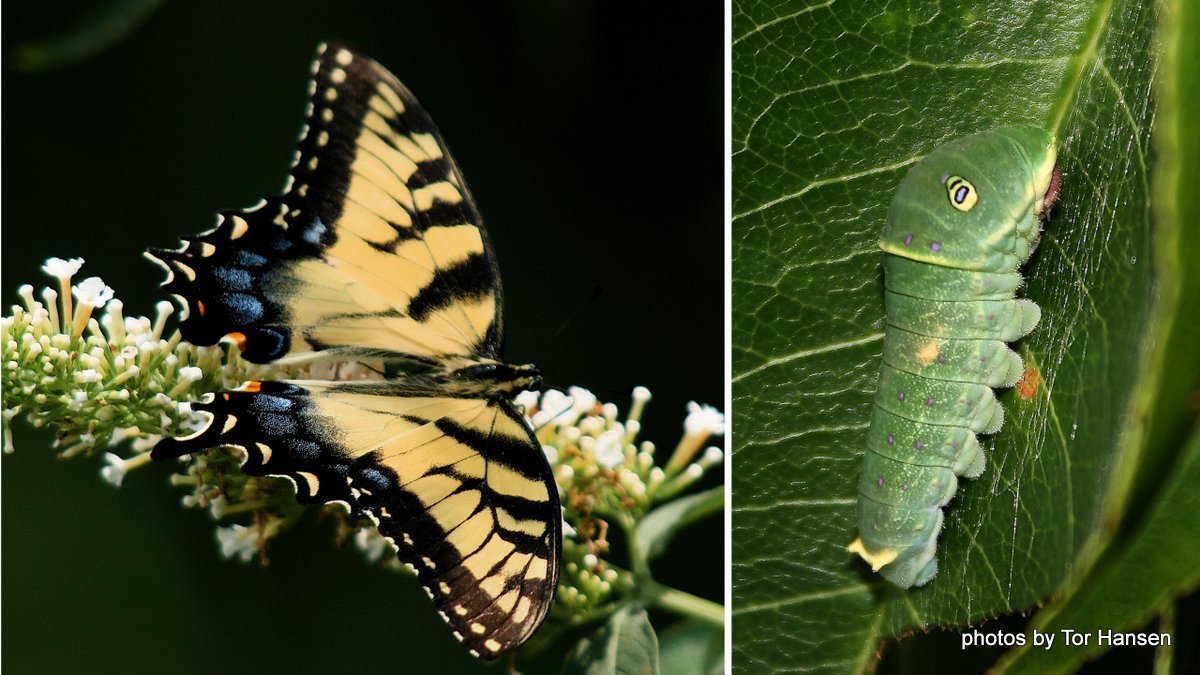
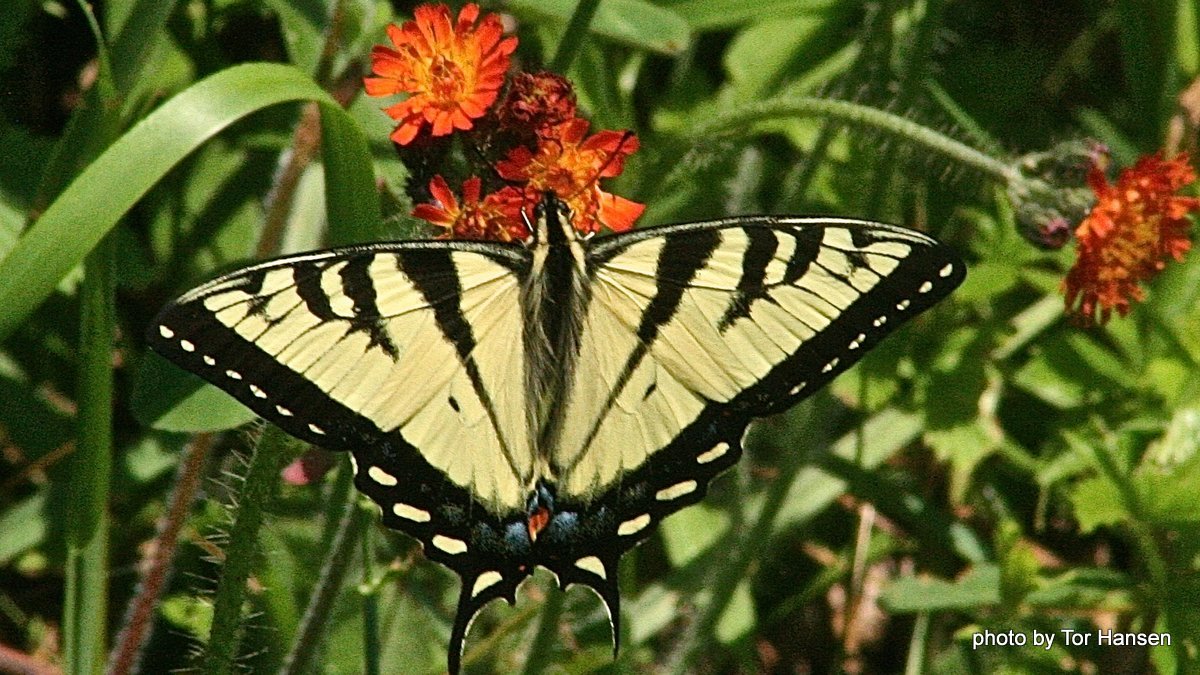
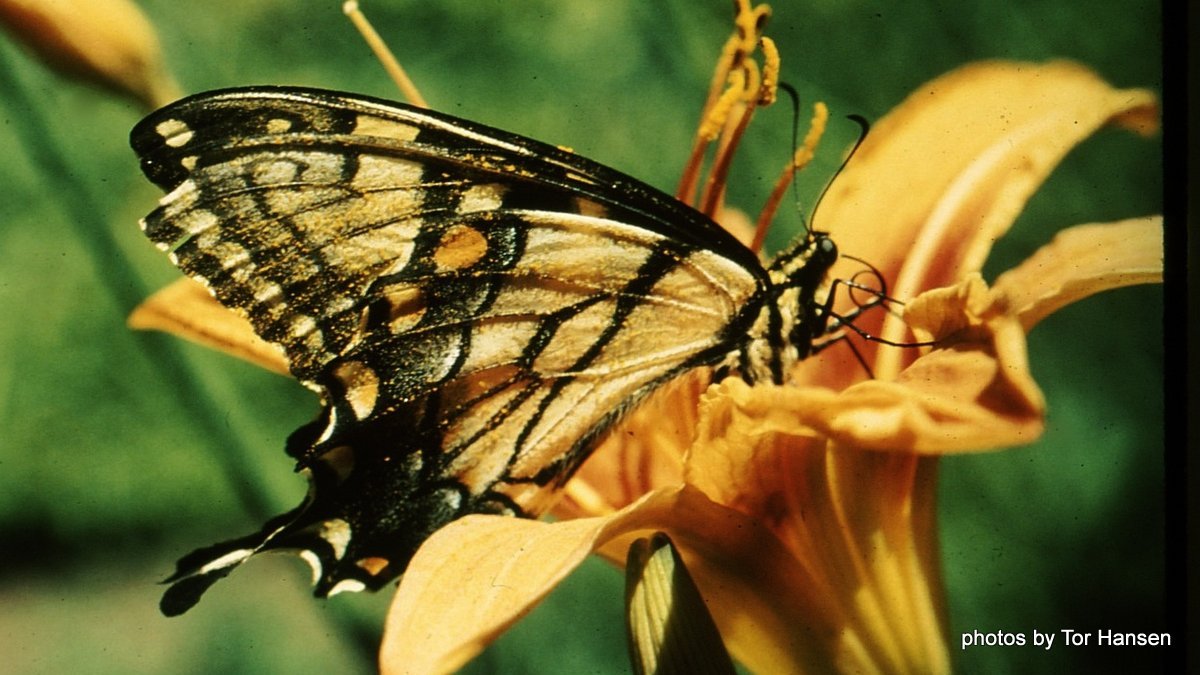
The tiger swallowtail is the sole swallowtail here in late June through mid-July, and quite numerous, leading to a surprising estimate in the thousands for the whole Greylock mountain range and neighboring valleys. Swallowtails looping and fluttering through the green woodland in this great abundance compliments my vision of Emersonian halcyon grandeur, intact in not only Emerson's day but is thriving again here today!
Learning the assorted wildflowers as I walked the shady trail would later need a field guide for positive identification. The last of purple or white Trilliums grace the foot trail, and ragged robins in their showy pink deep fringe rock in a gentle zephyr. Closeup views detect a throng of tiny bees, beetles, flies, and wasps that appear to pollinate the flowering sources of the nectar they too imbibe. As one hikes the shady trails, passing a beckoning campground and hiking about one mile approaching Stoney Ledge, butterflies zoom out from roosting on a prominent leaf that may overreach the trail.
I am tempted to exchange the formerly excepted word "flutterflies" into our vernacular, since "flutterflies" does describe the way flutterflies fly, replacing or interchanging at leisure the bold genre in "butterflies," since butterflies do flutter about, to find nectar, or to look for a potential mate.
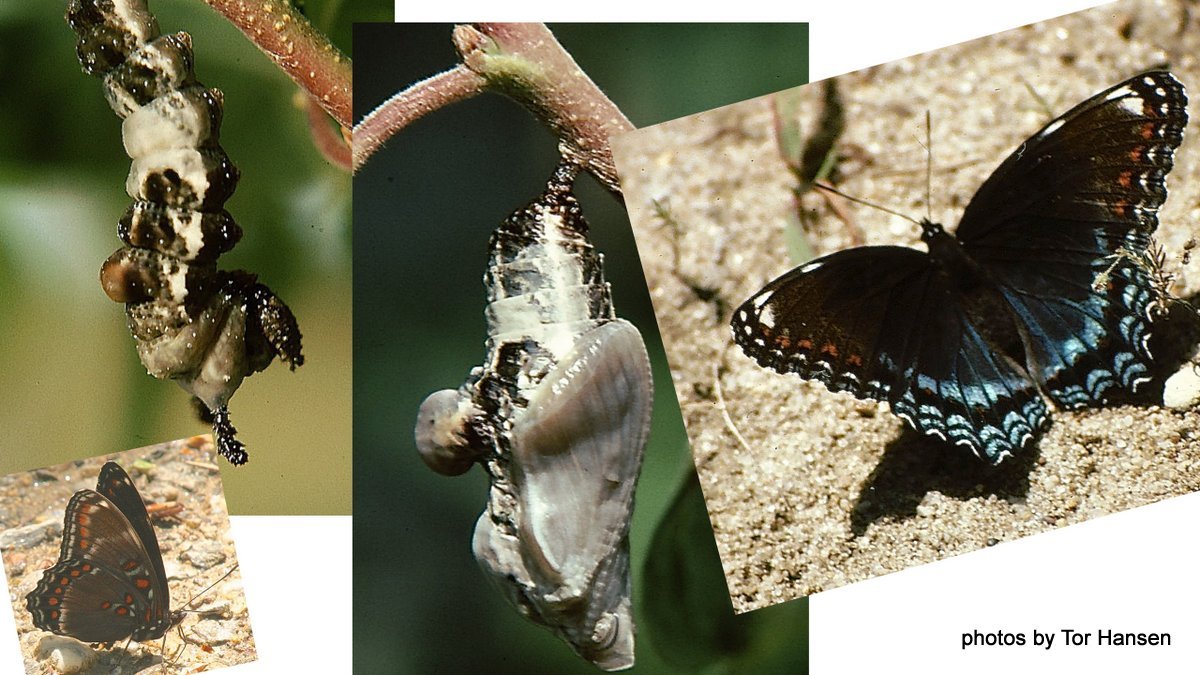
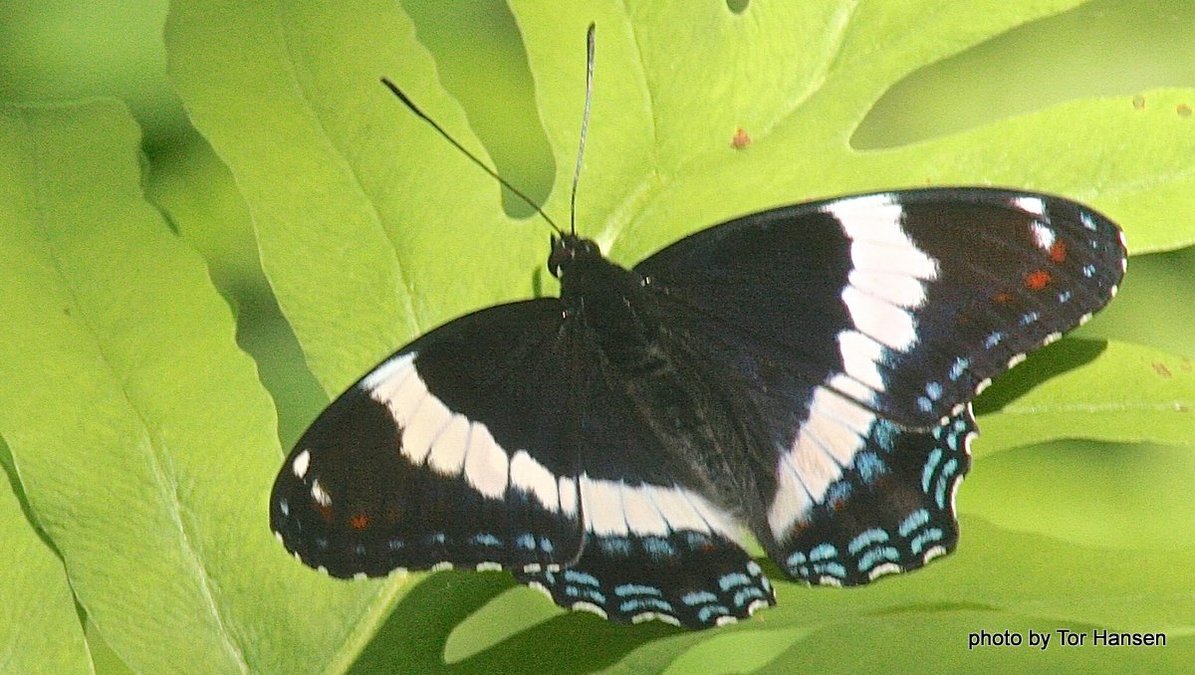
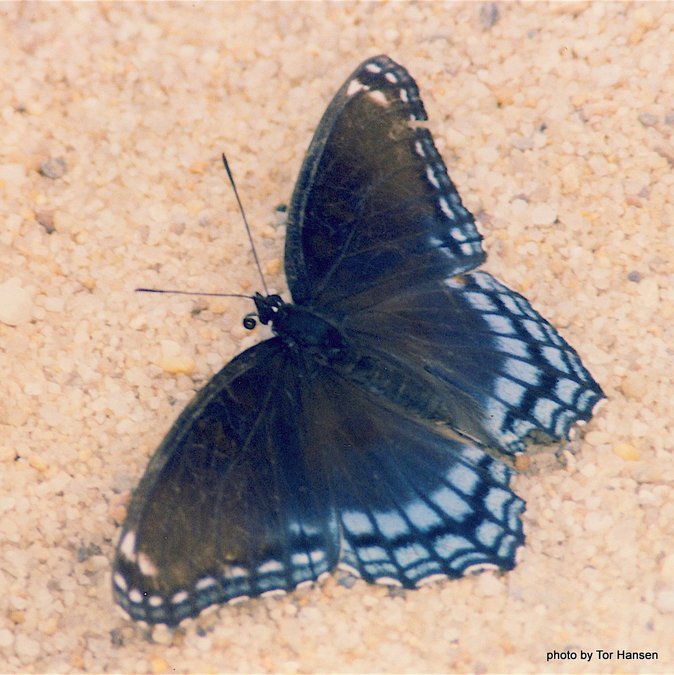
This "hill topping" red-spotted purple will roost still on a leaf until another flutterfly flutters out to meet and perchance join in a joint spiral rising upwards to 40 feet in the azure sky; then they separate and float down leisurely to earth, as if in their determination to secure a mate, they describe the spiraling double helix in chromosomes themselves!
At trail's end a stupendous view opens to what remains of the original uncut old growth. A deep valley separates Stoney Ledge, a rocky outcrop with an abrupt rugged drop off from a steep slope across the valley, too inaccessible to loggers since pioneer days. This primary forest sports tall conifers like spruce and hemlock, and assorted deciduous hardwoods like ash, maples and beeches. Adjacent to the ledge is an assembly of birch trees, with exceptional configuration, likely a little stunted by exposure to winter's persistent windy cold. And yet a fullness pervades their wide outstretched multi-limbs. A touch of what we can call a micro-mountain biom, applies to temperate deciduous woodland in a certain ecosystem. Yes here is habitat for luna moths as well. The word sylvan translates as woodland edges, where meadow merges with woodlands. Sylvan fringe gives rise to small open meadows, adorned in wildflowers, offering nectar from hawkweeds and clover to swallowtails and speedster great spangled fritillary.
Two similar subspecies appear. They belong to the large family: Nymphalidae. Given to imbibing ground moisture and "puddling" for invested minerals, where standing water indicates a recent rain, flutterflies are drawn to the muddy puddles, where thirsty denizens alight on a moist soil and with the outstretched proboscis to probe the surface crust for salts imbedded in mineral-rich water. Perhaps this practice of puddling, in terms of evolutionary time, supersedes the imbibing of nectar found in flowering plants — the angiosperms. A few flutterflies are found in the fossil record that predates the rise of flowering plants.
Recalling the works of author Loren Eiseley, in his book "The Immense Journey," he touches on this very concept, that animals including arthropods, jointed legged invertebrates, the largest phyla, and here including flutterflies evolve up through geological time, undergoing extensive species radiation and diversifying in the Paleocene epoch, say 65 million years ago, coinciding with the rise of flowering plants.
In conjunction with a co-evolution, or mutual interdependency of butterfly and wildflower, they engineer a symbiosis and survive in mutual adaptation as in insects and hummingbirds drawn to wildflowers. In exchange for nectar deep in the flower, a swallowtail may brush up against pollen-bearing structures (stamen & anther) that can bring about fertilization of the ovum deep in the flower, when brushing against the stigma, another female part of a flower. There is a miraculous spurt of growth to fertilization down female style to reach the ovary, indeed another wonder within the floral kingdom.
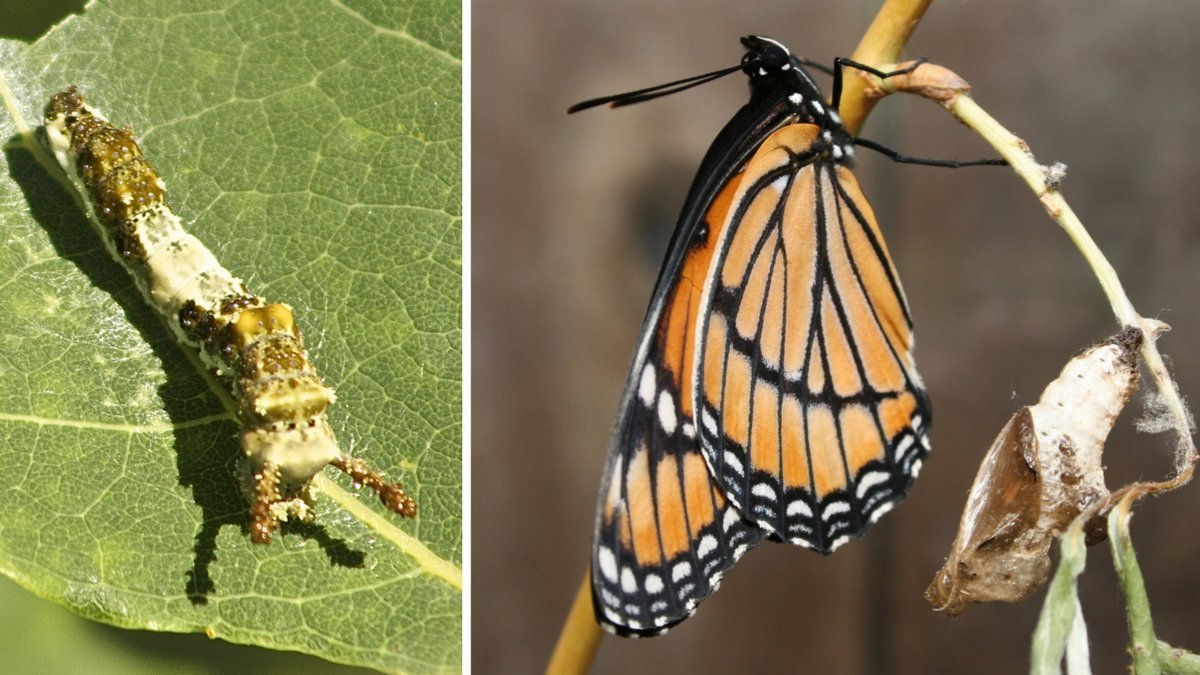
These subspecies are red-spotted purple (Limenitis arthemis Astyanax) and the banded purple (Limenitis arthems arthemis), also known as white admiral. Both are in the genus Limenitis and so is its sister species the viceroy (Limenitis archippus), strikingly different in wing scale coloration, but is actually very similar to our monarch, that is in a separate family Danaiidae as well as genus (Danaus plexippus). For a clear understanding of how these species are truly related, taxonomists compare Limenitis caterpillars of all three that are boldly similar and almost indistinguishable!
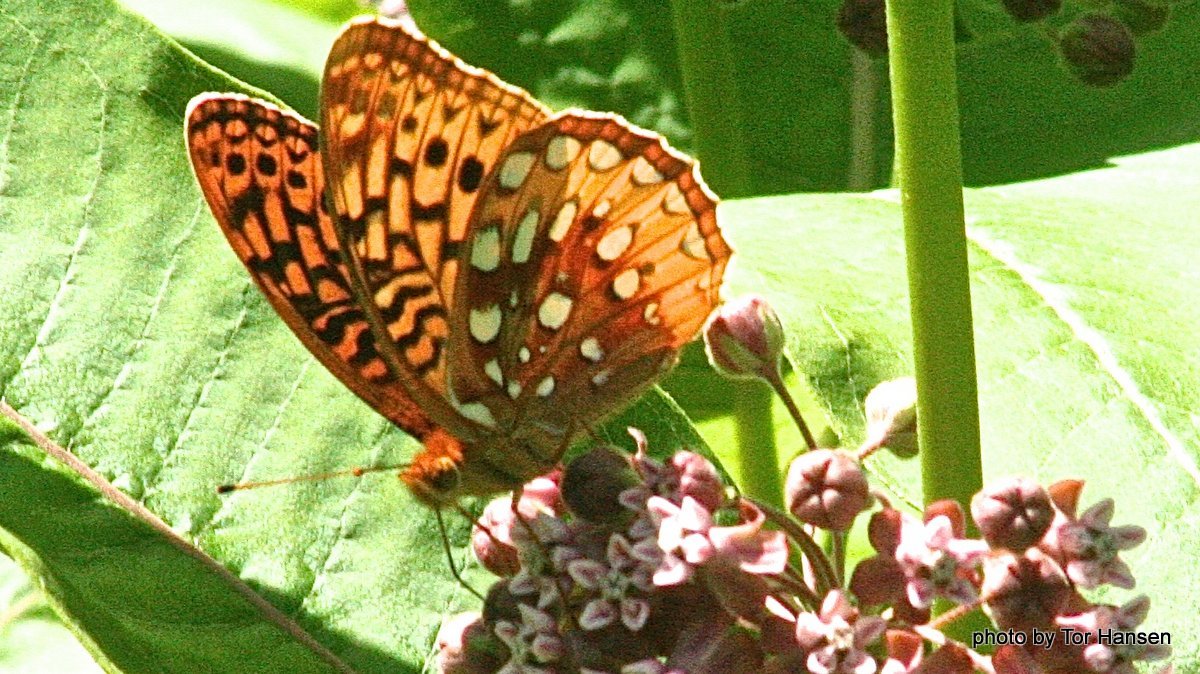
Surrounding the Stoney Ledge itself and the sudden defile are open weedy meadows sporting orange and yellow hawkweeds where swallowtails will alight to imbibe sugary nectar, arduously working the thin tubular proboscis to obtain scanty amounts of fructose and energy providing glucose within the blossom. Erratic in flight and zooming about is a fourth major species — the great spangled fritillary (Speyeria cybele), a fast streak of deep brownish orange
with black spangles.
Like all fritillaries, their larvae require violets that here are plentiful along sylvan edges. They all risk everything to obtain fast energy, and some show torn wings likely signs of attack from birds, regardless of their warning colors of yellow-orange and black.
They search a long time in flight before alighting at a nectar source, making a photographers quest all the more enduring. So much of the photographer's fun is to follow their movements, finding a roosting fritillary, often imbibing at a flower, and holding still until another potential mate flies by. Be fast to close the shutter to get two butterflies in one picture. Different species do engage in momentary sweeping aerial acrobatics, but soon separate governed by their own species behavioral chemistry.
Getting to know their patterns of mate selection and breeding biology helps for personal awareness and expands our role as stewards for protecting and procuring their sylvan realms.
Tor Hansen, a naturalist writer, photographer, and musician, is a recent addition to the North County community.
Tags: butterflies, wildlife,