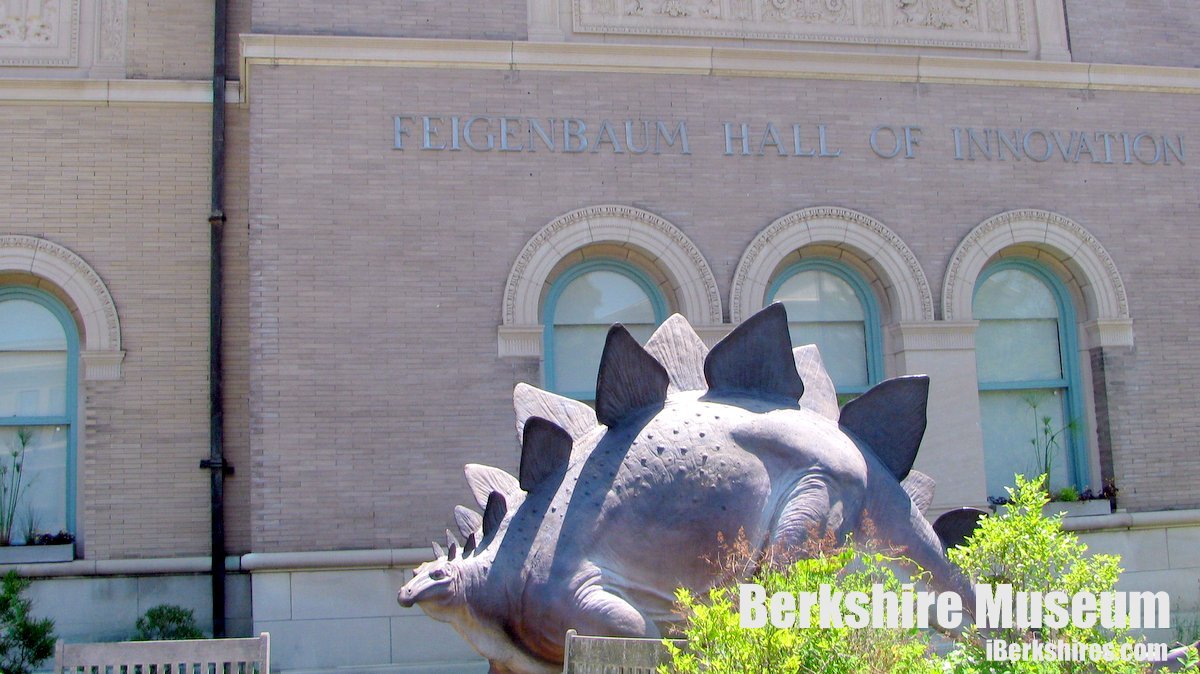
Berkshire Museum Trustees Vote to End Art Sales, Begin Building Repairs
PITTSFIELD, Mass. — Berkshire Museum officials have voted to suspend further sales of the museum's art collection and to begin repairs on the century-old building.
A total of 22 works were sold in two tranchments, raising $53.25 million through public bidding and private sales.
"We are moving forward having secured the future of this museum for generations to come," said Elizabeth McGraw, president of the Berkshire Museum Board of Trustees. "Our work ahead is focused on making this museum ever more interesting, inspiring and engaging to the broad community in the region it serves and consistent with our unchanged mission."
The trustees took the controversial step last year of de-accessioning some of its pieces to fund a "new vision" that would include a refocusing its mission to be more educationally interactive and interpretive as well as to renovate the tired physical structure and establish an endowment to wipe out a $1.1 million deficit. The nearly $60 million venture would be supported largely by the auctioning of works expected to bring in at least $50 million.
The decision split the community and was widely condemned by other museum directors, including the Association of Art Museum Directors and the American Alliance of Museums. The family of Norman Rockwell, and the Norman Rockwell Museum in Stockbridge, opposed the sale of two works by the iconic artist that he had donated to the museum.
Berkshire Museum officials insisted that the only way to ensure the future and financial sustainability of the art and natural history museum was to sell a small portion of its 40,000 piece collection.
An attempt to halt the sale through the courts resulted in an agreement with the Attorney General's office and approved by the Supreme Judicial Court, to sell up to 40 works in groups for a maximum of $55 million.
Rockwell's "Shuffleton's Barbershop" was sold to George Lucas as a cornerstone for his planned Lucas Museum of Narrative Art in Los Angeles; it was purchased with the caveat it be publicly available and is spending up to a two years at the Rockwell Museum and then hosted at several others around the nation until the Los Angeles museum is ready to receive it.
A second Rockwell, "Blacksmith's Boy, Heel and Toe," brought in the most at auction with a sale of $8.1 million at Sotheby's in May. Out of the 13 works auctioned in May, many underperformed and two failed to find immediate buyers. "Valley of Santa Isabel" by Fredric Edwin Church was acquired by the Pennsylvania Academy of the Fine Arts for an undisclosed amount after failing to find a buyer at auction. Nine other works were set to be sold privately.
During this tempestuous year, the director who led the new vision announced his retirement, new hires were made and five new trustees were elected to the board.
With the trustees' vote on Monday, work will move forward on repairs to the museum building. Capital improvements are expected to begin in spring 2019, including waterproofing and improvements to sewer lines and the loading dock. There are no structural changes planned to the Crane Room. Additional plans for improved and enhanced exhibition and programming spaces, including an expanded and upgraded aquarium, are still in planning stages.
"Our goal is to transform a more than 100-year-old building in need of repairs and upgrades to function as a 21st-century museum," said McGraw. "The museum will continue to include art, science, and history. Objects from our collection will be presented in a new way that allows these three areas to combine in exhibits that provide new interpretations and relevance to historical objects."
Officials say the interpretive approach is already being used in the museum's current programming and exhibits, including the recent exhibit of Josh Simpson's glass work of galaxies, a coming exhibition of 40 full-size working models of the best of Leonardo da Vinci's machines, as well as exhibitions featuring local oral histories, women's suffrage, and the museum's musical instrument and shoe collections. More than 40 schools have signed up for the free class visits being made available to all schools.
Tags: auction, Berkshire Museum,