North Adams Considers Adopting State Law to Reduce Speed Limits
"My hope is that in adopting this ordinance update, we can begin to curb the unsafe traffic activity in our downtown corridors. A decrease in speed limits, along with improved enforcement can help to make our city safer, and increasingly pedestrian friendly," wrote City Councilor Benjamin Lamb in his communique recommending the ordinance to the council.
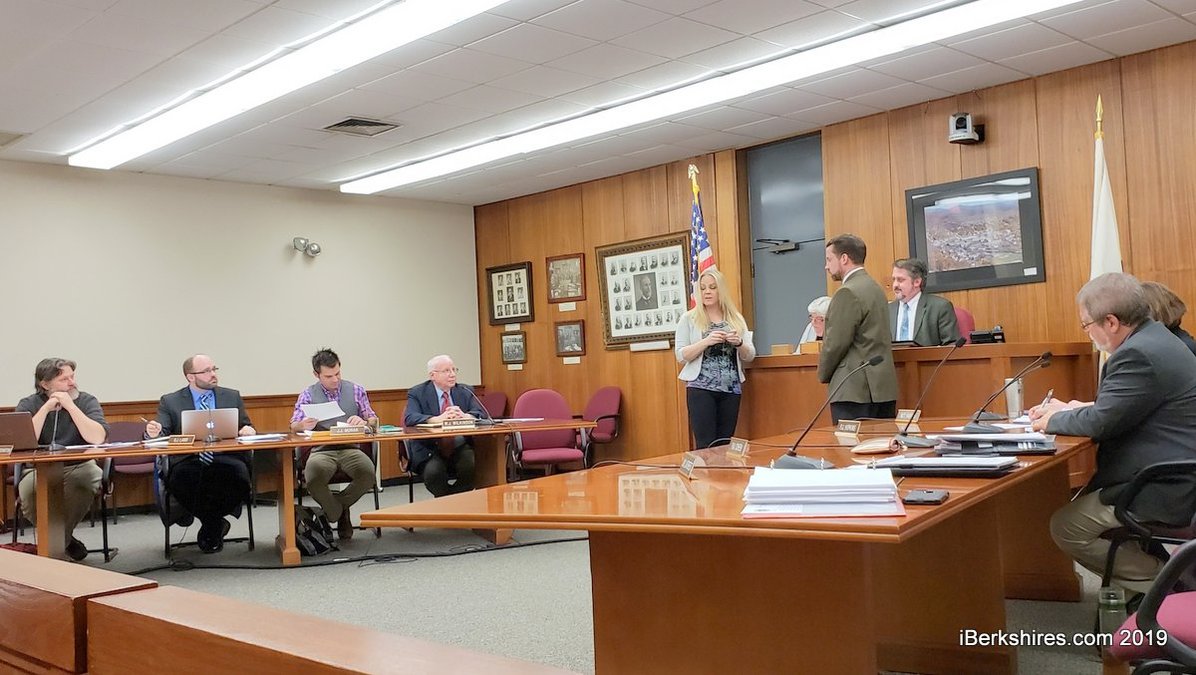
At Tuesday's City Council meeting, Lamb said there were a lot of layers to go through with the state to reduce any speed limits. Adopting the state law would cut through those layers.
"What this essentially does is, it's not saying by adopting this we're automatically changing all the speed limits, what it's saying is, it gives us the latitude to make those adjustments in a very strategic process," he said.
The law, MGL Title XIV, Ch. 90, Sec. 17C. and Sec. l8B, offers two scenarios:
• The first would allow the determining authority to set a speed limit of 25 mph "inside a thickly settled or business district in the city or town on any way that is not a state highway" as a matter of public safety.
• The second would allow the determining authority to establish safety zones "having a speed limit of 20 miles per hour," including on a state highway with the approval of the state Department of Transportation.
Mass in Motion coordinator Amanda Chilson, who is also a member of the Traffic Commission and involved with the city's Safe Routes to School Program, said the commission has been fielding speeding complaints.
"We definitely have a lot of concerns that we see come forward around speeding, whether it be on their own street, or they heard about or other streets their business might be on," she said. "I think this will also help ... provide some answers and some demonstration that we'll be able to do something to help with that speed."
Several councilors thought the idea a good one but were concerned about the enforcement factor, particularly if there were already speeding complaints.
"We can post what we want, we can have laws set, but if they're not being pulled over, if they're not being held accountable for speeding ... ." said Councilor Rebbecca Cohen, continuing that the Police Department's capability to improve its enforcement should be part of the conversation.
President Keith Bona questioned if the ordinance should be shelved until a new police chief was hired, saying a new law enforcement leader could lead to revisiting the measure. That idea was rebuffed by councilors.
"I agree we should have the input ... but I don't think we should hold up the process for it because it is the job of the Police Department to enforce the speed limit not to set the speed limit," said Councilor Eric Buddington.
The Public Safety Committee's new Chairman Jason LaForest agreed, adding that the department had "qualified officers" who could provide insight on traffic enforcement.
"I think the new police chief is going to have more important things to focus on than whether the speed limit on Main Street and the downtown area is 20 mph or 25-30," he said.
There is some concern from the administration on reducing speed limits in regard to zoning changes being proposed, said both Lamb and Bona. There also were questions about the definition of "thickly settled" and the length of a street. Chilson said she was speaking with MassDOT on some of these issues.
Currently, 30 mph is the default speed on any street that does not have a speed limit sign; if there is no sign, a speed study would not have to be done in order to reduce the speed. Should the speed limit be changed, a sign would likely be posted to ensure that drivers know what the new limit is.
A lot of the conversation began to get into details but Lamb cautioned that the proposal wasn't to change all the speed limits but rather to adopt a measure that would allow speed limits to be reduced.
"We're talking about an ordinance that gives us the latitude to change," he said. "We're not talking about an ordinance that automatically changes speed limits everywhere."
The proposed ordinance was referred to the Public Safety Committee with a return date of the second meeting in March.
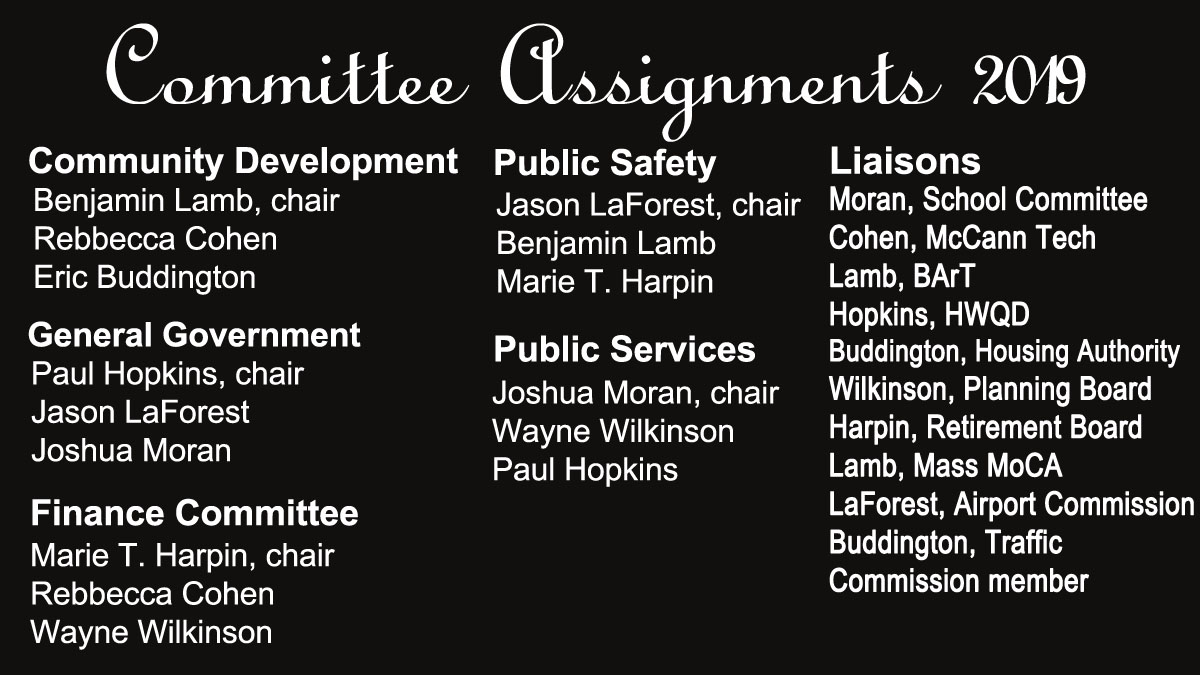
In other business, the City Council reorganized at its first meeting of the year. Bona was re-elected as president and Lamb as vice president. Bona also provided new rules of order to be voted at the next meeting and made the new committee and liaison assignments.
• Cohen and LaForest pulled the names and seat numbers for the new year that will mix up the councilors a little more. Last January's seat pull ended up putting all the new councilors on one side and the veteran councilors on the other. The councilors will take their new seats at the next meeting.
• The council set the bond levels for the city treasurer/tax collector for $250,000; the assistant city treasurer/tax collector at $62,500; and the city clerk at $15,000.
• A report by the Community Development Committee on a food "desert" in the West End was accepted and Cohen said conversations on the issue will continue; a proposed ordinance change to the Public Arts Commission was also continued with a meeting of the General Government Committee set for Tuesday, Jan. 15.
Tags: appointments, speed limits, speeding,