Governor's Proposed Budget Is Good News For Pittsfield Schools
PITTSFIELD, Mass. — The governor's proposed budget for fiscal 2020 brings good news to the Pittsfield Public Schools.
Gov. Charlie Baker released his proposed budget on Wednesday along with the "cherry sheets" that list the local and school aid for municipalities. As proposed, the city would see a $3.7 million increase in Chapter 70 aid for schools. That would make two consecutive years in which the district saw a significant boost in funding.
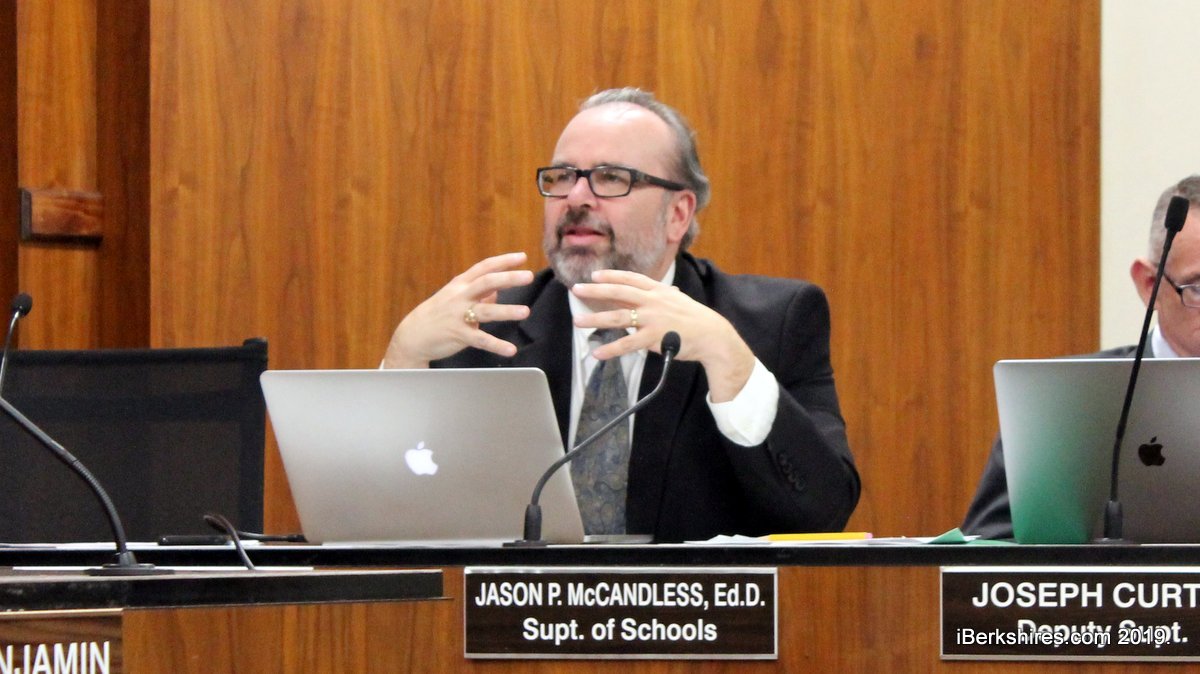
"This is a substantive increase in Chapter 70 money for the city of Pittsfield," Superintendent Jason McCandless said.
The superintendent is still waiting on the details as to how the number was settled on but Deputy Superintendent Kristen Behnke said it appears the proposed budget has significant increases in funding for the economically disadvantaged students, English Language Learners, and special education reimbursements.
The city has a particularly large number of students in the economically disadvantaged category and that been bolstered in the state budget significantly, and along increasing the funding for Pittsfield more than a half-million dollars.
Just a few years ago the school was in the routine of seeing overhead costs rising faster than revenue to fund the schools. That led to cutbacks year after year and eventually, the city hit a wall and close to 70 staff members were laid off in the school system.
But the tide changed a bit last year. Last year the district saw a $1.1 million increase in state aid and used most of that to establish a therapeutic program and bring back a preschool program that had previously been cut.
"We were waiting to see if this was a one-time blip on the radar or something that could potentially be part of a pattern," McCandless said.
The reasons behind the large increase appear to be in line with the Foundation Budget Review Commission's recommendation. That group had made lengthy recommendations to completely revamp the formula for how school aid is calculated. The state Legislature had worked on a bill to implement many of those recommendations last term but was unable to pass a final bill.
However, the Legislature has made it a priority to work on a revamping the Chapter 70 formula and the governor has apparently begun working that way on his own.
"It certainly feels like there is some effort being made to get closer to the foundation review," McCandless said.
And typically, the governor's budget funds Chapter 70 at a lower level than what the Legislature ultimately approves in the budget.
"Traditionally the governor's budget is the starting point that the Legislature attempts to build upon," McCandless said.
McCandless said he expects the local lawmakers to support the increased funding. The numbers and process are far from over. The state House of Representatives gets the first crack at crafting a budget. The state Senate does its own work. And finally, the two bodies develop a final budget for adoption. Those final numbers aren't often known until even after the city adopts a spending plan.
Internally, the crafting of a budget will ramp up significantly in February with the meeting with the principals. McCandless said right now some of the priorities will be on supporting at-risk populations, special education, the effort to roll out a new code of conduct, to implement three new vocation programs at the new Taconic High School, and to support the district improvement plan. But exactly how that takes shape is yet to be determined.
"The early indication is this looks like good news. It is certainly better than seeing a reduction or an increase that is as good as a standstill," McCandless said.
Tags: chapter 70, cherry sheets, fiscal 2020,