Pittsfield Council Subcommittee in Favor of Tighter Solar Ordinance
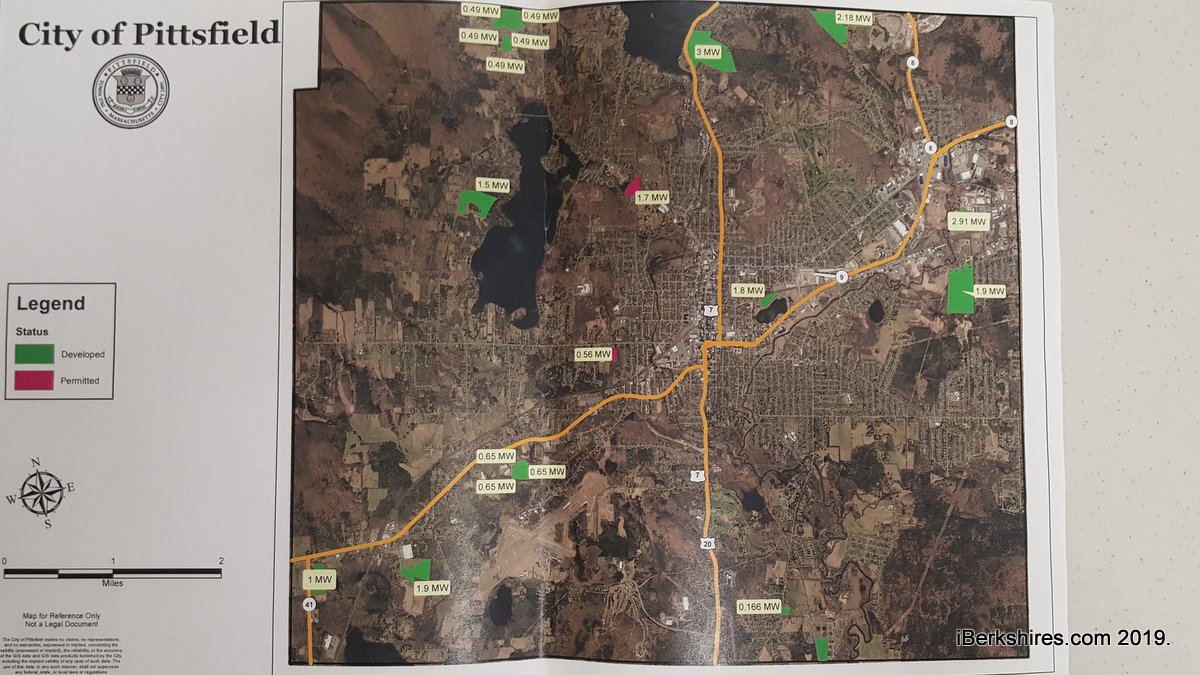
The Department of Community Development provided a map of permitted solar arrays, showing the majority of them have gone into residential neighborhoods.
The Zoning Board of Appeals has handled a number of requests over the years for such solar arrays. Of 14 solar facilities that were permitted in the city, all but three are in residentially-zoned areas.
Under the current ordinances and state regulations, the Zoning Board of Appeals had a fairly high threshold to deny such a project and felt it had few options to condition a project so that it wouldn't adversely impact a neighborhood.
After yet another heated debate between residents and the developers of a proposed solar array at the Pontoosuc Lake Country Club, the ZBA opted to rewrite the current law with the intent to ease conflicts between residents and commercial solar developers.
"We've found the current zoning ordinance wasn't able to prevent those even with the best conditions," said Permitting Coordinator Nate Joyner, later adding that many of the current solar arrays in existence wouldn't have been approved.
The Pontoosuc Lake Country Club proposal was not the only project to face opposition by any means. Other solar arrays in residential areas fought by neighborhoods include on the former Ponterril property, on Peck's Road, on Gamwell, on East Street, and on Churchill. The neighbors consistently brought up the changing of the neighborhoods, aesthetics, wildlife, tree cutting, and responsibility around decommissioning and maintenance.
City Councilor John Krol said residential properties had become "low-hanging fruit" for solar developers. He said the permitting made it easy and residents could sell a property to a solar developer instead of a housing developer.
"If we had done this earlier, there would be far less in residential areas and we could have compacted it more in our commercial areas," Krol said.
Director of Community Development Deanna Ruffer added that the city of Pittsfield has more megawatts of solar per resident in the state and nearly all of that is coming from residential areas.
"The objective is to ensure future solar arrays are appropriately sited in the community," Ruffer said.
The Pontoosuc solar array never got its full shot at being permitted before the Zoning Board of Appeals. The Conservation Commission denied an access road because it infringed on wetlands and the developers didn't see a better plan to get in and out for construction and ultimately withdrew the application.
While the neighbors had opposed it, the Pontoosuc Lake property could have easily become a solar field against their wishes like many others had.
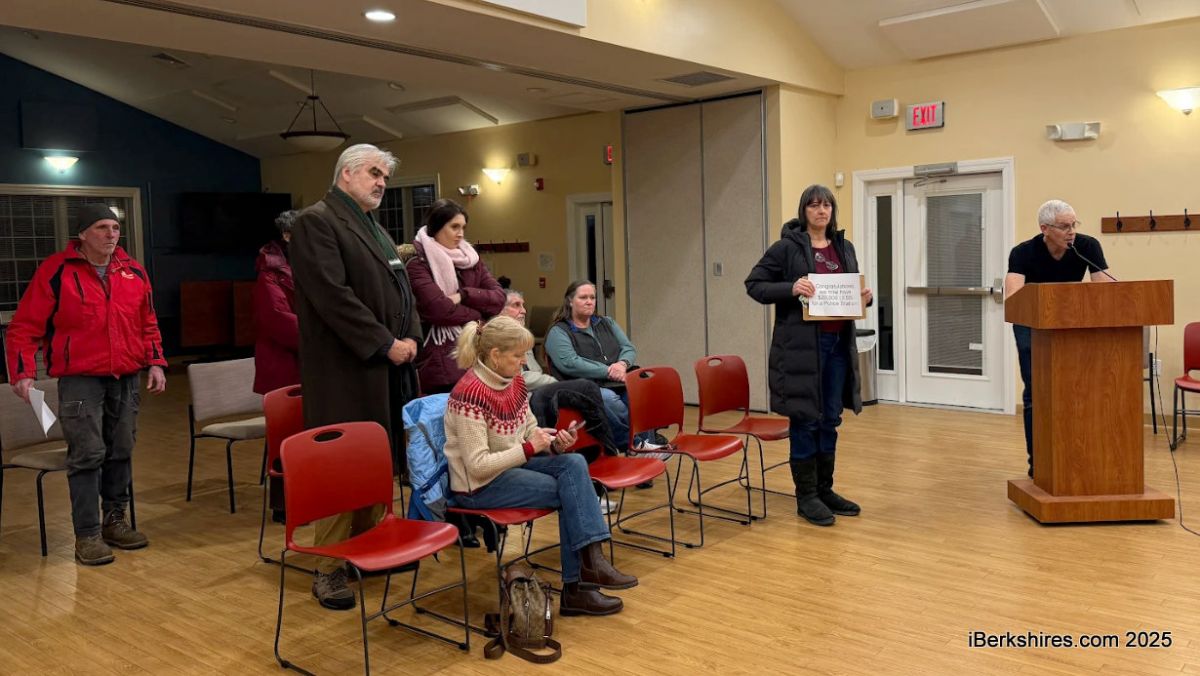
Michele Rivers-Murphy and Tom Murphy had been at the forefront of that fight. They said the opposition was never about being anti-solar but rather the cost to the neighborhood. The project would have including the cutting down of a significant number of trees and would have impacted the tight, thickly settled residential area.
"When you look at solar fields to the extent that was proposed, 25 plus acres of panels, 45 acres in total, 6.5 megawatts, by far the largest in the city at that time proposed in a residential neighborhood. This was never a solar debate because most everyone that you speak to supports renewable energy but at the cost of what?" Tom Murphy said.
The neighbors had fought that proposal in numbers and Michele Rivers-Murphy said it wasn't just a win for them, but for the entire city. That's why she and her husband are in favor of the revamped laws so others don't end up in the same situation they were.
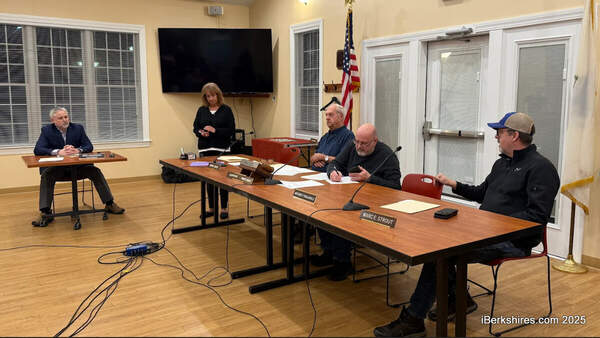
Joyner walked the subcommittee through an ordinance that divides solar arrays into three sizes. The small, accessory ground-mounted solar arrays used for a home would still be allowed in residential areas and roof-mounted arrays remain approved. However, medium and commercial sizes would not be.
"This ordinance provides specific provisions that were lacking in operation and maintenance, abandoning and decommissioning, and financial aspects," Joyner said.
More detail about the specific provisions in the new ordinance can be found here, but overall, Joyner said the "thrust of it is to prevent large-scale, ground-mounted solar from residential" areas. The intent is to guide solar developers toward using commercial land for those large arrays.
Resident Lewis Schiller said it goes against the state's push for more renewable energy. The retired architect has twice taken concerns with the ordinance to city boards looking at it, saying it is too extreme and will significantly impact the amount of renewable energy developed in the city.
"I think this is counter to public policy," Schiller said, adding that there are ways to still allow such solar projects in residential areas without causing negative effects to the neighbors.
Schiller took issues with a number of the specific provisions, the sizes of each classification, and the definitions. At the same time, he contrasted the allowable uses at the Pontoosuc Lake Country Club by saying hundreds of single-family homes, mobile home parks, jails, day-care centers, a pig farm or shooting range would all be allowed there under current regulations. He feels the proposed laws around solar are significantly more stringent than other types of property use in the city.
Councilor Melissa Mazzeo shared Schiller's concern about the restrictiveness. She said if a large residential landowner wanted to put an array in a spot nobody else would see, then the landowner should have that opportunity. Ruffer responded that the arrays outlawed in residential lands are ones that are considered commercial operations because of their size.
"Putting in a large solar array is like building a business in the middle of the property," Ruffer said.
Councilor Donna Todd Rivers wishes these laws had been passed sooner. The Gamwell Avenue residents, in her ward, are currently in opposition to a project. But that project has already started the process and the filing included a provision that essentially freezes the current zoning. That project won't be covered by the new law when it seeks a special permit.
"These are residential areas. They are not our industrial lots," Rivers said.
Tags: commercial zoning, ordinance & rules , solar array,