Workforce Board Initiative Looks To Connect Jobs With Job Seekers
PITTSFIELD, Mass. — The most recent data shows that there are 1,143 jobs available in Berkshire County ranging from sales to health care to engineering to maintenance.
And yet, there are thousands of people unemployed. Shortly after state Sen. Adam Hinds was elected he asked MassHire Berkshire Workforce Board Executive Director Health Boulger what would be the magic wand to matching up jobs to the unemployed.
"There are a lot of great agencies that are doing a lot of great work but we need somebody or a team of people to focus solely on identifying what the industry needs are truly and connecting them to the job seekers," Boulger said.
Hinds took that back and secured a $75,000 budget allocation to create that team. The Workforce Board set a goal to meet with at least one local company a week to gain insight on exactly what these companies need in skills to fill vacant jobs.
"We ended up meeting with 65 companies to identify what their needs were and we trained 23 people and we helped 28 job seekers, about 70 percent of them were placed in employment opportunities," Boulger said of the first six months or so of the project.
The state's money funded the position, which Hinds had dubbed the "job czar," and it evolved into a collective effort headed by Huff Templeton, for six months. The Berkshire United Way granted the board enough funding for the project to last three years. Templeton started in November and picked up on what Pam Malumphy and Donna Todd Rivers had begun in the project's infancy.
"We were excited that this wasn't a standalone project. The senator's money was kind of the seed money to get it started and the United Way continued it. We still have another year and a half United Way resources to move forward," Boulger said.
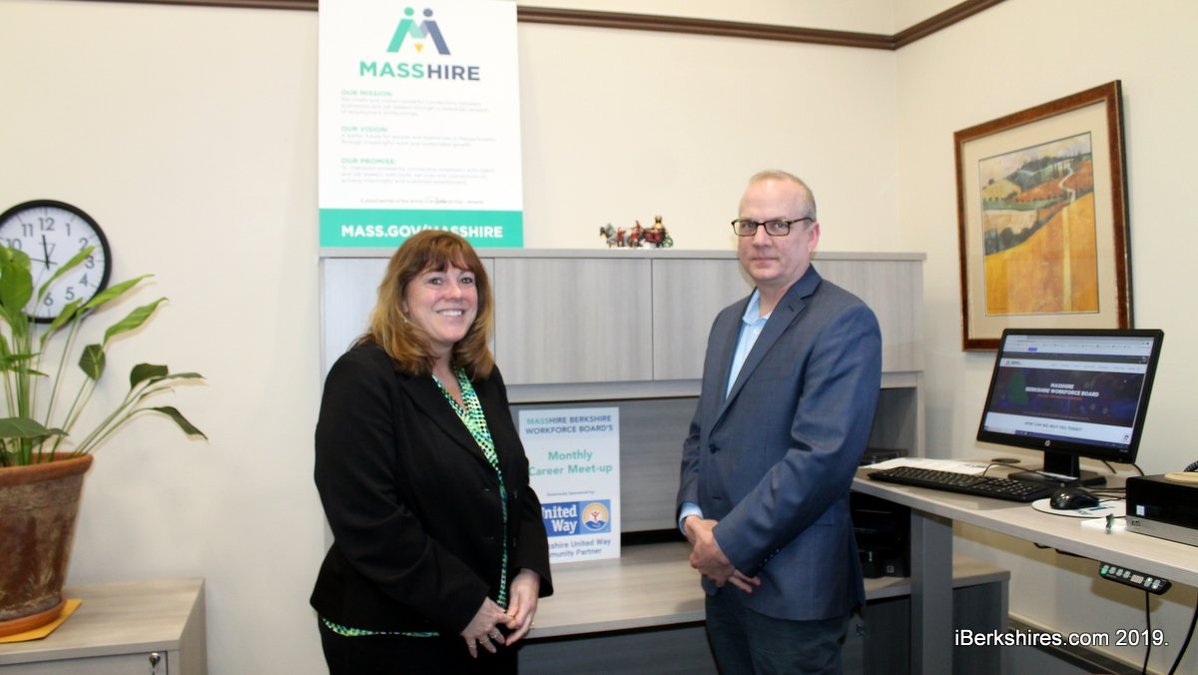
Templeton's role is to do outreach and Marybeth Mitts heads efforts to connect with the job seekers.
"One of the ways I think is important is shortening that timeframe, putting a little bit of squeeze on the time it takes for somebody to identify an opportunity, apply for the opportunity, and land the job. Sometimes it is about help marketing, so and so is looking for this type of person. The vision here is we will be able to take this information we are acquiring from employers and help job seekers connect faster," Templeton said.
Templeton said the Berkshires, like many places, has an issue with a skills gap. The companies have been struggling to find the help they need and that's led to creative efforts to recruit and retain employees.
"In order to sustain the workforce, a lot of companies have come up with creative solutions. I talked to a company a couple of weeks ago that said they just brought back the referral program, they might offer a bonus to a current employee for somebody who lasts for six months," Templeton said.
"They are getting a little more creative in how they keep their workforce level. But the company leaders are looking ahead nine months to a year and I'm sensing a little more concern out there than in the past."
He said a lot of companies are OK with sustaining a workforce but would need more in order to grow.
"It's a narrative we are seeing throughout the country, everyone is short on help. The new part that I am experiencing when I am talking to people is that these companies have opportunities on the horizon that in order for them to take advantage of they need to have a workforce in place," Templeton said.
Templeton said he's found that the job search is "a little siloed" in that job seekers are checking one or two spots and employers advertising jobs in limited ways and the two never connect. The hope is to build a stronger "ecosystem" around job seeking to make it easier.
"We find during the job meetups they really need the networking and how to go about finding a job. There is a hidden job market. Some people don't even know where to go to look for employment opportunities," Boulger said. "The majority of jobs are filled by who you know and by networking and marketing yourself to companies."
Secondly, the workforce board is in charge of all publicly funded job training programs. The information Templeton collects helps craft job training programs, giving the people the basic skills they need to take a job.
What the Workforce Board heard from manufacturers was that there was a need for CNC machinists. The board took that information and worked with McCann Technical School and Berkshire Community College to develop a program. The five-week program trained those enrolled in machining, welding, and hoisting.
At the end, the board organized a career fair and invited the manufacturers, 14 in total, to meet with the graduates. Each graduate had a chance to talk to company representatives and Bougler said 70 percent of them found jobs. Boulger said it helped that companies came to the fair knowing that those in attendance already had some understanding of the profession.
"They do the training and we have an in-house industry person that helps to place those people after they complete the training into employment opportunities," Bougler said of the partnership with the educational institutions.
A second round of manufacturing training is happening now and a program to train more certified nursing assistants and health-care professionals is being developed for the fall.
She added that Berkshire Community College is starting hospitality and health-care programs also based on the workforce data the board is gathering. Boulger said the initiative isn't so much about recreating what colleges and vocational institutions are doing but to help make sure those programs are more targeted to the needs of employers.
"We're not just interested in their first job. We are interested in putting them on a career path that will sustain them and their families," Templeton added.
Templeton said as the economy is stronger than in years past and people are more comfortable switching jobs. The group is also taking a look at those who have established careers.
The group has put together seminars and an upcoming one includes Quest Connect's Jeff Van Lingen to talk about computer and communication skills. Templeton said many who have been established jobs may have let their tech skills lapse and classes in the county are available for them to brush up and be more prepared to switch careers.
"It is a different set of skills training but it is skills training," Templeton said.
Boulger said 45 percent of the jobs available are highly technical so the effort isn't just focused on filling entry-level positions. The efforts are also aimed to help relocating spouses find jobs, a challenge the Berkshires has in attracting and retaining workers. Another focus is connecting professionals with opportunities to build careers in the Berkshires they may not know about to keep them from going elsewhere for a promotion.
"There are so many companies doing amazing things here and I don't think the average person realizes the gems we have right in our back yard," Boulger said, adding that the board is using its social media reach to highlight not only companies and jobs but the other programs and events the group is putting forth in this effort.
The board also heard a desire to bring back regular meetings among human resources professionals so it recently started hosting discussions on things such as cybersecurity and wage laws. Boulger said about 20 people come every other month and about 40 in total are involved in the Berkshire Workplace Improvement Network.
"It is about creating an ecosystem that didn't exist before and that's what this initiative has allowed us to do," Templeton said.
Tags: employment, job training, workforce development,