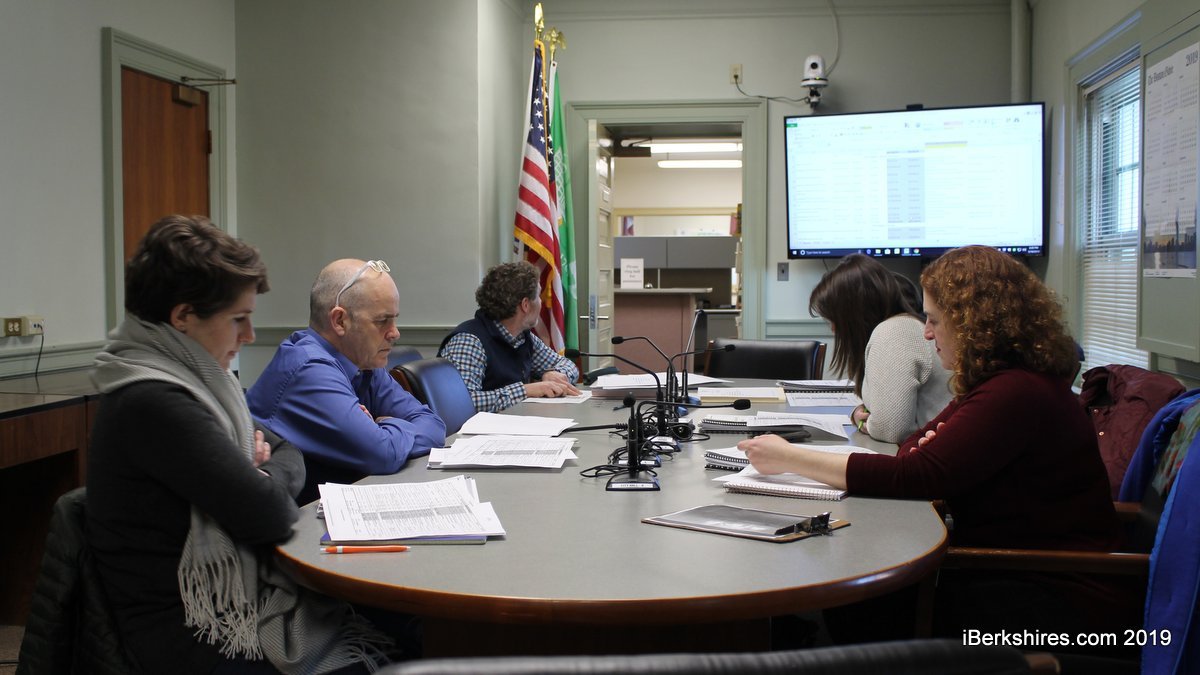
Pittsfield CPA Committees Gets $1 Million Worth of Requests
PITTSFIELD, Mass. — Nine entities are looking for more than $1 million from the Community Preservation Act to fund an array of projects.
But the city only has about $613,000 to dole out. The Community Preservation Committee will spend the next month or so decided which projects to fund and at how much.
"This year we're trying to aim to have this package to the City Council at the first meeting in May," said City Planner CJ Hoss.
Voters approved the act at by ballot vote in 2017 and held the first round of funding last year. In that cycle, funds were asked for 11 different projects for a total of $823,026. The committee ultimately recommended $320,000 be divvied up between all of them. That had been after only a partial year of collecting funds, which are generated from a 1 percent surcharge on property tax bills, with the first $100,000 of value exempt, and matched by the state.
The nine applicants this year are looking for money for 14 different projects. The city of Pittsfield is the applicant for five of those projects.
The city is looking to continue its work in developing pickleball courts at Springside Park. The CPA provided some funding to a feasibility study last year and the Parks Committee recently gave its approval to use an area of Springside Park -- though that concept isn't universally liked as the Springside Park Conservancy opposes the project.
Nonetheless, the city is looking for $52,500 from CPA funds to take the conceptual plans and turn them into construction design documents.
That location is next to the water tower in the area of the Doyle Softball Complex. The city is sponsoring a second application asking for $17,000 to reconstruct dugouts and install new lights. Both of those projects fall under the category of recreation, one of three purposes for which CPA funds can be used.
For historic preservation, another category for which the funds can be used, the city is looking to continue its multi-year restoration of the Springside House. The city is asking the CPA to fund $50,000 toward designing the interior renovations needed in the historic mansion.
The Berkshire Athenaeum is asking for $9,145 to replace the UV filtering film on its windows and upgrade the heating and ventiliation system to better protect historic material kept there. The city is also looking for $25,000 to develop restoration plans for two cemetery sections.
A number of private and non-profit entities are also seeking funds for historic preservation.
The YMCA is seeking $200,000 for facade improvements, the Berkshire County Historical Society is looking for $50,000 to replace the barn roof and siding at its Holmes Road location at Arrowhead, Berkshire Theatre Group is seeking $96,800 for a roof replacement for the Colonial Theatre, CT Management is asking for $75,000 to restore the terra cotta roof and campanile tower at the former St. Mary's Church property, the Samuel Harrington Society is looking for $100,000 to restore a workshop section of the Third Street house, St. Joseph's Church is looking to restore its iron fence, and the Zion Lutheran Church is seeking replacement of a roof at its First Street building.
In the final category, housing, Central Berkshire Habitat for Humanity is seeking a total of $140,000 for two projects. It is seeking $90,000 for the long-planned Gordon-Deming project that will create six condominium units and $50,000 toward the purchase and renovation of a home on John Street.
The CPA will hold two public hearings to hear directly from the applicants. The committee will give about 15 minutes each project. Each member will then have scoring criteria that it will use to prioritize the list. But exactly who gets funding and how much is not known.
Last year, the committee opted to limit funding to specific areas of public benefit. That lowered the Community Preservation's committee funds to certain projects, which then meant every project at least got something.
Hoss said among last year's projects, half are completed and the rest are in the process. He said only one project seems to be at risk of not being completed and if so, the money not spent will come back to the fund.
That project is one to improve drainage at Pontoosuc Lake. The Friends of Pontoosuc Lake had asked for design funds to improve wetness issues in the public area on the Hancock Road side of the lake. But Hoss said the organization ran into some wetland issues.
"The plan was to beginning taking the steps to bring back the beach that was historically on the lake but there are some wetlands issues that I'm not sure can be easily mitigated," Hoss said.
Hoss said SK Design is looking at a project slightly west of the original area to improve the public's experience at the lake but that work hasn't been completed.
The projects funded and completed last year include the turf field at Berkshire Community College, two Greenagers projects, restoration of a stonewall at Arrowhead, and the preservation of Melville artifacts at the library.
Otherwise, the pickleball feasibility study is moving into the design phase so there is still a little work to do before the CPA closes that one out.
"The first year funds covered the feasibility and now the profession into actually designing the courts," Hoss said.
Improvements to the Pellerine Field at Clapp Park is bring rebid, according to Hoss. The CPA's funds are part of a larger project to renovate the park but bids had come in too high. The project was reworked and has since gone back out to bid.
"That project is expected to move forward," Hoss said.
The same happened with improvements to the Taconic High School track, which was outside of the scope of the building of a new high school.
"It's being rebid as well and construction is anticipated as soon as school gets out," Hoss said.
The Berkshire Theater Group has begun working on the Clapp House, which is on target with the timeline that was expected, Hoss said, and the latest Springside House repairs are expected to begin this summer.
Tags: CPA,