MassWildlife Offers Tips for Dealing With Aggressive Turkeys
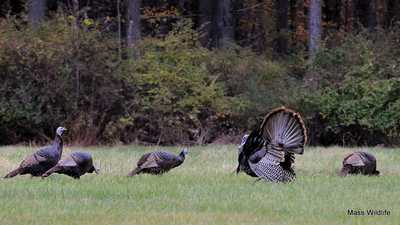 |
| Wild turkey doing the strut. |
BOSTON — The state Division of Fisheries and Wildlife is offering some tips for dealing with aggressive wild turkeys.
A woman in Cambridge was recently injured when a flock of turkeys began pecking at her legs; aggressive turkeys have also been reported and recorded in in Foxboro and Brookline.
There's more room for humans and turkeys to co-exist in the Berkshires but residents should still be aware of turkey behavior if there's an encounter.
MassWildlife says:
March through May is breeding season for wild turkeys and as a result, there is an increase in turkey activity all across the commonwealth. Some turkeys may be seen acting aggressively by pecking, following, or exhibiting other intimidating behavior towards people. Males will puff out their feathers, fan their tails, and "strut their stuff" while gobbling and making other vocalizations. This behavior is common during the breeding season and other times of year when turkeys are establishing social dominance or status within the flock.
Wild turkeys live in flocks organized by pecking order. Each bird is dominant over or "pecks on" birds of lesser social status. Turkeys may attempt to dominate or attack people that they view as subordinates, and this behavior is observed most often during breeding season. They may also respond aggressively and peck shiny objects like windows or automobiles, interpreting their own reflection as an intruding turkey.
MassWildlife urges the public to avoid feeding wild turkeys. Aggressive behavior toward people occurs when turkeys have become overly comfortable in the presence of humans, usually over several months or even years, in areas where turkeys are fed. Never intentionally leave out food like bird seed or corn in attempts to help or view turkeys. Avoid using bird feeders, as fallen bird seed attracts turkeys and other wild animals. For those who enjoy viewing songbirds, MassWildlife recommends planting native plants and shrubs or adding a water feature to attract birds.
"The best thing you can do to prevent conflicts with turkeys is to stop feeding them," said Dave Scarpitti, MassWildlife turkey biologist. "Feeding turkeys, whether intentional or not, can cause turkeys to act tame and may lead to bold or aggressive behavior, especially in the breeding season from March through May. Once this behavior is established, it can be very difficult to change."
People are encouraged to scare or threaten bold turkeys with loud noises or water sprayed from a hose. A leashed dog may also be an effective deterrent. Mylar tape, balloons, or pinwheels can be used in and around your property as a deterrent to turkeys; however all these techniques may have variable success for turkeys that have become highly habituated around people. For more information on how to prevent problems with aggressive turkeys, check out MassWildlife's Tips for Wild Turkey.
The wild turkey is the state's official game bird and that the spring turkey hunting season begins Monday, April 29, and continues through Saturday, May 25. Licensed hunters with a turkey permit can harvest up to two bearded birds. The Youth Turkey Hunt will take place on Saturday, April 27. To learn more about turkey hunting, visit MassWildlife's Guide to Wild Turkey Hunting.
Tags: turkeys,