Kalinowsky Seeks to Bring Fairness, Accountability to Mayor's Office
PITTSFIELD, Mass. — Karen Kalinowsky saw firsthand middle school children being "out of control" as a school resource officer. If no one is there to teach them right from wrong, the schools are going to suffer.
And when the schools suffer, leaders second guess themselves and the city suffers. The former school resource officer is looking to bring accountability to not only the students but to the city's administration.
"They were getting too light and kids were upping the ante. I'm not saying corporal punishment or anything. I'm saying if they do something wrong, you hold them accountable. I don't care if it lunch detention or what, something where you tell the kid this is wrong and this is the consequence," she said.
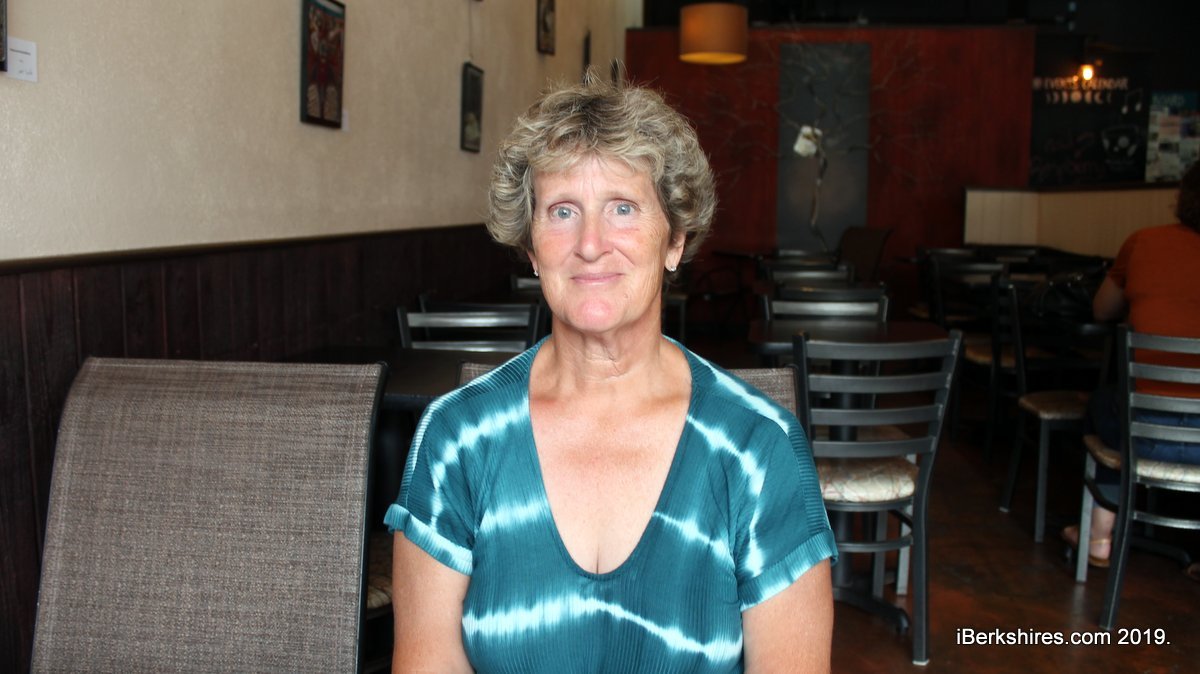
Kalinowsky is now running for mayor. She had retired in September from the Police Department after just short of 32 years and she said her priority is going to be on improving the school system.
"If you want to bring your business into this town and bring a whole bunch of people in this town, what are you going to want? A city that looks good and schools that their kids can go to," Kalinowsky said. "To me our infrastructure is important. You are not going to attract people with poor infrastructure."
Her goal is to reach children early. She spent 13 years at Reid Middle School but it is the first six weeks of being there that still sticks in her head.
"I started at Reid when the school was out of control. It was unreal. They asked me to go in there the last six weeks of the school year and the kids were controlling the school," Kalinowsky said.
She said she tried to help get things under control but the staff there told her they'd complain to the chief of police about her. She said she was told that the students "didn't know any better."
"If no one else is teaching them, they are going to deal with people like me when they are adults, and I don't want them to deal with people like me unless it is in a good way," the former police officer said. "We need to teach them. That's my philosophy. We need to teach good behavior, not excuse bad behavior."
She went to the chief asking to be transferred — promising to fill out of the final six weeks and then go back to patrol. But the chief supported her and there was going to be a change in leadership at the school.
The next summer came and a new principal had come on and implemented new policies that she described as holding the students and staff members accountable for their actions. She said it wasn't overly disciplinary but was effective and there was nearly an immediate turnaround in the school's culture.
"I think it is holding everyone accountable from the students to the teachers, everybody had accountability for their actions. Some of it was on discipline," Kalinowsky said.
In a short time, she felt the school had reached a point where she was willing to send her three sons there. She admits that she wouldn't have before then and believes there are a lot of people who feel that way about the schools today. In the last four years, she said she's seen the issues creep back up.
"I don't think I would have sent them there and that's a problem in this city," Kalinowsky said. "More people are going to outside schools. That should be a wake-up call. Why are these kids going to outside schools? We have good teachers."
She supports trying to reach students younger because "at the middle school level, it is hard to help them." She wants to make sure there are mediators in the school to handle problems that arise between students. She ran the DARE (Drug Abuse Resistance Education) program for a number of years and believes in educating students on the dangers of drugs and alcohol.
"If they make a choice, they are at least making an educated choice, they do know the consequences of what can happen if they choose to use drugs. But it is not enough because we still have people using," Kalinowsky. "I saw it at the middle school level. I saw kids and I tried to help but they ended up becoming alcoholics by high school and now they are adults. It is just sad. I tried. I had them in my office to talk. What could I do?"
It isn't the children themselves, she said, it is having a structure of accountability in place. She said a lot of them come in with troubles at home or have mental health issues. She remembers vividly a time when a fifth-grader was telling her about having to clean up after his parents who were abusing drugs and alcohol.
The city needs to do a better job at supporting the students, she said. As mayor, she said she'd hold the school's leadership accountable for making sure the students are on the right path.
"Most of the kids are good kids. At Reid, I ran into very few kids that I would say 'whoa,'" Kalinowsky said. "Most of them are good kids who have things going on."
As for teens, she wants to get them employed. She had started working at a very young age and saw the benefits of working and wants to find a way to get more teens in the workplace.
"We have so many businesses here that need help. Are kids who are of age to work not applying for these jobs because they don't know how? Or is it because they don't want to? Could we do something to bring the businesses to students, before school got out, and get these kids set up with a job," Kalinowsky said.
"One it helps with self-esteem — you can accomplish something and make some money — and you are interacting with others. I just think it would be better."
Kalinowsky had come from a big family — she was one of 16 children — so most of what she got was hand-me-downs. In the seventh grade, she got her first job and was able to buy her first pair of jeans and she was able to buy her own bicycle a year after. It instilled a lot of positives in her that she took with her throughout her career.
After high school, she wanted to become a veterinarian and went to school for her associate degree in animal science. She took a job at Pittsfield Veteriniarian Hospital but it wasn't paying enough. She was working a second job at McDonald's, and later a package store, and it was barely enough to support herself.
"I had my own apartment but I didn't have anything. I was working to live. I was looking for something else," she said.
She left her job at the veterinarian after speaking to an Air Force recruiter. She began training to join the Air Force, in hopes to become an officer and work with K9s. But it wasn't for her. The veterinarian had filled her job so she moved to full time with McDonald's.
"Some of the officers would come into McDonald's. I was one of those people who if you were my regular customer, I knew what you wanted so if I saw you coming in, I had it and it was sitting there. They used to talk to me. They asked me what was going on with the military and I told them. I said that is going to work, I just need a decent job and they told me the police test was coming up," Kalinowsky said. "I went and took it in April and they hired me in October that same year."
That was 1986 when she was just 24 at the time. And it was the start of a long career. She remembers being appointed as one of the first community policing officers, as she would walk the beat on North Street in the 1990s. Then she moved to Reid, where she spent 13 years.
She has that inside perspective of the city schools but that wasn't what drove her to run for mayor. It was the ongoing issue of unaccepted streets that essentially led her to run. She lives on one and has struggled to get it repaired.
"I went to City Hall. I went to the mayor's office. She wasn't there but her secretary was and we talked about getting the street fixed. I got the runaround. I got sent to the engineer's office and I got the runaround. I know what the runaround is, I've worked for the city. It just pissed me off," Kalinowsky said.
"This is what they do. So I complained and complained and then I saw the elections were coming up and I said 'I should just run.' I'm just so sick of people not listening to the people. We pay our taxes."
In the neighboring town of Lanesborough, officials there have been accepting a number of streets, adding them under their control. Pittsfield has accepted some roads but has resisted others.
"That is not fair. Everybody who owns a home pays taxes in this city. It shouldn't be by who you know," Kalinowsky said. "I admit that I didn't go to my city councilor first. I found working in the city that if you want something done you have to go to person you feel will do something about it."
The same goes for paving. Being a city employee for so long, she has realized that if you want something done, you go to the people who can do it. And not everybody has that connection. She'd like to have all of the streets rated and ranked in priority and the paving schedule should be based on the worst road. That way if somebody has a problem with their road, they can see where they fall on the list.
She also wants to budget more for the unaccepted streets and at least do some work on them every year.
Ensuring that fairness is a high priority for her, so much that she isn't reaching out for any political backing or capital during this race.
"I have no political backing. I am financing this whole election myself just so I don't have to feel like I owe anybody. If I get elected I want to be able to go in the office and just work for the people who live here and not special interest groups or anybody else," Kalinowsky said.
When it comes to city employees, she feels the city often contracts too much workout. She'd like to provide enhanced training so that workers aren't just filling a role and doing what they are told, but actually understanding the job and gaining skills. She believes that will help create a pipeline of institutional knowledge — when one person leaves, the next in line can be promoted to that position so the city constantly has people with years of intimate knowledge of the city at the helm.
"I think it would be better for the city if we had employees that we trained," Kalinowsky said.
As she speaks about training, she doesn't imply that she knows better than the employees doing the job. She said one of her best skills is her ability to listen and make adjustments. Over the years, she spent a lot of time listening and understanding other's problems and she'll bring that compassion and open ear to the office if elected.
"If you were somebody who worked just under me and you knew I was wrong about something, I would want you to tell me," Kalinowsky said. "If I am wrong about something, I want to know I am wrong even if I don't want to hear about it."
The mayoral job has a lot of different aspects and nobody knows everything about everything. But Kalinowsky said she's willing to learn just about anything, add some "common sense," and be hands-on. She said if something needs to be done a certain way, she is willing to adjust her thinking if she is shown why it has to be done a certain way.
"If I have to ride with the public works guy around the city of Pittsfield, then I'm going to get in the truck with him and we will talk ... I am totally hands-on," she said, and later added, "I am always willing to look and learn. I am not saying I am a know it all."
She is one of four candidates in the race for mayor. Incumbent Linda Tyer, City Councilor Melissa Mazzeo, and Rusty Anchor owner Scott Graves are all vying for the position. There will be a preliminary election in September to narrow the field to two.
Kalinowsky is encouraging as many people to get involved and vote. She understands many people are busy but she doesn't want to see people complain about things and not get involved to help fix it.
Tags: city election, election 2019, mayor,