Lee Represents Massachusetts in 50 in 50 Mural Project
.jpg)
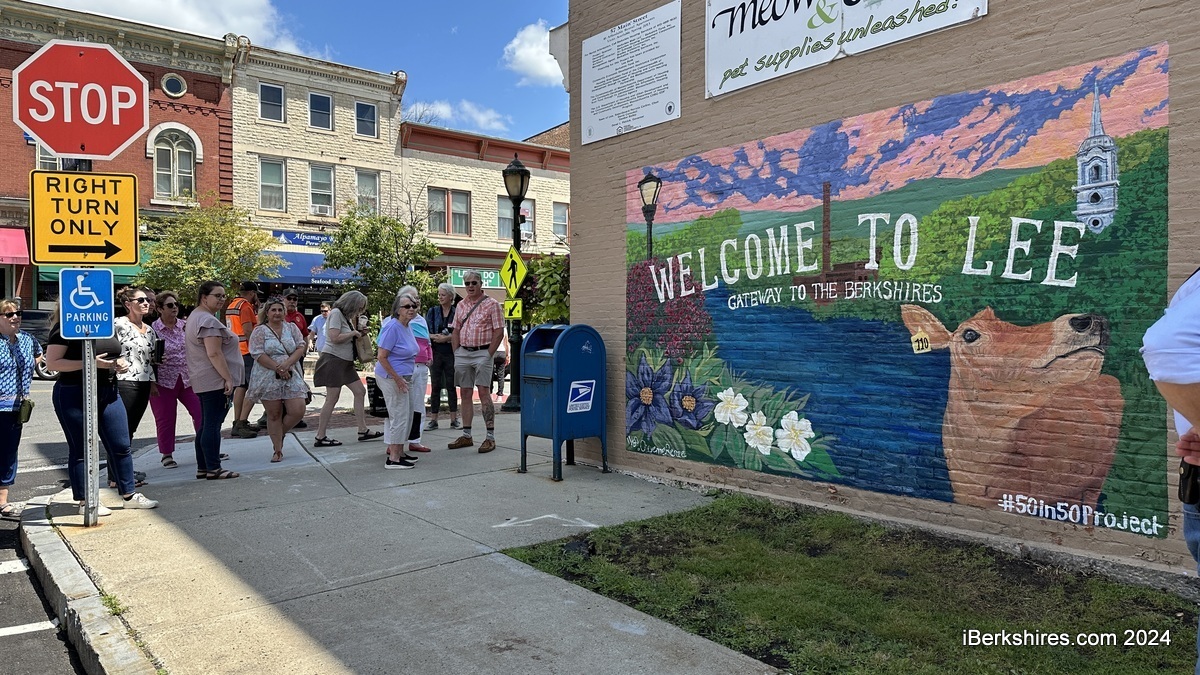
The mural features the town's history and beauty. Lee is representing the state in artist Cheyenne Renee's '50 in 50' project to paint a mural in one small town in each state.
Artist Cheyenne Renee is working to paint a mural in a small town in all 50 states. As part of the project, there will also be a documentary that will incorporate interviews and footage from each town.
Renee has already completed murals in towns in West Virginia, Wyoming, Idaho, and Iowa, among other places.
Renee received close to 300 nominations but only has about 18 states accounted for, so she is still in need of more nominations for a state yet to be completed. More information here.
When selecting a town, Renee looks at chamber of commerce websites and visitor center information to learn more about the area.
Lee marks the 11th town she has completed and will now be moving on to Morristown, Vt., for her next project, which she will do with some schoolchildren.
The goal is to "highlight the community and small businesses within each town and really give people a reason to travel to all of the murals [and] get to know the area that they'd be going to," Renee said at Friday's celebration of the mural.
"Then the other part of it is just to connect in a really unique way with 50 communities that deserve to be known on a larger scale and to create a web and a map of these murals in these towns for people to go and visit."
The largest town that she did was Cheyenne, Wyo., which has a population of about 62,000 people.
"The only town that I did that isn't a small town is Cheyenne, Wyo., and I did that because it's my name. So, I felt like I couldn't pass up that opportunity, but I'm making that the largest location," Renee said.
"So any location that's under [Cheyenne's population] and also values small businesses can be a part of the project."
Renee works with the towns to discover what makes the area unique.
"One thing I really like to get across is that the murals and this project, it's more about the community that I'm in than it is necessarily about me as the artist or the mural itself. I want the mural to represent the people that live here," she said.
"Then also, I want it to be meaningful and enjoyable to the people that have to look at it all the time. I come in, and I get to be a tourist and meet everybody, but the people that have to live with the mural it so should represent something that they love."
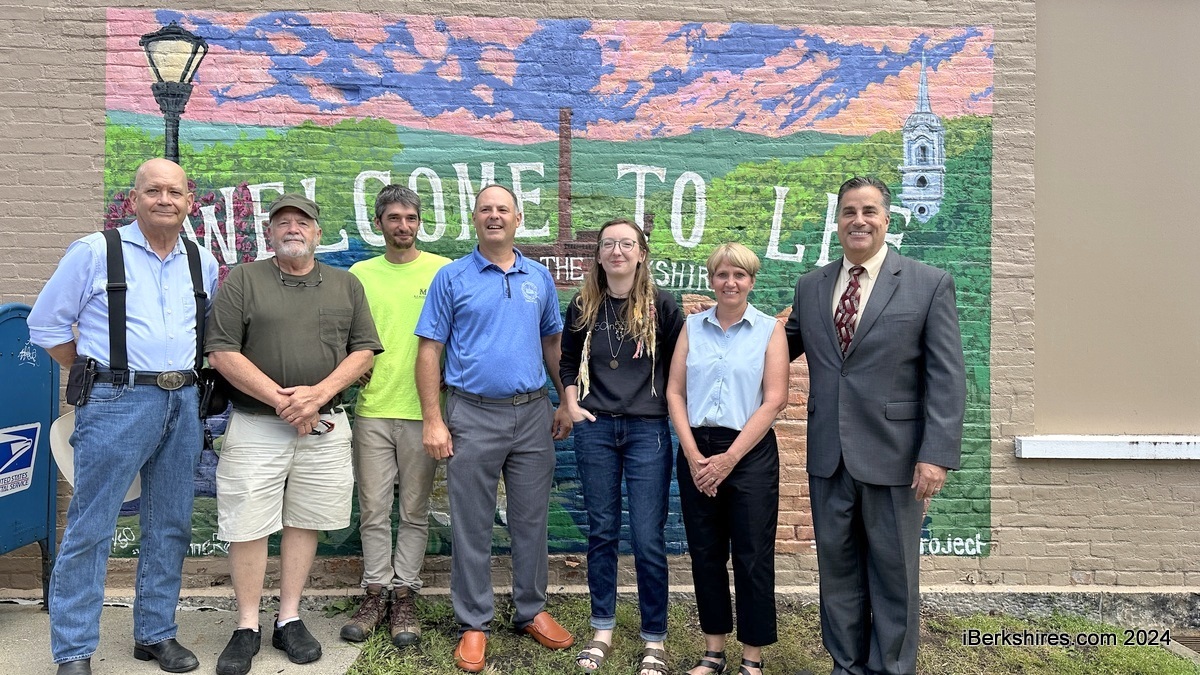
The Lee mural showcases the Berkshire Mountains, the Housatonic River, a cow to represent High Lawn Farm, the historic Eagle Mill, the lampposts and flower baskets in the downtown area, and the Congregational Church steeple.
Each of these things showcases the Lee community.
High Lawn Farm has been around for more than 100 years and is an "incredibly wonderful working dairy farm" that makes its own ice cream, cheeses, and herb butter, Doug Bagnasco, Lee Chamber of Commerce president, said.
The Housatonic River and mountains showcase the area's scenic beauty, and the Eagle Mill represents the town's history.
"Lee was once one of the largest milk producers, paper producers in the world, many, many, many years ago. And there's a revitalization program going on over there as well. So, it's great to have that captured in the picture as well," Bagnasco said.
Lee's Town Administrator Chris Brittain and the Chamber of Commerce Director Kathy Devarennes went around the town looking for an ideal location for the mural, snapping six pictures, mostly along the main road.
Eventually, they selected a building at the corner of Main Street and Consolati Way because it is centrally located and highly visible from Main Street, and the wall has a clear, clean surface suitable for painting the mural, Devarennes said.
The town is grateful to Berkshire Housing for allowing the mural to be painted on their building, Brittain said.
It's a great location because the town is about to embark on a very large revitalization project at the corner of Consolati Way and Railroad Street, Lee Select Board Chair Gordon Bailey said.
There is going to be a new fire, emergency medical services and police facility built there, he said.
"This area has been a bit worn down for quite some time. It's all going to be replaced with a brand-new facility and I just look at this mural as the first step in that revitalization," Bailey said.
"[This mural] says welcome to Lee and this whole side of town is going to be transformed and it's perfect timing."'
The town was nominated by a tourist who went through Lee with their family on a road trip. They stopped for lunch in the downtown and were impressed by its scenic beauty, Renee said.
Renee wants to highlight and give a voice to smaller communities that value scenic beauty and small businesses.
"We're used to seeing murals in big cities, but small towns have some of the most unique and fun pieces of art and there's a lot of artists that live in small communities. So when I paint in small towns, I meet a ton of artists," Renee said.
"It always surprises me how many people live in their little cabins and their little apartments in the middle of nowhere, and they just paint, and I love that."
Public art can have a significant impact on tourism and community pride in a given area. Since public art is free, when someone is driving through an area without any other reason to stop, they might notice a mural and decide to take a break from their travels to take a closer look and snap a photo.
"It kind of draws travelers, and it makes them think, ‘Oh, ‘why does this place have a mural?' Then the other part that I think is really valuable is that your local artists are given a bigger voice when they see more public art happening," Renee said.
"So once you get people used to the idea of public art and the benefit that it can have on the community, it can get a ball rolling."
The 50in50 project was inspired by Renee's desire to pursue two interests she had: small-town tourism and murals.
"I discovered a love for painting on a large scale. So, I kind of created the project as a way for me to travel full time and see the small towns that I had always wanted to visit, as well as just see more of the country and be able to do a job and something that I felt passionate about," she said.
The documentary idea was born from wanting to highlight the actual communities without just posting pictures online, she said.
Tags: murals,