Clark 'Fragile Beauty' Exhibit Profits from Direct Light
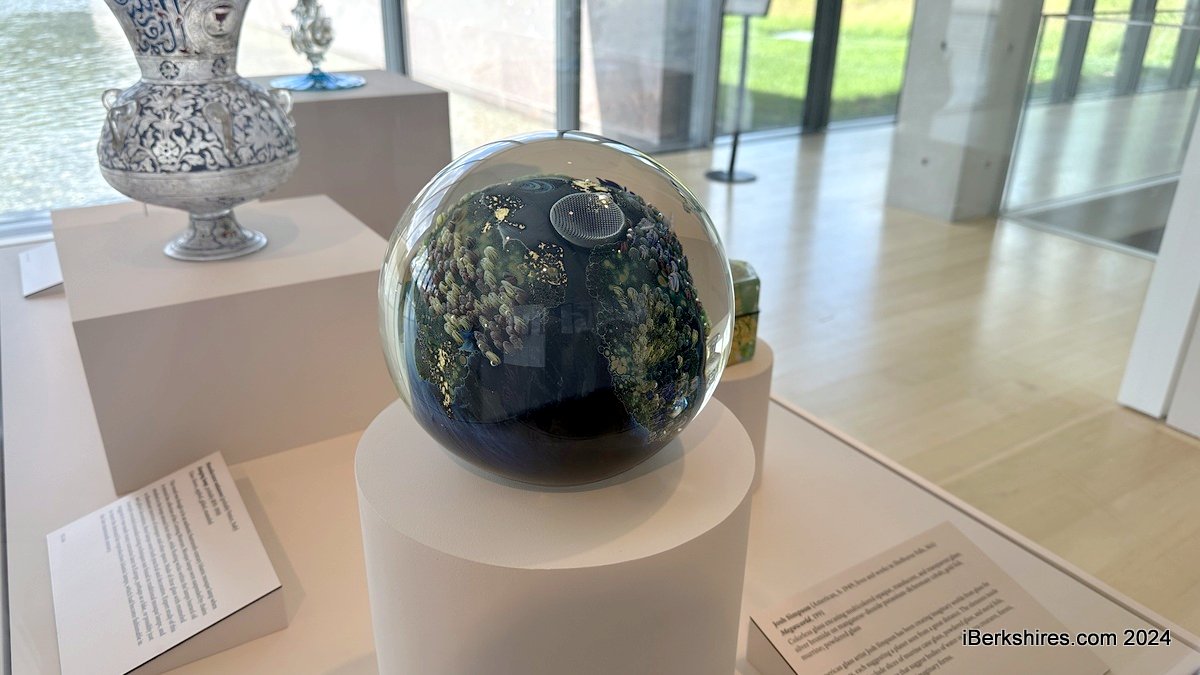
The pieces reflect the broad range of artistic, utilitarian and decorative glassworks over cultures and time, such as Josh Simpson's 'Megaworld.'
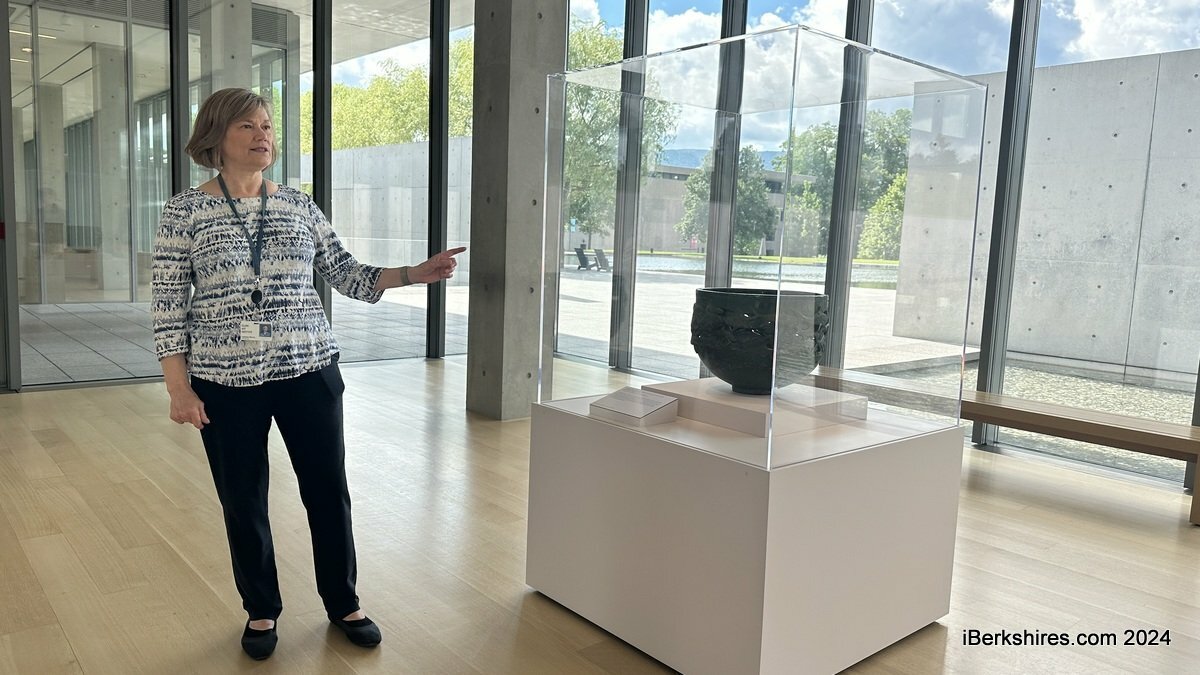
The light-filled pavilion looks out over the museum's three-tiered reflecting pool and the surrounding mountains.
The exhibit, "Fragile Beauty" fills the pavilion with glass objects from the Corning Museum of Glass, showcasing different cultures, time periods, and techniques, and will run through Oct. 27.
There will also be a number of events to celebrate the event, including lectures, glass-blowing demonstrations, and a weekly art-making drop in event.
The Corning Museum of Glass will bring its mobile hot shop to Clark for one week in early August. This will allow visitors to see live glassblowing demonstrations by the Corning Museum's team of expert glassmakers.
Local contemporary artist Josh Simpson, who is from Shelburne Falls, will be part of this demonstration. Simpson's piece "Megaworld" made in 1991, is on display as part of the
The glass planet is just on of the imaginary worlds he has been creating for many years and uploads the process online.
They are meant to look like you are looking down on a planet from a distance.
The Corning Museum is an "incredible place," said the exhibit's curator Kathleen Morris.
According to Corning's Gaffer District website, it is the world's largest glass museum, with more than 50,000 objects representing 3,500 years of glassmaking history.
When looking for exhibits to fill the space, the Clark want to find something that could not only sustain direct light but also profit from it, Director Olivier Meslay said.
"We're always thinking about projects that will be really conducive to the natural light in this gallery, and we came up with the idea of glass," Morris said.
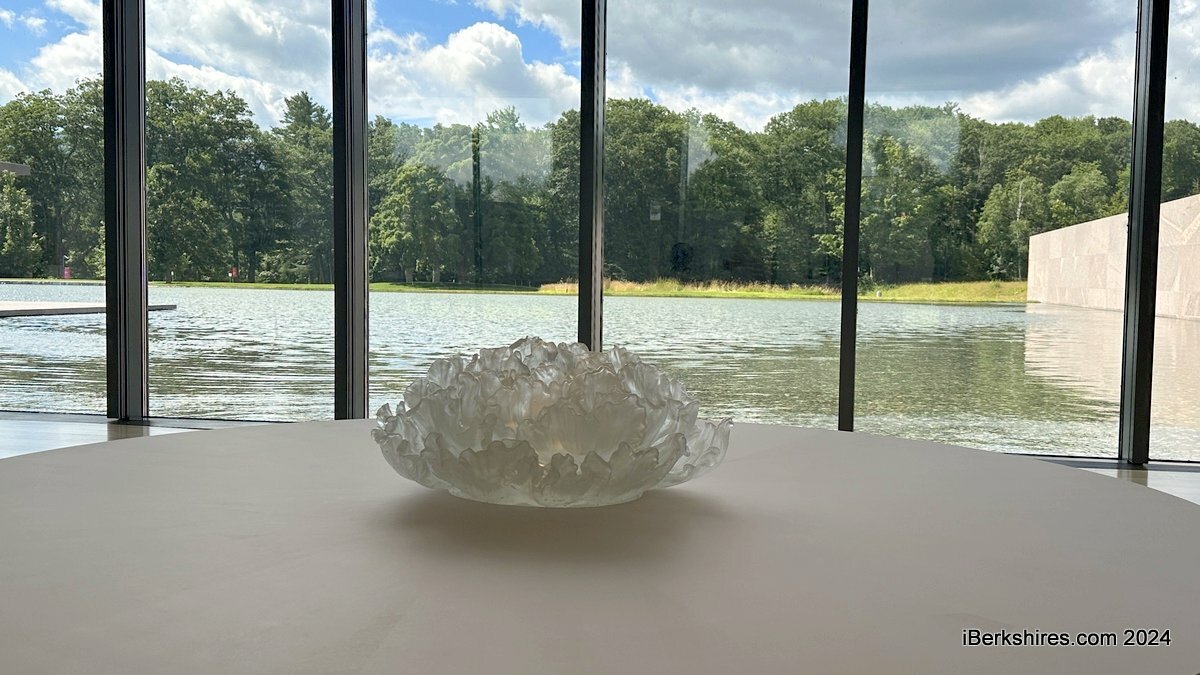
For instance, the look of the contemporary piece in the exhibit "The Proof of Awareness" changes based on its surroundings.
The colorless glass peony, which the Clark has lighted from beneath, was made in 2006 by Taiwanese artist Loretta Hui-Shan Yang.
"It does pick up on the different colors around it. If you come back to the Clark on one of the evenings when we're open late, every Wednesday evening, you will also see it without all of the sunlight, and it looks completely different," Morris said.
The theme of the display is very broad, but every piece in the exhibit takes inspiration from nature in some way, which is fitting because of the museum's landscape, which can be seen within the pavilion, Morris said.
The objects vary in shapes, sizes, and colors and the exhibit shows a broad range of cultural diversity, with pieces from Europe, North America, Asia, India, China and Japan.
There is also a temporal range, with ancient pieces whose creator and date of creation have been lost to time beside contemporary pieces made only a few years ago.
The fragment of a wall decoration in the shape of a fish is just one example. The piece is made from fused and assembled glass games set into plaster.
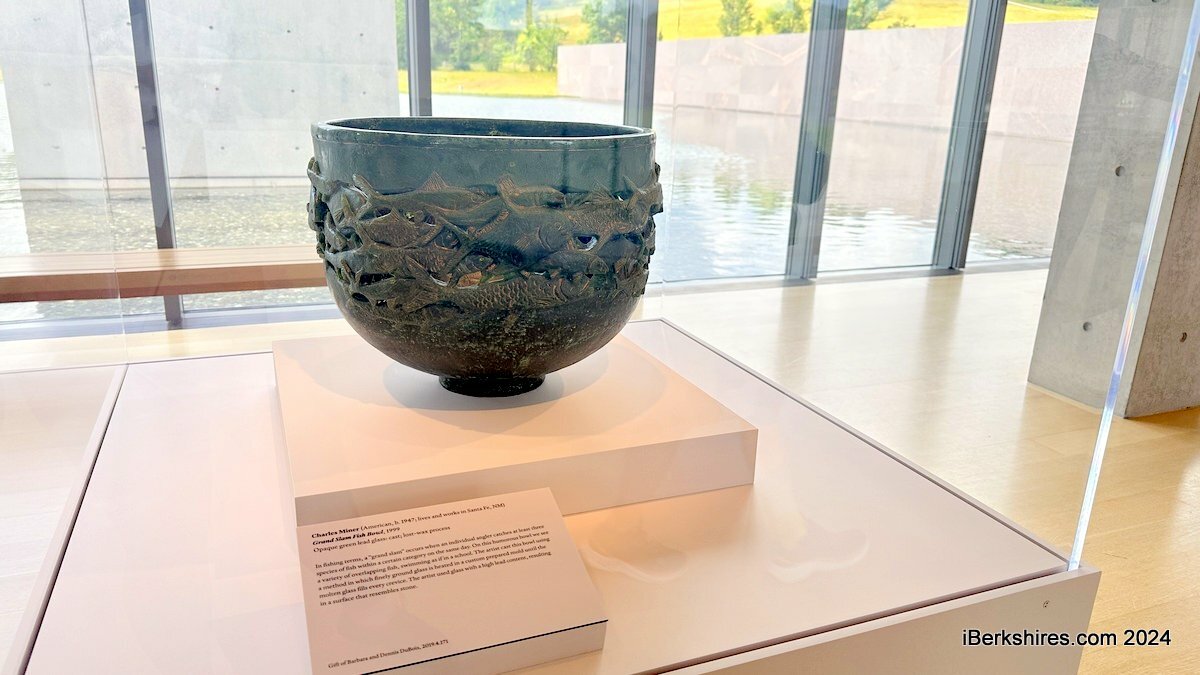
The exhibit showcases various glass techniques, some of which transform the glass so much that it doesn't even resemble glass, like the "Grand Slam Fish Bowl" from 1999.
Charles Miner made the fish bowl using opaque green lead glass and the lost wax-casting technique.
"This actually was in the storage of the Corning Museum of Glass, and when I saw it, I was like, 'That doesn't look like glass.' This is one of the things I loved about it. It looks like it's made of jade or ceramic or stone, but it's glass," Morris said.
There are many different ways glass makers have made glass over the years, Morris said.
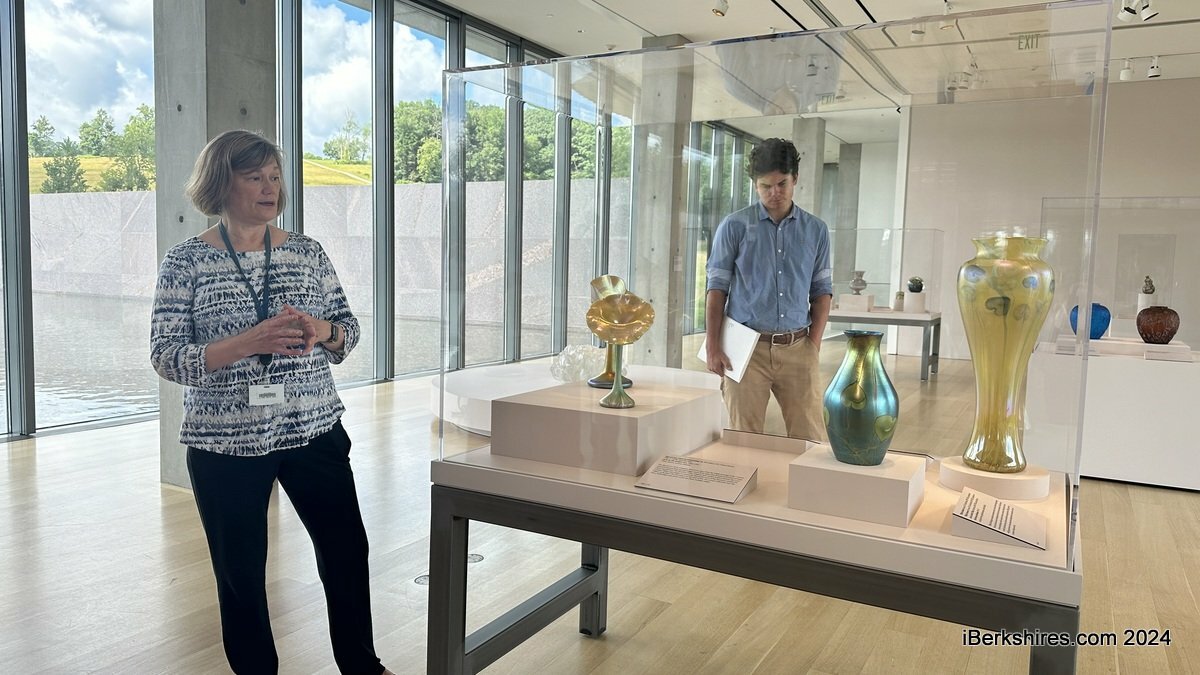
The exhibit includes works by Louis Comfort Tiffany and some of the glass scientists and manufacturers who developed the technique and formula for producing favrile glass.
Tiffany loved the Art Nouveau and aimed to produce glass with iridescent surfaces similar to those found on ancient buried glass. He collaborated with scientists to recreate this effect in his factory, without the need for centuries of burial.
These pieces had a shimmering, iridescent effect which was popular in Europe and America in the 19th century, Morris said.
The display not only gives a glimpse into the trend but also tells the story of the lawsuit surrounding the beautiful glass with the inclusion of two pieces by different companies that made iridescent glass.
One piece is by Quezal Art Glass and Decorating Co., which was formed by two of Tiffany's scientists who split from his company.
The other is by Frederick Carder, who was one of the co-founders of Steuben Glass Works.
"He was a glassmaker. He was a scientist. He was a designer, an amazingly creative man, and he was determined to find ways to create iridescent glass of his own," Morris said.
Tiffany took Carder to court and lost the lawsuit because the courts determined the process of making the glass is something anyone can figure out with trial and error, she said.
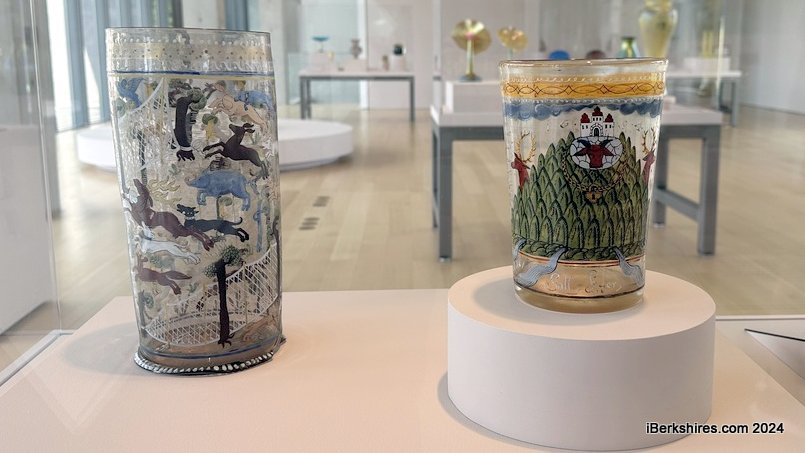
Enameled beakers from the 16th century.
The design illustrates hunters and their dogs chasing various animals, such as foxes, bears, deer, and boars. Along the top is an inscription that translates to "Hunters drink, fill yourself up, then your hounds will run well."
The design closely resembles the hunting ceremony that transpired while using the beakers.
"These kinds of drinking vessels were made in huge quantities but I think it's kind of remarkable that any of them survived if you think about how they were used," Morris said with a chuckle.
Especially considering there were other beakers larger in size.
The beakers were not meant to be decorative and were actually very actively used. The large beaker was filled with beer and would be passed around before hunting.
Tags: Clark Art, glass maker,