
image description
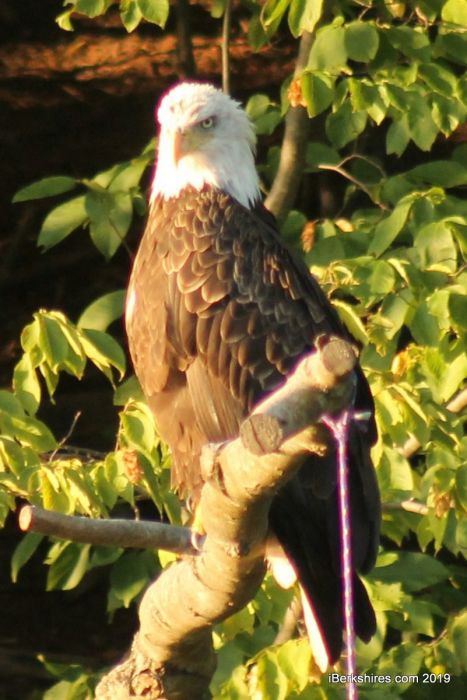
A bald eagle was sighted on Beaver Street on Thursday.
image description
image description
image description
image description

Bald Eagle Sighted Over the Hoosic River in North Adams
Staff ReportsPrint Story | Email Story

A number of nesting pairs of the raptors have been sighted or confirmed in South and Central County. It's not clear if this bird in North Adams has a mate. 

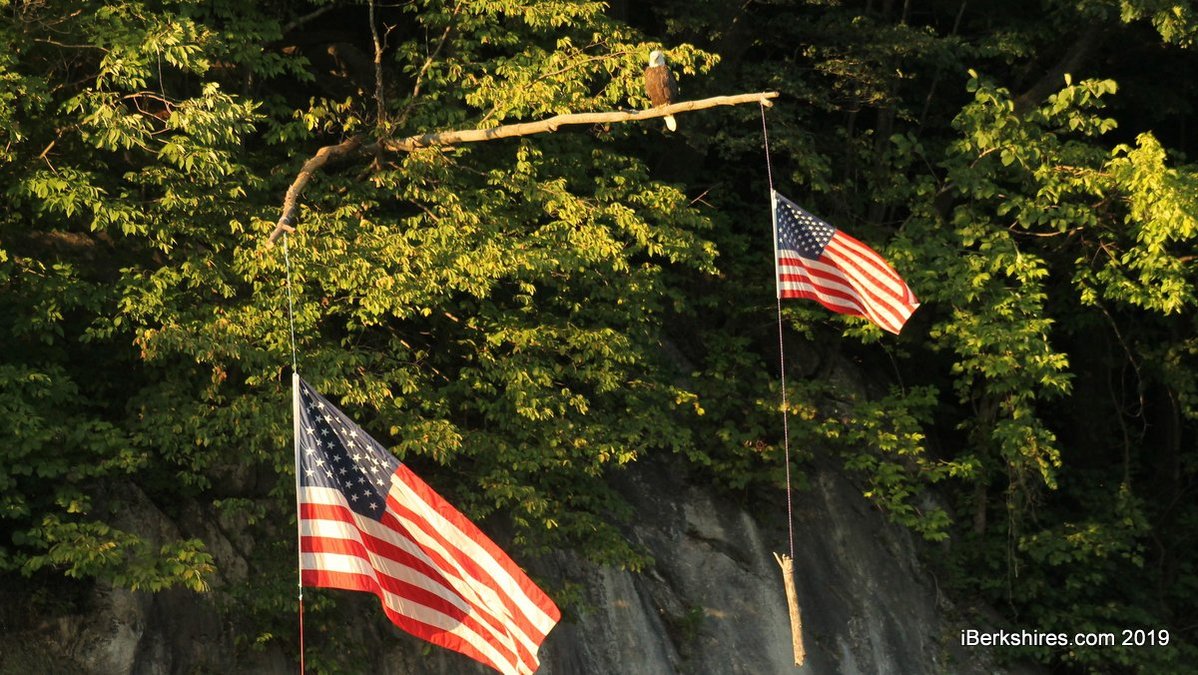
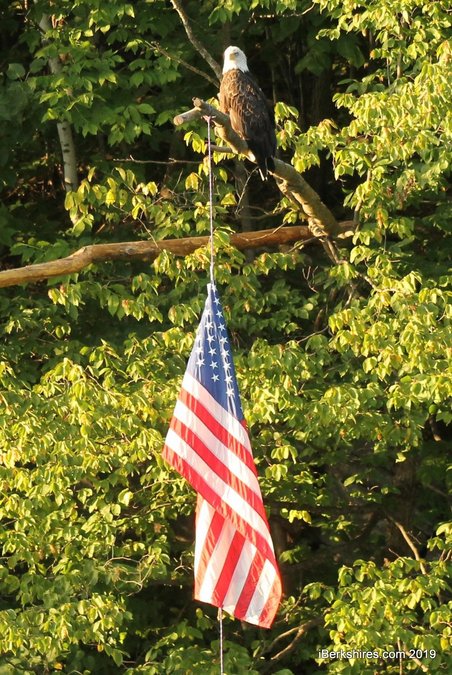
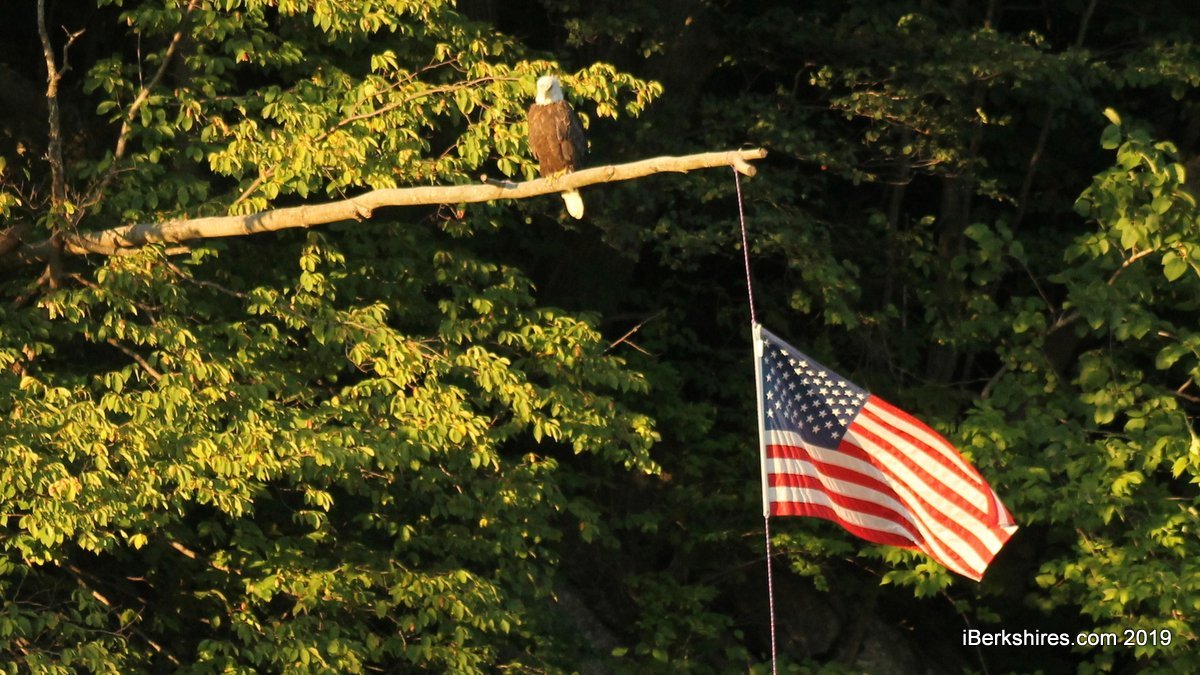
NORTH ADAMS, Mass. — Photographer Rick Duteau, who helps cover sports at iBerkshires, caught images of a bald eagle on Thursday taking a break above one of the American flags that have been hung over the Hoosic River. 

The eagle has been seen recently in this area, just above the Eclipse Dam off Beaver Street. It apparently drew a crowd on its most recent siting.

Bald eagles were re-introduced into Massachusetts in the early 1980s. According to Massachusetts Audubon, the last presumed nesting of these birds of prey had been around the turn of the 20th century. The species was endangered by the use of DDT, which softened or eliminated the baby birds' shells. Since the banning of DDT in 1972, the nation's symbol has moved from the "endangered" list to "threatened" status.

Haliaeetus leucocephalus is a scavenger that prefers carrion but will seek small prey, especially fish. It is the largest raptor in the state with a wingspan up to 7 feet. Bald eagles have also been sighted in recent years along Cheshire Reservoir. Audubon's most recent bird listing (no date given) shows confirmed and possible sightings mostly in Central and South County and one block that appears to be Cheshire Reservoir. 

About 30 bald eagles were counted in Vermont in 2017, but that was in the northern and northwestern part of the state along Lake Champlain and as far south as Lake Bomoseen. 

On the other hand, MassWildlife in 2018 counted 76 pairs of bald eagles in the state, a more than 20 percent increase over 2016. The state agency is looking for information on nests or nesting birds, including "adults carrying sticks or nest lining material are of special interest." Observations can be sent to State Ornithologist Andrew Vitz at andrew.vitz@mass.gov. MassWildLife has more information on the birds here.


Tags: birds,   eagles,   

If you would like to contribute information on this article, contact us at info@iberkshires.com.

What To Do Immediately After a Car Accident: A Step-by-Step Guide for Drivers

No one plans to be involved in a car accident, but knowing what to do in the moments afterward can help protect your safety, your passengers, and your vehicle.

Whether it's a minor fender bender or a more serious collision, staying calm and following a few important steps can make a stressful situation much easier to manage.

1. Check for Injuries First

Your first priority should always be the safety of everyone involved.

Check yourself and your passengers for injuries. If anyone is injured, call 911 immediately. Even if injuries appear minor, it's often best to have emergency responders evaluate the situation.

If you are unable to move safely, remain in your vehicle until help arrives.

2. Move to a Safe Location if Possible

If the accident is minor and the vehicles can be driven safely, move them to the shoulder of the road or another safe location away from traffic.

Turn on your hazard lights to alert other drivers.

If the vehicles cannot be moved safely, remain inside with your seatbelt fastened until emergency personnel arrive.

3. Call the Police

Even in a minor accident, contacting local law enforcement can be beneficial.

A police report provides an official record of the incident that may be important for insurance claims and future documentation.

When speaking with officers, provide factual information about what happened, but avoid speculating about fault.

4. Exchange Information

Gather the following information from all drivers involved:

  • Name and contact information
  • Driver's license number
  • Insurance company and policy number
  • Vehicle make, model, and license plate number

It's also helpful to collect contact information from any witnesses who may have seen the accident.

5. Take Photos and Document the Scene

Your smartphone can become one of your most valuable tools after an accident.

Take photographs of:

View Full Story

More North Adams Stories