Pittsfield Mayoral Candidates Debate City Issues
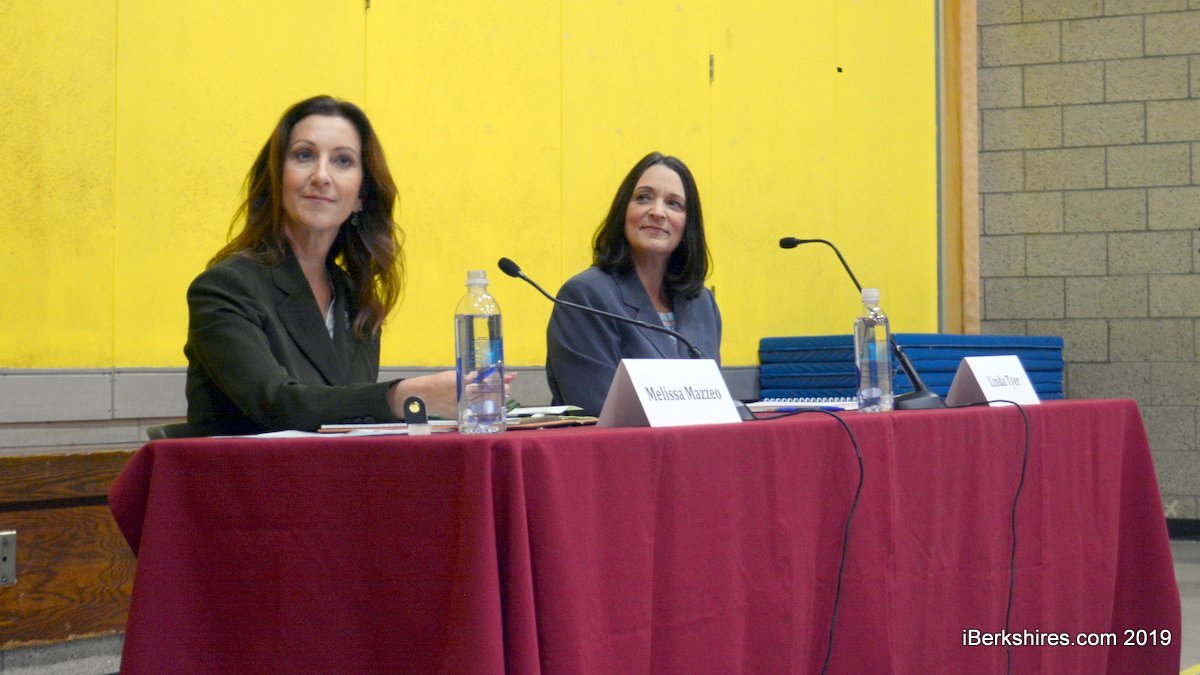
Candidates Melissa Mazzeo and Linda Tyer took questions related to crime, social justice and business at Wednesday's debate.
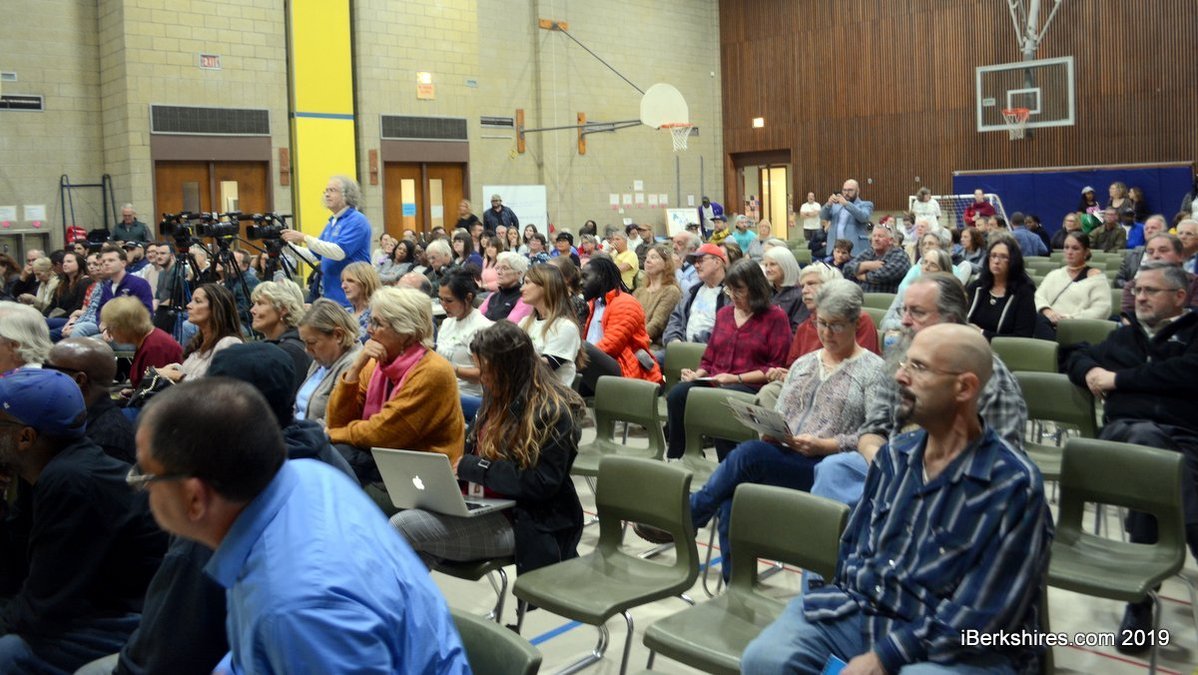
Tyer, the incumbent mayor, and Mazzeo, a councilor at large, contested a variety of issues including crime, economic development, and inclusiveness Wednesday night at Conte Community School.
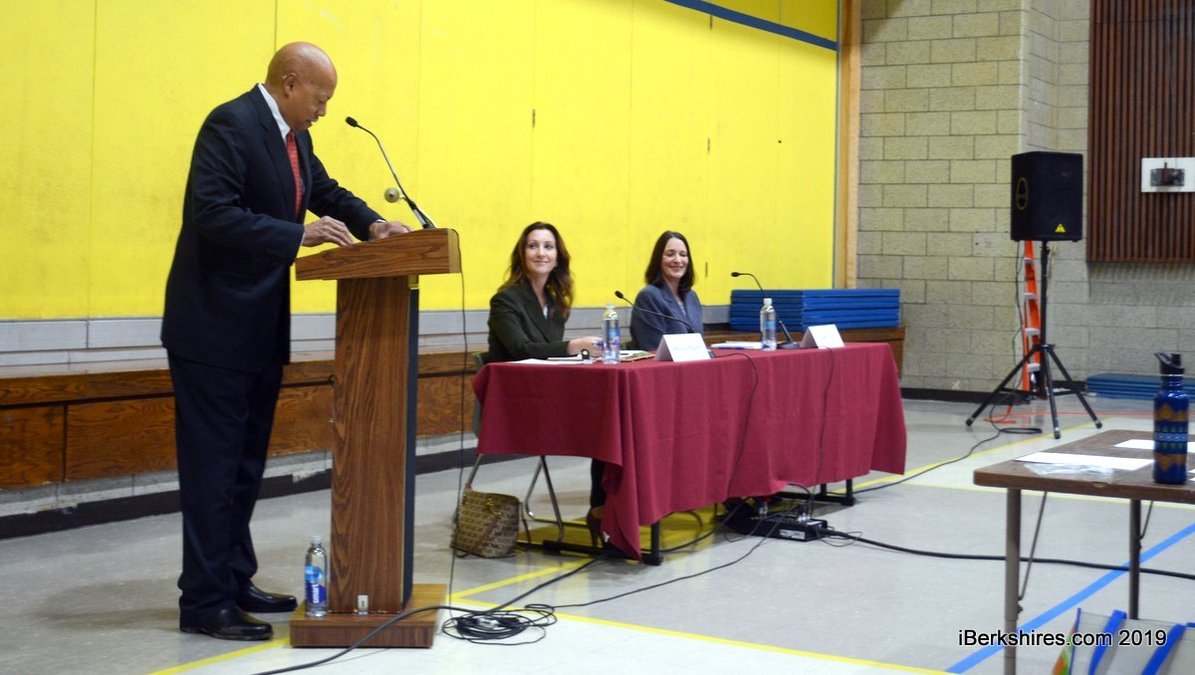
After opening statements, NAACP Executive Committee member and moderator Will Singleton asked the first question about crime in the city.
Tyer said the city has hired more police officers under her administration. She added that, currently, Pittsfield is taking the lead on a countywide grant that would give it access to federal resources to combat crime and create safer communities.
But Mazzeo said whatever the city is currently doing is not working and thought the city has to re-assess its efforts.
"We are without a doubt going in the wrong direction ... what is it that we are trying to do that is not working?" she said. "We need to talk about true hot-spot policing and bring that into neighborhoods that are targeted with a crime … and we can't be afraid to say we have tried this for a number of years and it is not working."
Mazzeo took the next question first and was asked how she would increase diversity at City Hall, city businesses, and the schools and said most importantly, there needs to be better workforce training to connect everyone to these jobs.
Tyer said if it's the city's mission to expand diversity, it needs to make a point to hire a diverse population.
Question 3 dealt with violence among the city's youth and Mazzeo was questioned about her past comments about restorative justice practices fostering a "culture of leniency." The councilor said she thought there was a need for restorative justice in the schools but if there is an endless loop of behaviors or infractions, there needs to be consequences.
Tyer said she supported the new code of conduct within the school system and that she did not think Mazzeo understood what restorative justice was.
"What I know for sure is those old models of discipline and punishment have not resulted in improvement academically or in behavior and it is especially true for kids of color and kids who are economically disadvantaged," she said. "So we have got to do something different."
Taxes were next on the docket and Tyer said when she took office in 2016, the city was in a financial crisis and that since then, she has led the rebuilding effort. She said her administration has cut costs, better managed debt, and increased savings.
It came down to accountability for Mazzeo.
"This past winter, we allowed our sand and salt budget to go over by $2.1 million -- there was no oversight," she said. "That does not lower your taxes ... that is not being fiscally responsible. Accountability is the biggest thing that funnels around the budget and I think that has been lacking."
Mazzeo took the next question and was asked what she would do to help small businesses. She said she would bring the stakeholders into the conversation and figure out their needs.
"We need to stop holding them to these archaic ordinances that are outdated. We need to look forward to help them," she said. "We need to look at them with an attitude of how can we help you grow not how can we shut you down... we throw the red carpet out for the big business but we don't for the local business."
Tyer said the city has helped multiple small businesses and listed some resources that the city offers them. She said eight of the 14 "red carpet" businesses are local.
Tyer was asked if she would support city staff undergoing cultural competency training. She said that more than 400 employees have already gone through some of this training
"We want to make sure when we welcome a diverse population into our organization that they have a sense of inclusion and that we are going to support them and help them to succeed," she said. "We can only be stronger if we are working for everyone."
Mazzeo said she, too, supported the cultural competency classes for city employees.
Parking was next and Mazzeo said she thought the current system is a failure and promised to make changes to it if elected. She also had concerns about where parking revenue was going and called it a "cash grab."
Tyer said it has become an important revenue source that allows the city to maintain infrastructure. She admitted there are issues with it but with two years of data they can tweak downtown parking and improve it. She said she did inherent the parking improvement plan from a prior administration. She added the Mazzeo approved the plan, the fee structure, and the funding to purchase the kiosks.
Mazzeo was asked about how important it was to create incentives to attract business into the city and how important it was to protect the city's investment. She said the city has put in good measures to protect these incentive funds -- specifically from the Economic Development Fund. She said the city has to be selective of who it helps and make sure whoever utilizes the program benefits the city. She did note that the city has lost money in the past and must hold businesses accountable.
Tyer said the city has been very judicial when making incentive agreements and must do all it can to attract business.
"Economic development and job creation is a competitive sport and if we are going to build a stronger city we have to put everything on the table that is available to us," she said. "We need to bring new businesses to our community that will create jobs, invest in our community but also support the businesses that are here now."
Singleton asked about North Street and what could be done to increase foot traffic. Tyer said she thought the city had to stay on the same trajectory. She said it was important to save the Beacon Theater and that many of the restaurants and businesses are thriving.
Mazzeo disagreed and said the city has to loosen regulations to get more feet on the street during the day.
Mazzeo was asked about homelessness, which she felt was a worsening issue. She said after receiving pushback from the mayor, she worked to reactivate the Homeless Commission. She said it is currently working to help the homeless and improve the issue in the city.
Tyer said the city does provide resources to the homeless and partners with local organizations to offer the homeless support.
Tyer was asked about her endorsement of selling the art at the Berkshire Museum. Tyer said she believed in the trustees of the museum who knew they needed to sell the art to bring in funds to reinvigorate the institution and expand its programming.
Mazzeo said she was not supportive of selling the art and felt after so much backlash, the museum should have pulled the plug on the sale. She thought such an action could spark some new donations.
Trash also came up and Mazzeo blasted the mayor's toter program noting it did not work for many residents and was not equitable
Tyer said she knew the program was not well received so the city dialed it back. She did say it was a plan and an attempt toward a needed solution.
The final part of the debate allowed the candidates to go back and forth and Tyer said about a year ago the city was hit by violent crime and the community came together at Conte to have a conversation about how to make the neighborhood safer. She said although Mazzeo has made crime a primary focus of her campaign, she did not attend.
"You are one of the leaders of our community and this was a crisis situation," she said. "So now you are so outraged about crime in our community but you weren't there for us a year ago."
Mazzeo said she was not able to attend the meeting but added that she had been to similar important community meetings in the past. She said Tyer sang the same tune about crime in years past and asked why she has not attended homelessness meetings.
"Because you are not physically in the audience or are there for a photo op or a ribbon-cutting does not mean you aren't supportive," she said. "Where were you four years ago when you were screaming at the previous administration about crime ... four years later and you deflect because I did not come to one meeting."
The debate wrapped up around 7:30 and candidates gave their closing statements.
Mazzeo noted this is the second time the city will elect a four-year mayor and thought Tyer should have been able to get more done in her term. She said more seems to be happening now that is an election year and alleged that Tyer was playing politics with the city
"I love Pittsfield. My family is here, our business is here, and I got into this because I want to help people," she said. "But we also have to take the good with the bad and I think when you mix that together that is when you get a community that we all want ... I think it is my time to step in."
Tyer said she thought three debates showed some real distinctions between the two of them and said good leadership does not operate on "fear and doom." She said although the city still has challenges they can overcome them with "good old-fashioned hard work".
"So here is one promise. Every neighborhood, every citizen matters to me and we are stronger when everyone is at the table," she said. " That is a promise that will continue into January 2020 when I take another term as your next mayor."
Tags: debate, election 2019, mayor,