Pittsfield Planners Say No To Eliminating Pot Growth In Residential Zones
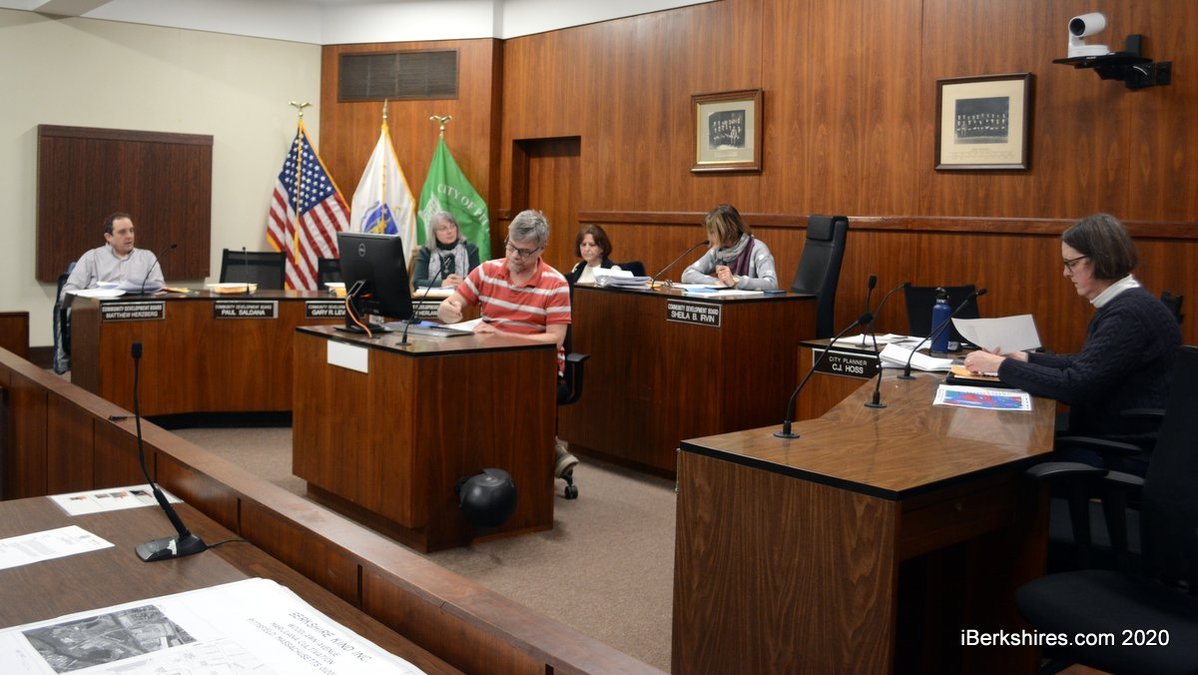
PITTSFIELD, Mass. — The Community Development Board recommended a modified zoning amendment to the City Council that would not eliminate outdoor marijuana cultivation in residential areas but limit it.
The board reached the compromise amendment Tuesday that would allow outdoor marijuana cultivation in residential districts as long as they are 500 feet away from homes.
"After much thought I cannot support totally removing cultivation from these zones," board member Floriana Fitzgerald said. "I think this would be more balanced and a good compromise to have."
The Community Development Board continued the hearing last month that stemmed from a petition put forth by Councilor at Large Earl Persip that would essentially eliminate outdoor marijuana cultivation in residential districts.
The board heard from residents both for and against the amendment and from City Planner CJ Hoss who spelled out different zoning amendment scenarios with different minimum lot sizes, different set backs, and elimination from specific zones.
"Do we want to only remove it from some of those residential districts, change the setback from residential structures, or decrease the lot size," Hoss said in a quick recap Tuesday.
The board members were hesitant to accept the more stringent scenarios and wanted more information and more time to digest what they heard from the public.
But when the board first opened up the floor to the public, no one had attended the meeting to speak for or against the amendment. Chairwoman Sheila Irvin said this was the third meeting on the issue
"We have had two possibilities for people to speak to this so there is probably not a lot more to say," she said.
Board member Elizabeth Herland said she could not support such a restrictive amendment that would limit cultivation to industrial zoned areas — many of which are already developed.
She said she did take in many of the residents' concerns and researched the topic a bit more and visited actual marijuana farms.
First, she challenged the idea that cultivation sites look like prisons with barbed wire and 24-hour lighting. She said they look like farms.
"There may be buildings ... but they are the same for standard agricultural crops," she said. "Hoop houses, green houses, barns. Nothing is different, just the plant."
Herland acknowledged the odor is a touchier subject but said she did not think the smell of marijuana was totally different than typical agricultural smells people live with everyday.
She said there are 1,600 variations of marijuana and although some smell "musky," others smell like citrus, flowers, or nothing at all.
"If a farmer wanted to grow roses or lavender there would be a smell for certain periods of time," he said. "This is not different than marijuana plants. They only smell when they flower, which is generally in September so you won't smell marijuana when you are grilling out on your deck on the Fourth of July."
Herland said she thought marijuana growth was another option for farmers who often struggle to make ends meet. She added that she would support anything that kept space open.
"I support any private landowner who works hard to maintain their land as open space so others can enjoy the views," she said. "Unless we support these farmers and help them pay their property taxes and earn a living we will see the conversion of this open space to residential space."
The board went through some options and felt a 1,000 setback was too much and although there was some sentiment on the board that 500 feet was also too much, they felt it was a good compromise.
"I actually measured that at my home and I could barely see my husband at the end of our driveway," Herland said. "500 feet is a really long distance. It is more than adequate."
The City Council will vote on the amendment next week.
Tags: marijuana, zoning,