National High School Federation Offers Guidance on Return of Sports
WILLIAMSTOWN, Mass. — Do not expect this spring to be the last high school sports season impacted by the COVID-19 pandemic.
That is the sobering takeaway from a 14-page report issued Tuesday by the National Federation of High School Associations in Indianopolis.
The national group's Sports Medicine Advisory Committee wrote the report to advise the NFHS' 51 member state associations as they think about a phased return to interscholastic athletics in consultation with state health departments.
"It is important to be clear that this is guidance for individual states to consider as they return to activities this fall," NFHS Executive Director Karissa Niehoff said in a letter accompanying the report. "States will utilize the guidance in this document as it best fits their state after consulting with local and state health departments."
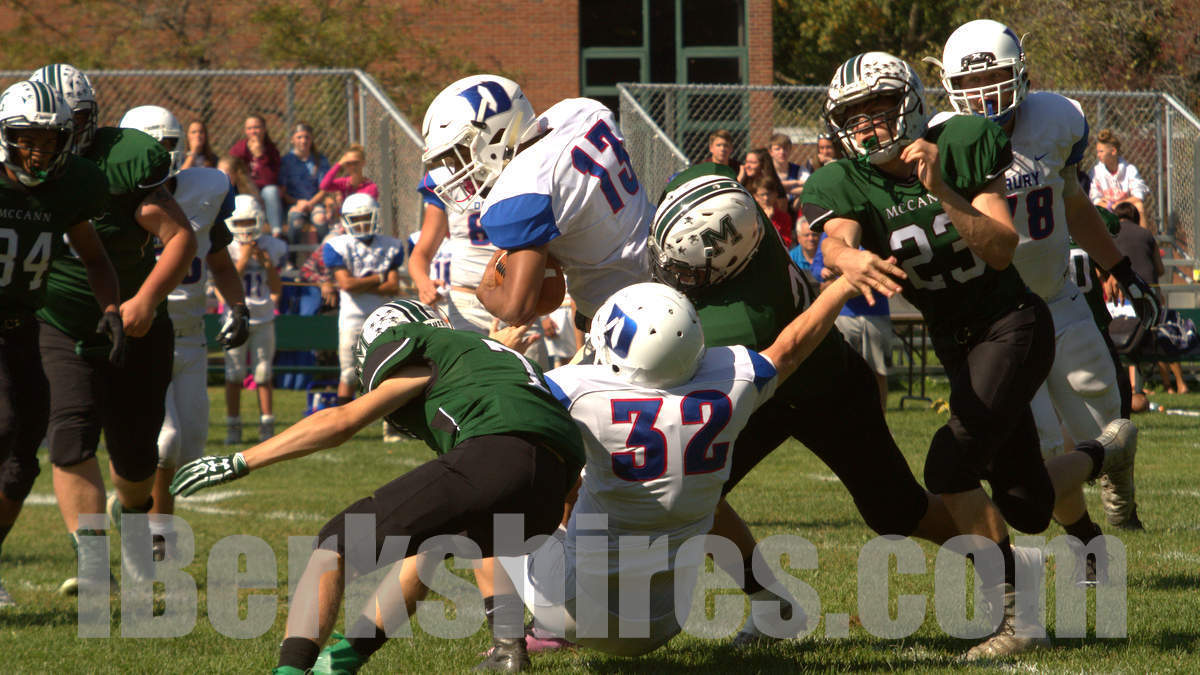
Among other things, the report recommends that state associations consider different timetables for the resumption of sports with a relatively low risk of virus transmission — like golf and certain socially-distanced track and field events — and sports with a relatively high risk of transmission, like football and wrestling.
"The NFHS Sports Medicine Advisory Committee utilized recommendations from the Centers for Disease Control and Prevention (CDC), as well as some return-to-play considerations by the United States Olympic & Paralympic Committee in formulating this guidance document for re-opening athletics and other activities in our nation's schools," Niehoff wrote.
Although the report is advisory and non-binding on the national group's member organizations, it likely will get a long look from officials at the Massachusetts Interscholastic Athletic Association, operating in one of the states hardest hit by the novel coronavirus.
Much of the report focuses on proposed guidelines around the use of face coverings and general hygiene, including cleaning practices for facilities and equipment.
The NFHS report notes that phasing of a return to normal activity will vary from state to state, but it lays out suggested practices for three different phases for its members to consider.
Phase 1, the most restrictive, would limit gatherings to more than 10 people at a time and restrict workouts to "'pods' of students with the same five to 10 students always working together." During this period, all equipment, including balls, would be cleaned between uses by individuals; in other words, to give an example from the report, "A volleyball player should not use a single ball that others touch or hit in any manner."
In Phase 2, groups would be limited to 10 people indoors, but up to 50 could gather outdoors for workouts, and locker rooms could begin to be used. As for balls, they could be shared, but they must be "cleaned intermittently during practices and contests."
Phase 3 would see gathering sizes of up to 50 people, inside or out, but "when not directly participating in practices or contests," social distancing should be maintained. Hand sanitizer should continue to "be plentiful at all contests and practices," among other accommodations.
One thing was clear from the report: The medical experts at the national federation do not expect the pandemic to magically come to end before the start of fall sports.
"Due to the near certainty of recurrent outbreaks this coming fall and winter in some locales, state associations must be prepared for periodic school closures and the possibility of some teams having to isolate for two to three weeks while in-season," the report reads.
"Until a cure, vaccine or very effective treatment is readily available, or so-called 'herd immunity' is confidently reached, social distancing and other preventive measures such as face covering will be a 'new normal' if workouts, practices and contests are to continue."
2020 NFHS Guidance for High... by iBerkshires.com on Scribd
Tags: COVID-19, high school sports,
More Coronavirus Updates