Limited Indoor Dining, Nail Salons Can Resume on Monday
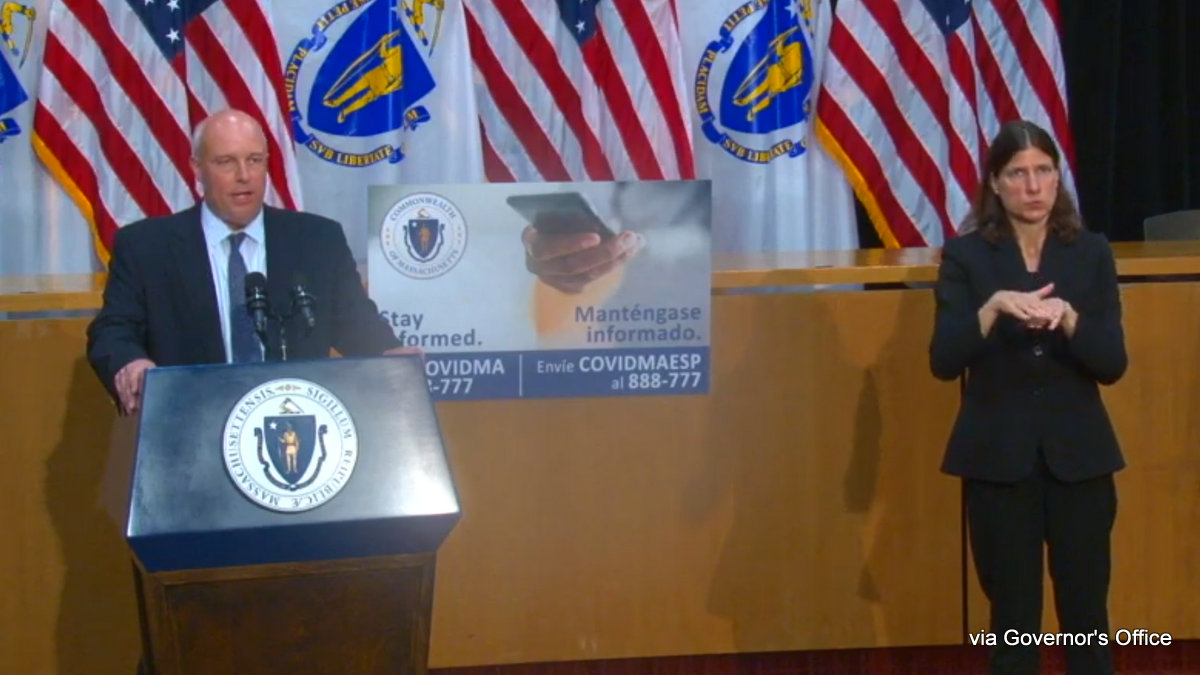
Secretary Michael Kennealy explains some of the restrictions for the next step in reopening.
Gov. Charlie Baker on Friday morning said the next step in Phase 2 of Reopening Massachusetts would commence on June 22, allowing for some inside dining, close contact person services, fitting rooms by appointment and increasing the occupancy percentage of offices.
"In order to monitor the impact of reopening more businesses, the administration divided this phase into two steps. Today thanks to the progress that we're making in fighting the virus, step two will begin on Monday, June 22," he said. "That means that a number of additional businesses may resume operations. This includes indoor dining restaurants and offices are permitted to go from 25 percent occupancy to 50 percent of their capacity."
He did urge businesses that are allowing teleworking to keep that practice and that executive branch employees working remotely will continue to do.
"While we're lifting the office space capacity limit, employers should continue whenever possible, to encourage their employees to work remotely from home whenever they can," Baker said. "And for densely populated areas, specifically Greater Boston, if people can keep teleworking, we can obviously keep people off the MBTA for a little longer."
But, he also said Phase 3 — which would include the openings of gyms — would not take place until the data was in for indoor dining. That would but the start of Phase 3 into July and past the anticipated June 29 opening.
"I'm just going to say point blank that indoor dining starts on Monday. We're going want at least two weeks of indoor dining data," the governor in response to a question. "I want two weeks, we want two weeks of indoor dining a data. Period."
The governor issued emergency orders in March that shutdown all but essential businesses unless those operations could be done remotely. Gatherings were limited to no more than 10 and schools were closed across the state. The four-phase reopening plan began at the end of May.
The guidelines for these newest allowances are available here.
"We've got here thanks to the sacrifices made by the business community, and their willingness to comply with the safety standards and guidance for each phase, and also your thanks to the residents of the commonwealth and their commitment to social distancing, wearing face coverings, and frequent hand washing," said Secretary of Housing and Economic Development Michael Kennealy. "A lot has been asked of everyone in these difficult times. And if everyone continues to do their part, we'll continue to make progress together."
Kennealy said there was a lot of reason for optimism and it was encouraging to see an increase in interactions between family and friends and "a burst of activity in local downtowns."
"But the fact is the virus is still here. And, as we previously said, that data and not dates will determine next steps to maintain the momentum we generated, all of us working together toward the same goal," he said.
Lt. Gov. Karyn Polito, who heads the governor's reopening advisory board, reminded municipalities that grant funding announced last week, the Shared Streets and Spaces Program, will be available for making infrastructure improvements to accommodate public access to businesses. A second grant program is now open to nonprofits and community groups. Applications for both will open on Monday, June 22.
"To complement those efforts, today we are pleased to provide details on anther funding source totaling $225,000 being made available to nonprofits and community groups to assist local economic recovery efforts, the Resurgent Places program," she said. The program through MassDevelopment will allow for grants up to $25,000 for things such outdoor dining.
Restaurants shifting back to indoor dining will have to abide by social distancing and sanitary protocols developed by the advisory board, such as keeping tables 6-feet apart unless they can be partitioned and limiting tables to no more than six parties. Baker said the decisions was to go by tables rather than occupancy limits placed on offices, retail and manufacturing because of the often unique layouts that many eateries have.
State officials encouraged residents and businesses to continue the sanitary protocols have that have lead to dramatic reductions in COVID-19 hospitalizations across the commonwealth. Baker also touted the testing and tracing program that officials see as a critical factor in reducing the spread of the novel coronavirus and which will come even more into play in fall as restrictions on interactions are expected to be lifted.
"No one really knows what's going to happen in the fall. There are plenty of people in the infectious disease community and epidemiological community who say that pandemic a like this have an echo and that the echo typically shows up in the fall," Baker said. "We talk to our colleagues in the health-care community about how they and we should be thinking about this.
"And I absolutely believe that one way you reduce the size of the problem in the fall is by doing everything you can to squeeze as much of the heat out of the virus you possibly can between now and then."
Tags: COVID-19, reopening, restaurants,
More Coronavirus Updates