Doctors Back Up State's Guidance for School Reopening
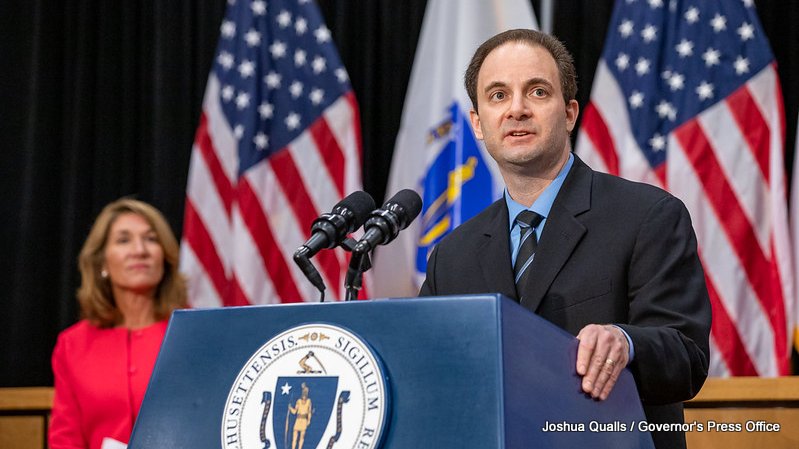
Dr. Lloyd Fisher, a pediatrician, discusses the reasoning behind some of the health measures recommended for reopening schools this fall.
But they will not do much good when it comes to reopening schoolhouse doors, Gov. Charlie Baker said on Thursday.
The commonwealth came very close to requiring daily temperature checks for students returning to school in the fall, but ultimately decided against the move because those checks would not yield any useful information, he said.
"With kids, there are way too many false positives and false negatives to not only not make it worthwhile but to create potential issues with respect to what people believed to be true," Baker said. "Many kids don't ever become symptomatic. They will test negative, because they don't have a temperature. Many other kids may have a temperature because they've been running around in the school yard before they went in. … They won't actually be sick but they'll be sent home.
"The overwhelming message we got from the health care community was, with respect to kids, temperature checks will actually provide people with a lot of the wrong information with respect to the status of those kids when they show up to school, and that will create more problems than simply having a really aggressive program with respect to face coverings, hygiene, hand-washing and an appropriate management of the school building."
When Baker and state education officials Thursday rolled out the commonwealth's guidelines for school districts, they were sure to bring backup from the health-care community. Worcester pediatrician Dr. Lloyd Fisher and Dr. Sandra Nelson, an infectious disease specialist from Massachusetts General Hospital, were on hand to explain the rationale behind the guidelines.
"We are quite pleased with the recommendations and are happy to endorse these guidelines," Fisher said on behalf of the Massachusetts chapter of the American Academy of Pediatrics.
One of the most eye-catching parts of Thursday's memo from the Department of Elementary and Secondary Education was its call for a minimum of 3-foot "social distancing" in schools, a departure from the now familiar 6-foot standard that Massachusetts residents have been hearing from state officials for months.
While DESE "encourages" schools to aim for 6 feet, Education Commissioner Jeffrey C. Riley said there is "growing research that says the [difference] between 3 and 6 foot is somewhat negligible."
Nelson expanded on that sentiment.
"We do support the CDC recommendation of 6 feet when possible," Nelson said. "But we acknowledge that's not always possible in a school setting. And when we started this, we learned that many other countries and also the World Health Organization have endorsed a distance of 3 feet as the minimum distance for separation.
"This is based on the distance that respiratory droplets travel, and respiratory droplets are the major means of transmission of COVID. The medical literature is still learning about COVID and transmission, but several modeling studies have been done which looked at 3 feet of distance versus 6, and in settings where the transmission risk is low, such as what we would expect in a school classroom, the incremental difference in transmission risk between 6 feet and 3 feet is not very high.
"On top of it, we're not relying solely on distance."
Embedded in the DESE guidelines are requirements that all faculty, staff and students older than first grade be required to wear face coverings. Schools also are encouraged to design schedules so that students can remain in "cohorts" throughout the day and not intermingle with other kids.
Fisher, the pediatrician, was asked whether it was reasonable to expect 8-year-olds to spend the day in masks.
He noted that guidelines do specify that schools should build in "mask breaks" during the day, preferably outside and with social distance. But he also argued that elementary school pupils are more compliant than one might think.
"We have some good experience in my own office … that yes, children of all ages have had some good successes wearing masks," Fisher said. "Are all children going to be successful? No. And we know that children with certain developmental disabilities, certain behavioral concerns, are going to struggle with it.
"That being said, the more that are able to wear a mask, the more we reduce the transmission. And as has been said by Dr. Nelson and others, we look at all of these mitigation efforts as a package, and we need to combine the mask wearing with the physical distancing and with hand-washing and hygiene and all of the other mitigation efforts that we talked about."
State officials on Thursday were clear that the focus of their guidance was to get as many kids into schools as safely as possible for as much time as possible.
And Fisher said COVID-19 is not the only health risk at issue in this process. Keeping children out of school has its own public health consequences.
"While for most children, COVID-19 has not had the devastating and life-threatening physical health effects that have occurred in adults, the negative impact on their education, mental health and social development has been substantial," he said. "The school experience provides so much more than academic learning. And the relationships that children form with their teachers, other school personnel and their peers are critical to their emotional health and well-being.
"In my day-to-day interactions with children and their families over the last few months, it has become clear that, for many, the remote learning experience has been a challenge."
Tags: COVID-19, school reopening,
More Coronavirus Updates