Q&A: Pothier Tickled Pink To Still Be Wearing Blue
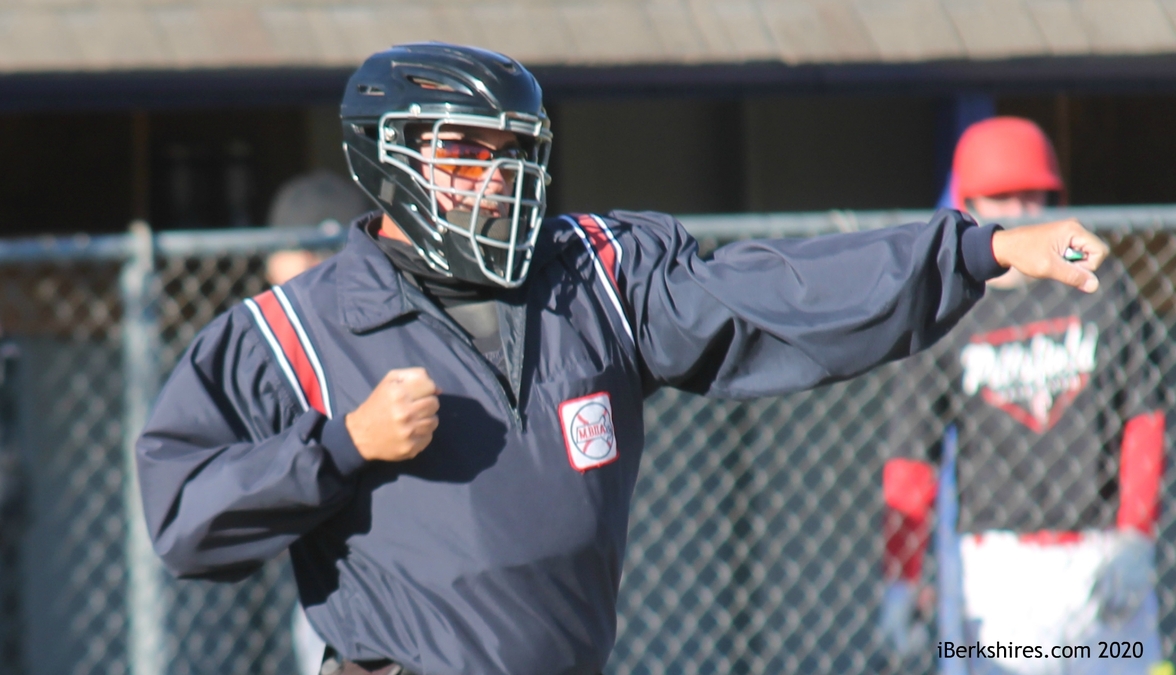
DALTON, Mass. — After 3,000 games and tens of thousands of judgment calls, Rich Pothier is a fixture on Berkshire County baseball diamonds and a walking advertisement for the recruitment of young umpires.
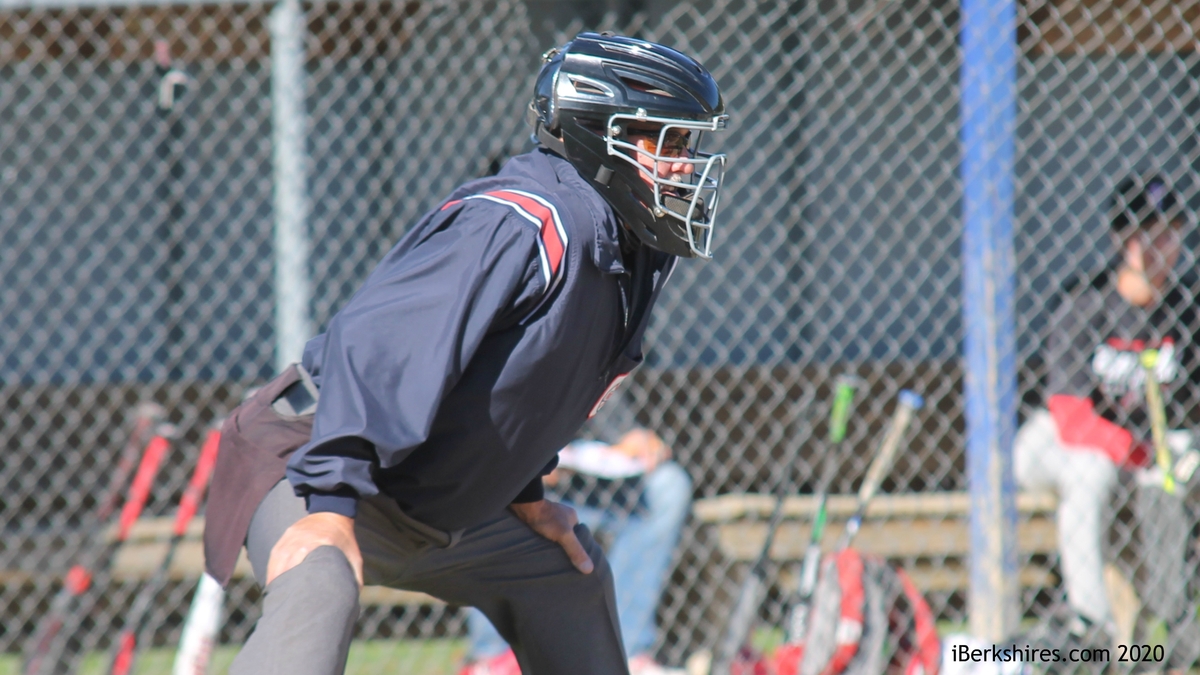
Moments before stepping behind the plate for his milestone 3,000th career game on Saturday, Pothier sounded as enthusiastic as ever and not the least surprised that career has lasted this long.
"Strangely enough, yes," Pothier said when asked whether he thought he would be umpiring well into his fifth decade. "Because I've loved it right from the first day I did it. I could envision myself doing it.
"I didn't have any talent as a baseball player, but I loved being out on the baseball field, and I found that I have an aptitude for doing this. I love doing it. So, it's the best of both worlds.
"I always say, it's the best seat in baseball, but you have to stand."
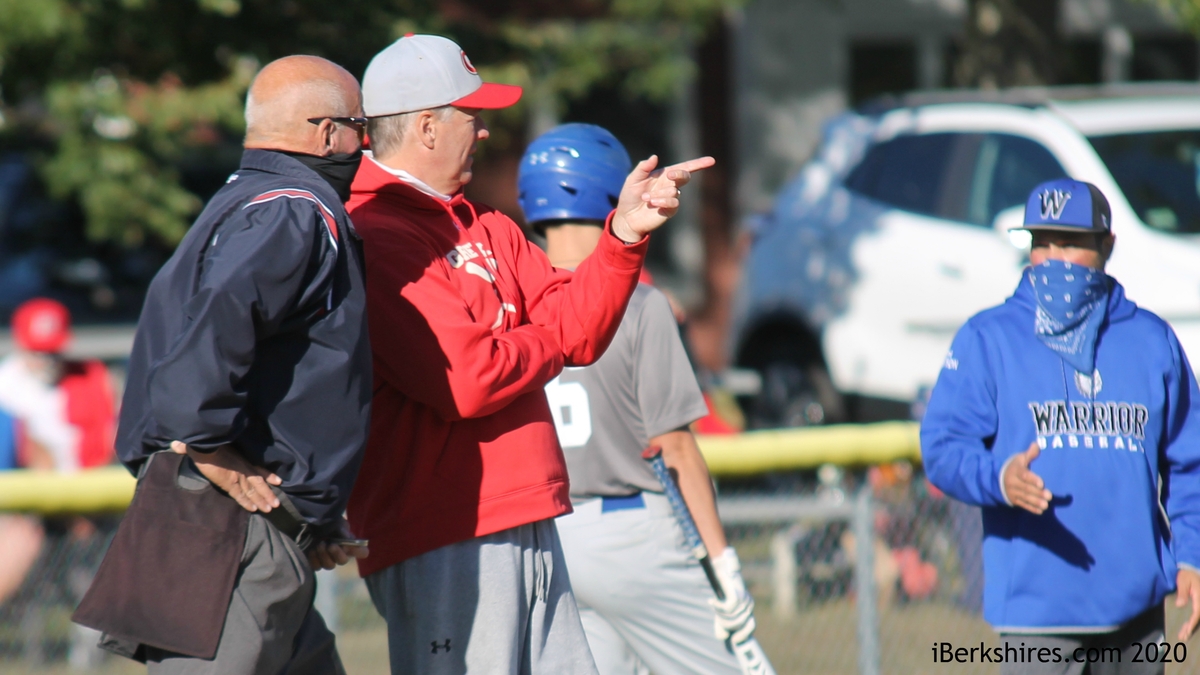
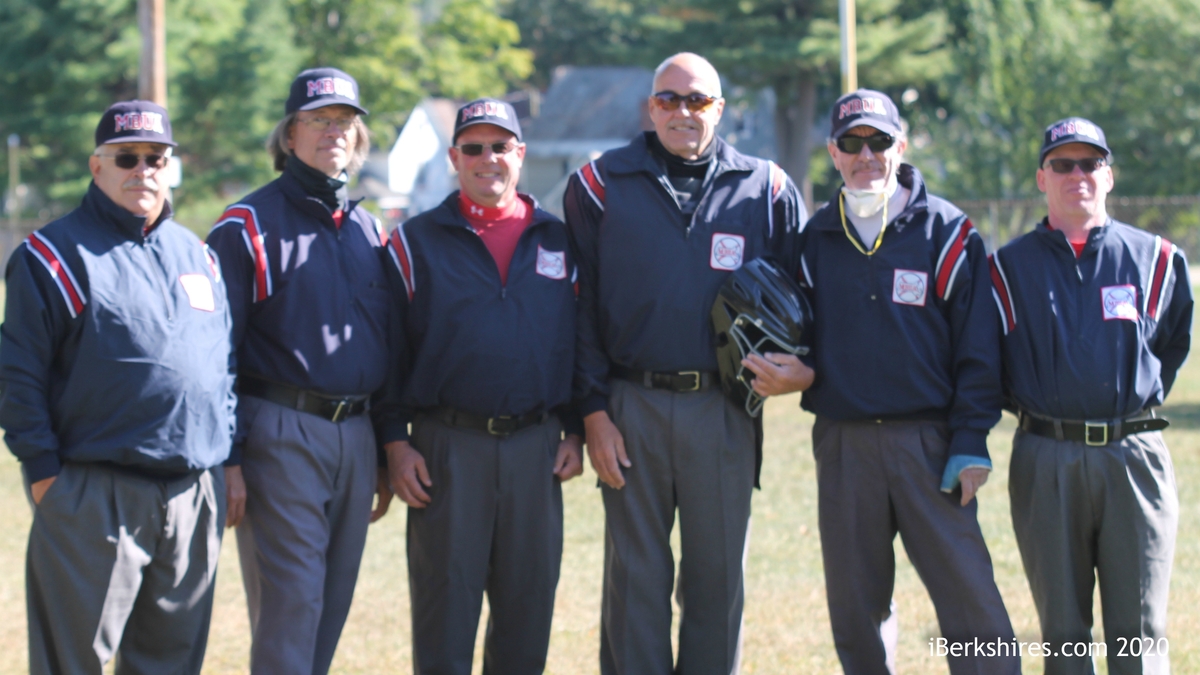
Five of his longtime buddies in blue stood by him Saturday at Pine Grove Park, making the game between Mount Greylock and Wahconah one of the most closely officiated Babe Ruth fall ball games you're likely to see.
Before they took the field, Pothier took some time to talk about his passion for the game.
Question: It must be nice to have all these guys out here with you today to help mark this milestone.
Rich Pothier: It is, and these are some of my closest friends. In fact, I looked it up. I've kept good records over the years, and cumulatively, if you look up just the games I've worked with these five guys right here, it's 949 games, between all these guys.
Almost a thousand.
Q: When did you start umpiring?
RP: 1974 in Marblehead, Mass, where I grew up. This is my 47th year.
Q: When did you come out to the Berkshires?
RP: I came out as a student in 1978 and ended up staying, never left.
Q: What school?
RP: MCLA, well, North Adams State College then.
Q: Has the job changed a lot over that time?
RP: Not really. I mean, the game of baseball doesn't change much, and the kids are the same as they always were.
Q: I was gonna ask. Are they the same?
RP: They are.
Q: Because the perception is that kids have gotten worse with things like talking back and that sort of thing.
RP: Maybe a little bit. But when they're out on the baseball field, by and large, it's all the same.
In Little League, the parents are worst when the kids are the youngest. By the time they get to be this age group, mom and dad know junior is not going to be signing a Major League contract the day after tomorrow.
Q: Do you have a preference for any one age group? You've done them all, right?
RP: Probably the older age groups. It's just better baseball. Anything on the big diamond I like better than the small diamond just because the baseball is getting to be better. By the time they get to be in high school, there's good, quality ball around here.
Q: Are the calls more challenging to make when you get to the older levels?
RP: Actually, the most challenging is at the smallest age groups. The older age groups, it's more predictable. You can more or less cheat a little bit because you know where they're gonna make the play. To capture the youngest age groups, you better adapt and be ready for anything to happen.
It's a little more predictable and controllable at the older age groups.
Q: After 3,000 games, do any players stand out? And do you have a chance to really appreciate the player when you're out there working?
RP: Yeah.
The amazing thing now, and I venture to say I'm gonna go out here and see one or two second generation kids out there today. I probably have had anywhere between 50 and 100 second generation people who I've seen.
One of these years, I'm going to get a third generation, and that might be a clue it's time to hang it up.
Q: How about memorable games? You've done Babe Ruth World Series games …
RP: I did the Babe Ruth World Series in 2016. I did the Little League World Series in 2011. Both were just great, great times and great baseball and provided some great memories.
But all 3,000 have been memorable in one way or another. I just love it. From the time I put the gear on back when I was 14 until now, I've loved every minute of it.
Q: Are there still things that surprise you out there, or have you seen it all at this point?
RP: Things can still happen on a baseball field that you haven't seen before. I'm drawing a blank on coming up with a quick example, but things happen that challenge our rules knowledge on occasion. Usually a game is predictable, and you don't have to dig through the vast knowledge of the rules, but sometimes you have to pull out some arcane rules to apply to different situations. That's part of the fun of it.
Q: Any doubt that you were going to be behind the plate for No. 3,000?
RP: I wouldn't have wanted to limp out onto the bases somewhere. It's definitely going to be on the plate, and I'm so happy that I have a bunch of friends to do it with.
Tags: Q&A, umpire,