image description
The Historical Commission has continued again a request by the city to raze 86 John St., former home of local faith leader Fannie Cooper.

Pittsfield Commission OKs Demo of Multifamilies
By Brittany PolitoiBerkshires Staff
Print Story | Email Story

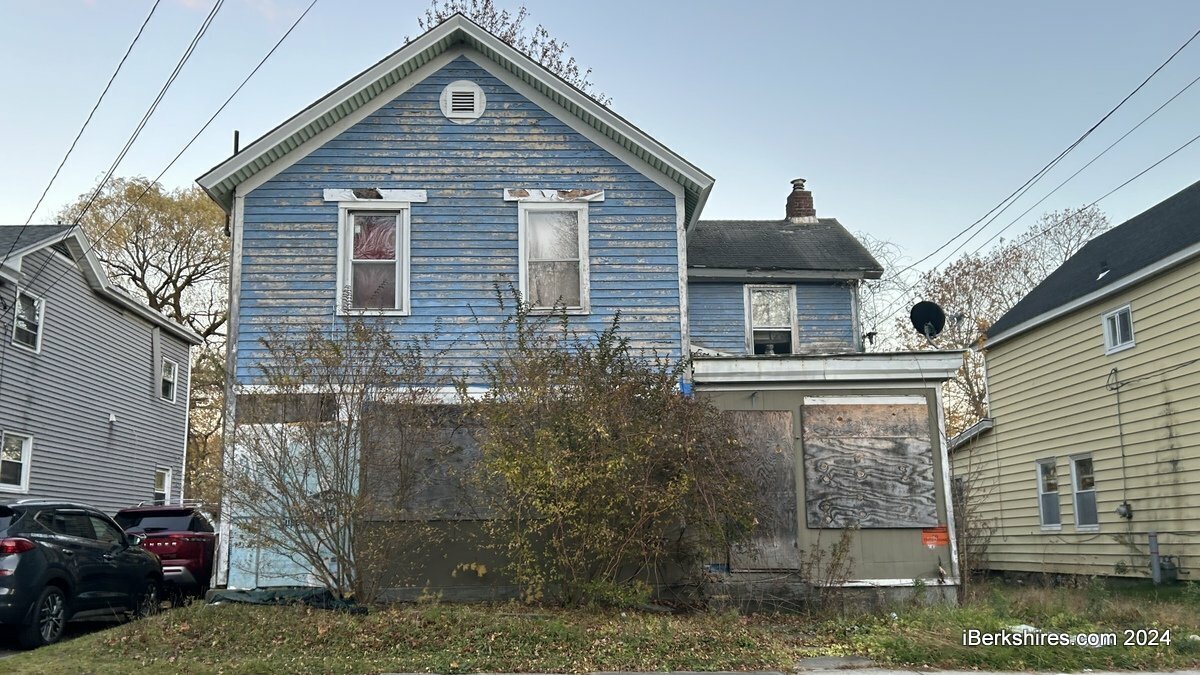
The city was hoping to have this blighted house on Fourth Street demolished by year's end. 

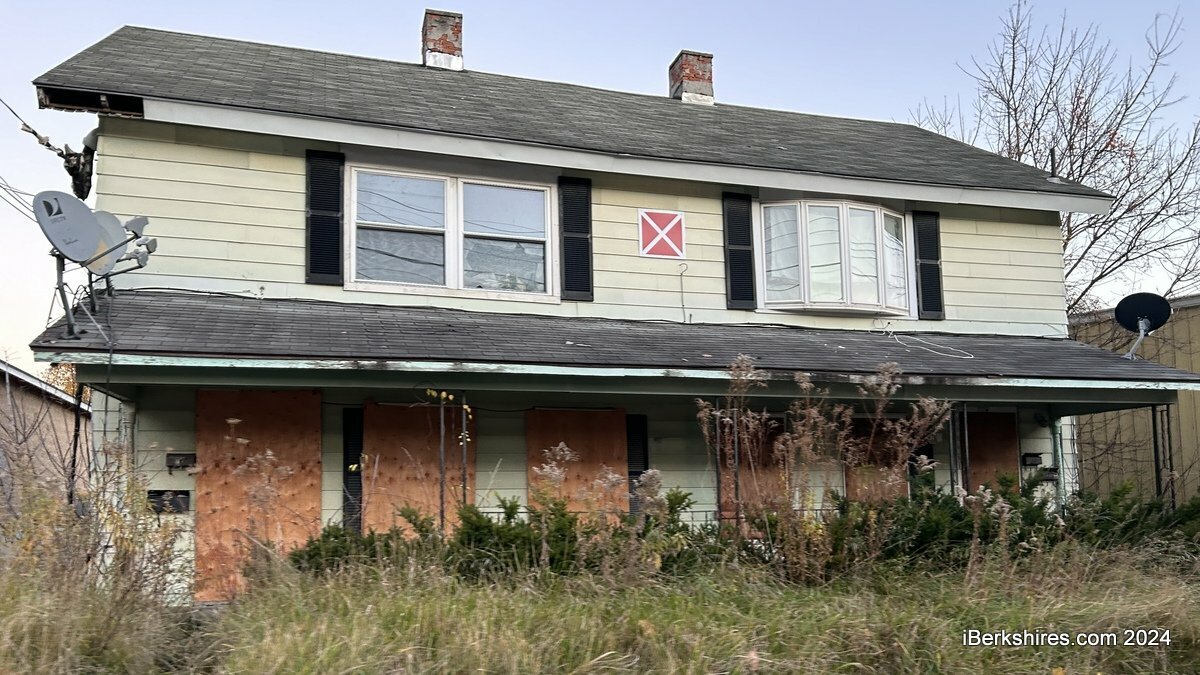
PITTSFIELD, Mass. — Disrepaired houses at 154 Francis Ave. and 224 Fourth St. will be demolished as part of the city's yearly efforts to address condemned properties. 

The Historical Commission earlier this month OK'd the demolition of the two multifamily homes built in the 1800s, and continued the decision to raze the former home of Fannie Cooper, Price Memorial A.M.E Zion Church's founder. 

"If we can pause and see the inside to see if it's really too far gone, but also to let people be a little more aware that it belonged to a legend," Chair John Dickson said about the John Street home. 

"Perhaps in a month's time or at the next meeting, we'll be ready to move forward." 

The Francis Avenue property, built in 1863, has a compromised roof, making it difficult to rehabilitate and vulnerable to the elements. Heirs have not maintained the property, and it has seen code enforcement actions from the city since 2018, now marked with an ‘X' because it is unsafe to enter. 

The Fourth Street home, built in 1893, is in a similar situation. 

Community Development & Housing Program Manager Nate Joyner said the city would like the John Street and Fourth Street properties demolished this year, and the other in 2026. 


The commissioners didn't act on a request to demolish 86 John St., built in 1893, because they wanted more information on the home that once belonged to the prominent local faith leader. Cooper founded the Price Memorial on Linden Street and was the sister of Dorothy Amos, for whom the West Street park is named. 

The property, held in Cooper's estate, has been vacant since 2018 but has been monitored by the city for code enforcement since 2008. It is believed to have begun falling into disrepair around 2013. 

"And then in 2018 it was left vacant, and it's just been in deteriorating condition since then," Joyner reported. 

The taxes are too advanced to be put forward for receivership, he said, and the property has been accruing penalties and interest for nonpayment of taxes since 2020. Receivership is a legal process where a court-appointed, neutral third party takes control and management of a residential property, and Pittsfield tries to identify two or three properties for this process each year. 

Joyner recommended that commissioners not enter the property because of its unsanitary condition and other concerns, like mold.  

The city is tracking around 80 vacant residential buildings. Reportedly, many heirs see shuttered properties as a cost burden and don't have the resources for needed repairs.  

The city can respond with a tax title, when the local government places a lien on the property to secure the tax debt, or a lengthy tax title taking in land court. Buildable vacant land is made available to Central Berkshire Habitat for Humanity or the West Side Legends for affordable housing. 


Tags: blight,   demolition,   
If you would like to contribute information on this article, contact us at info@iberkshires.com.

Why Berkshire Community College Is Essential to Our Community

Berkshire Community College is central to the life of Berkshire County, and nothing demonstrates BCC's contribution to the community more than its ability to provide a trained, ready workforce. BCC is deeply connected to the needs of our Berkshire County employers, tailoring its academic programs to specifically meet their needs. The nursing program, for example, trains professionals in many nursing fields that keep up with an ever-growing demand. Meanwhile, BCC's workforce training certificates
cover high-demand employment areas, including social services, hospitality, manufacturing, engineering, education, computers and IT, business, Commercial Driver's License (CDL) holders and more.
 
With free community college in Massachusetts, BCC attracts students from diverse backgrounds who are either entering the workforce for the first time, or who seek to gain or improve their skills and expand their careers. Free tuition supports students to succeed across the Commonwealth, and BCC is no exception. This past year, enrollment was up 13 percent. The number of students pursuing a certificate or degrees is up a stunning 73 percent over fall 2022.
 
Access and support
BCC's mission begins with access. Its welcoming environment draws students from across the Berkshires, the Commonwealth and beyond. That diversity is what makes the College special. Perhaps no one understands this better than outgoing BCC President Ellen Kennedy, who is retiring after 14 years of service to the College.
 
"Everything we do — every program we offer, every strategic plan we create, every building improvement we make — means nothing without access," Kennedy said. "The real meaning of community college is exactly what its name implies: a place for the community that welcomes everyone, regardless of where they are starting from, and gives them the tools to succeed."
 
Such supports are critical for student success, and it is an area in which BCC "truly shines," Kennedy said. From tutoring and mentorship to ensuring students have access to food and transportation, BCC makes it possible for students to complete degrees or certificates on their own timeline, including many who never thought it possible.
 
"We have students who haven't stepped foot in a classroom for decades, who never thought they would be going back to school, and who might be incredibly nervous at the prospect," she said. "Sometimes, those students might be working multiple jobs to make ends meet. They might struggle putting food on the table or finding care for their children or their parents or grandparents. Once we understand what a student needs, we act."
 
View Full Story

More Pittsfield Stories