image description
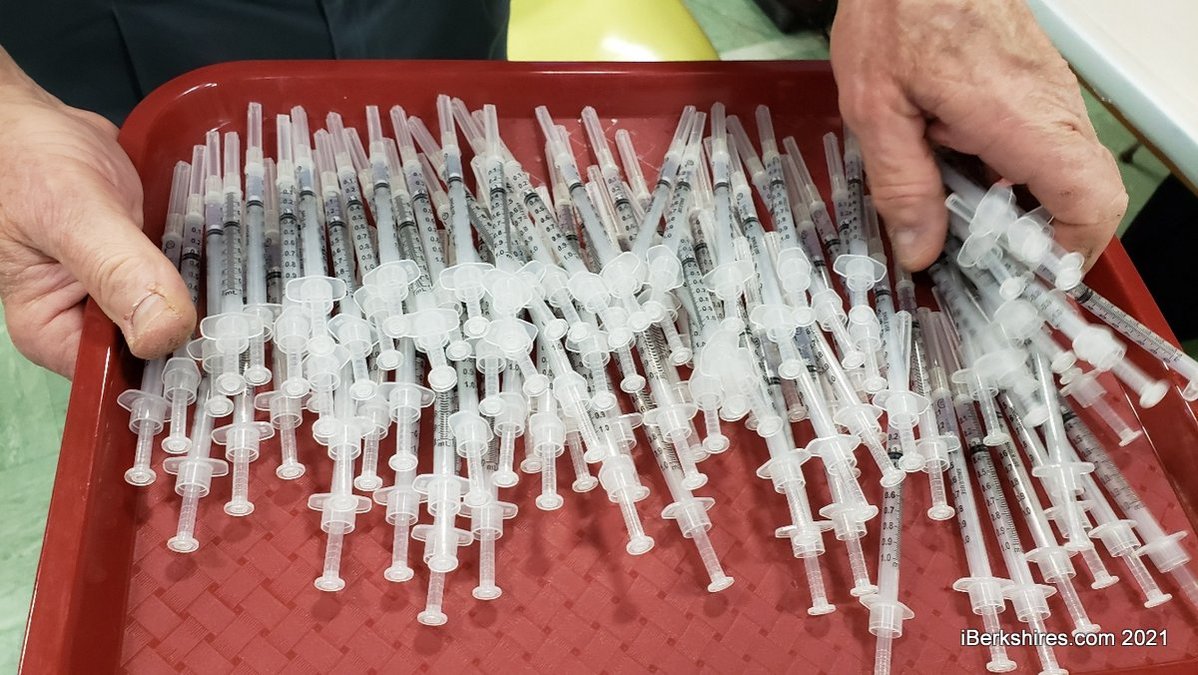
Doses of the Pfizer vaccine ready for injection at the vaccine clinic in North Adams.

State Launches Call Center for COVID-19 Vaccination Appointments

By Stephen DravisiBerkshires Staff
Print Story | Email Story

BOSTON — The state Friday launched a call center for residents to schedule appointments for a COVID-19 vaccination, but officials cautioned that it is only intended for those who either do not have Internet access or who have trouble accessing the appointment scheduling website.
 
Starting Friday, trained operators will be accessible by dialing 211 and choosing the option, "For help with scheduling a vaccine appointment," Gov. Charlie Baker announced on Friday morning.
 
The call center will be available Monday through Friday from 8:30 a.m. to 5 p.m. and will have more than 500 staffers on the line. Representatives will be available in English and Spanish and have access to translators in 100 additional languages, Baker said.
 
Also Friday, Baker and Secretary of Health and Human Services Marylou Sudders announced the start of a statewide ad campaign aimed at residents who are hesitant about the vaccine. The "Trust the Facts, Get the Vax" campaign will air ads on television, radio and social media platforms in multiple languages and will have a high profile "kickoff" during the pregame show for Sunday's Super Bowl.
 
Residents currently eligible to receive the vaccine are encouraged to continue using mass.gov/covidvaccine to find appointments, and as of Friday at 11:30 a.m., there were 20,000 appointments available for next week at the commonwealth's three "mass vaccination" sites, including Springfield's Eastfield Mall, Baker said.
 
The call center was established to help anyone who cannot schedule an appointment online.
 
"This resource is aimed at helping residents 75 and older," Baker said. "We expect this call center today will experience high volume, so people may need to wait in a line. Once connected, they will be asked to confirm that they are 75 and older and that they have trouble using the website."
 
Baker said the call center operators will not have access to any additional appointments that are not available through the site. In fact, the operators will make appointments for callers on the same website that users can access online themselves.
 
If a caller reaches an operator only to find no vaccination appointments are available within a reasonable distance to their home, they will be asked if they want to be placed on a callback list, Baker said.
 
"We believe this resource will be a huge help to folks over 75 who may not have access to the internet or have trouble using the website," Baker said. "I still recommend using the website because you may experience, as this thing gets going, significant delays using the call center."
 
He also said he expects the call center to remain an option for residents as the state progresses in its phased rollout of vaccinations — at the very least to accommodate residents in the 65 and older population, who currently are slated to be in the second group of Phase 2, or the next population in the queue after the 75 and older population.
 
In response to a question about the call center's hours of availability, Baker said the state considered expanded hours but thought limiting it to "business hours" is the way to go.
 
"We want to make sure that it's staffed appropriately and has the number of people we need on it to answer calls as they come in," Baker said. "Most folks are making calls for this type of thing during the day. I think our view is it's better to have a ton of people on during the day when the vast majority of people are reaching out than to spread that community into the evening when call volume would be significantly less."
 
Baker said the public service campaign "Trust the Facts, Get the Vax" was developed based on a survey of 1,000 residents and in consultation with a diverse group of experts in public health messaging.
 
"[The survey] oversampled people of color and communities that have been hardest hit by COVID-19," Baker said. "We wanted to know what barriers exist for people who are hesitant, who actually is hesitant about this and how to break through the myths that are out there."
 
A diverse group of doctors will be featured in the campaign's public service announcements, Baker said.
 
"While 47 percent of those surveyed were confident in the vaccine and eager to get vaccinated, 53 percent had concerns that ranged from taking a 'wait and see' approach to more hesitancy," Sudders said. "Survey data also confirmed that the most trusted sources were one's health-care provider.
 
"Not surprisingly, people of color and people in lower socio-economic status were disproportionately represented in that majority that is taking a wait-and-see approach or were more hesitant. The 47 percent 'early adopters' who were eager to get vaccinated were predominantly white and more affluent."

Tags: COVID-19,   


More Coronavirus Updates
Keep up to date on the latest COVID-19 news:


If you would like to contribute information on this article, contact us at info@iberkshires.com.

Puppets Teach Resilience at Lanesborough Elementary School

By Breanna SteeleiBerkshires Staff

The kids learned from puppets Ollie and a hermit crab.

LANESBOROUGH, Mass. — Vermont Family Network's Puppets in Education visited the elementary school recently to teach kids about being resilient.

Puppets in Education has been engaging with young students with interactive puppets for 45 years.  

The group partnered again with Bedard Brothers Chevrolet, which sponsored the visit. 

Classes filtered through the music class Thursday to learn about how to be resilient and kind, deal with change and anxiety, and more.

"This program is this beautiful blending of other programs we have, which is our anxiety program, our bullying prevention and friendship program, but is teaching children the power of yet and how to be able to feel empowered and strong when times are challenging and tough," said program manager Sarah Vogelsang-Card.

The kids got to engage with a "bounce back" song, move around, and listen to a hermit crab deal with the change of needing a new shell.

"A crab that is too small or too big for its shell, so trying to problem solve, having a plan A, B and C, because it's a really tough time," Vogelsang-Card said. "It's like moving, it's like divorce of parents, it's changing schools. It's things that children would be going through, even on a day to day basis, that are just things they need to be resilient, that they feel strong and they feel empowered to be able to make these choices for themselves."

The resiliency program is new and formatted little differently to each of the age groups.

"For the older kids. We age it up a bit, so we talk about harassment and bullying and even setting the scene with the beach is a little bit different kind of language, something that they feel like they can buy into," she said. "For the younger kids, it's a little bit more playful, and we don't touch about harassment. We just talk about making friends and being kind. So that's where we're learning as we're growing this program, is to find the different kinds of messaging that's appropriate for each development level."

This programming affirms themes that are already being discussed in the elementary school, said school psychologist Christy Viall. She thinks this is a fun way for the children to continue learning. 

"We have programs here at the school called community building, and that's really good. So they go through all of these strategies already," she said. "But having that repetition is really important, and finding it in a different way, like the puppets coming in and sharing it with them is a fun way that they can really connect to, I think, and it might, get in a little more deeply for them.

Vogelsang-Card said its another space for them to be safe and discuss what's going on in their life. Some children are afraid because maybe their parents are getting divorced, or they're being bullied, but with the puppets, they might open up and disclose what's bothering them because they feel safe, even in a larger crowd. 

"When we do sexual abuse awareness that program alone, over five years, we had 87 disclosures of abuse that were followed up and reported," she said. "And children feel safe with the puppets. It makes them feel valued, heard, and we hope that in our short time that we're together, that they at least leave knowing that they're not alone."

Bedard Brothers also gave the school five new puppets to use. Viall said the puppets are a great help for the students in her classroom, especially in the younger grades. 

"Every year, I've been giving the puppets to the students. And I also have a few of the puppets in my classroom, and the students use them in small groups to practice out the strategies with each other, which is really helpful," she said. "Sometimes the older students, like sixth graders, will put on a puppet show. They'll come up with a whole theme and a whole little situation, and they'll act it out with the strategies for the younger students. It's really cute, they've done it with kindergarteners, and the kids really like it."

Vogelsang-Card said there are 130 schools in Vermont that are on the waiting list for them to come in. Lanesborough Elementary has been the only Massachusetts school they have visited, thanks to Bedard Brothers. 

"These programs are so critical and life-changing for children in such a short amount of time, and we are the only program in the United States that does what we do, which is create this content in this enjoyable, fun, engaging way with oftentimes difficult subjects," she said. "Vermont is our home base, but we would love to be able to bring this to more schools, and we can't do this without the support of community, business funders or donors, and it really makes a difference for children."

The fourth-grade students were the first class to engage with the puppets and a lot of them really connected with the show.

"I learned to never give-up and if you have to move houses, be nervous, but it still helps," said William Larios.

"I learned to always add the word 'yet' at the end," said Sierra Kellogg, because even if she can't do something now, she will be able to at some point.

Samuel Casucci was struck by what one of the puppets talked about. "He said some people make fun of him if he dresses different, come from different place, brings home lunch, it doesn't matter," Samuel continued. "We're all kind of the same. We're all kind of different, like we have different hairstyles, different clothes. We're all the same because we're all human."

"I learned how to be more positive about myself and like, say, I can't do this yet, it's positive and helpful," said Liam Flaherty.

The students got to take home stickers at the end of the day with contact information of the organization.

View Full Story

More Williamstown Stories