Williams College, Partners to Seek More Accurate, Just Historical Narrative
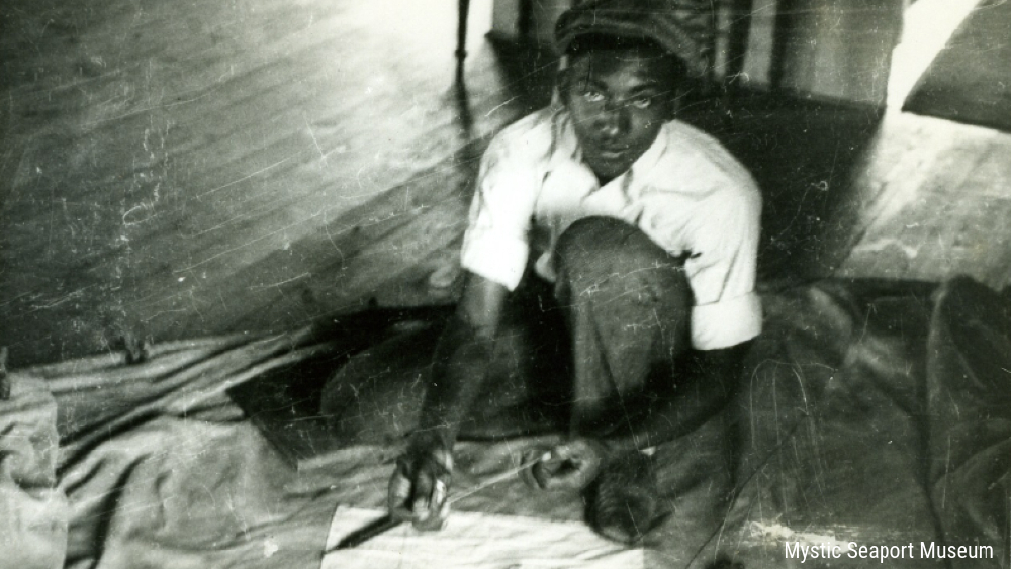
Black and white photograph of Maryland sailmaker Curtis Downes, circa 1950.
It will take many years — and many hands — to set the record straight and create an accurate historical picture of how the United States came to be.
Last week, Williams College took a big step in helping that process when it was named, along with two academic partners, the recipient of a $4.9 million grant from the Andrew W. Mellon Foundation as part of the non-profit's Just Futures Initiative.
Williams, the Mystic (Conn.) Seaport Museum and Brown University's Center for the Study of Slavery and Justice will spend the next three years on a project titled "Reimagining New England Histories: Historical Injustice, Sovereignty and Freedom."
"Oftentimes, what some people believe to be the history of a space and place is not accurate and full," said Leticia Haynes, vice president for institutional diversity, equity and inclusion at Williams. "It's important because we know that communities, especially communities of people of color, have been historically oppressed in our society, in Berkshire County, and are not reflected in the history.
"From the perspective of the college, it is critically important for our students to understand and see how they themselves are reflected and the people in their community."
The Mellon Foundation last summer invited 38 colleges and universities to submit project proposals to address "long-existing fault lines" of racism, inequality and injustice that challenge ideas of democracy and civil society.
Williams history professor Christine DeLucia, who co-wrote the grant proposal, said in a news release that the project will investigate "the powerful links between past, present and future" and reckon with the ties between slavery and colonialism.
That reckoning has been a trend in scholarly and popular histories over the past decade. From Ibram X. Kendi's "Stamped from the Beginning: The Definitive History of Racist Ideas in America," which won the National Book Award in 2016, to the New York Times' "1619 Project," which inspired curricular changes at public schools across the country to 2013's "Ebony & Ivy: Race, Slavery and the Troubled History of America's Universities," by Craig Steven Wilder, a former chair of African-American Studies at Williams, the practice of restorative history has never been more a part of the national consciousness.
Haynes said it is important that Williams be part of the process of creating a more truthful historical record.
"Much of that work does step from institutions," Haynes said. "Not just from scholars and professors but other people — students, faculty, staff, even alums who engage in the question. No one space or place should have the ability to have a monopoly.
"The fact that we continue to … bring to light histories, some of which were buried intentionally, is very important. What better place than an institution like Williams or Brown. It does elevate it in a different way at times."
DeLucia said the new initiative builds on work already being done in the field.
"In no respect do we see this project as the first to engage in these questions," DeLucia said. "We're building on a lot of important initiatives at Williams College, at Brown and in the communities. We're hoping Williams can complement that existing work.
"Events of the past year have especially pushed forward conversations about monuments, about institutions being responsible for their own pasts. That's all very much part of this work."
At Williams, those conversations often are inspired by the students, who will be part of the research conducted under the grant, DeLucia said.
"I'm relatively new to the faculty here," she said. "I've been here for a year and a half. And it's striking to me how much students have driven the conversations here about revising history, about wanting to delve into fuller, more accurate pictures of history.
"At Williams — and I know many of my faculty colleagues are doing the same — we're going into the college archives and the museum and working with original sources. Sometimes it's looking at monuments, sometimes it's looking at the land itself. From there, we're having deeper conversations about, 'What is going on here? How does this item or source ask us to think in different ways about stories we think we all know?' "
The specific research questions to be explored under the grant are under development, but DeLucia said some of the major themes will include looking at how the histories of enslaved peoples and Native Americans in the Northeast are intertwined, the role of maritime history in the trafficking of slaves, and the connection between New England and other parts of the world, like the Caribbean, during the 17th and 18th centuries.
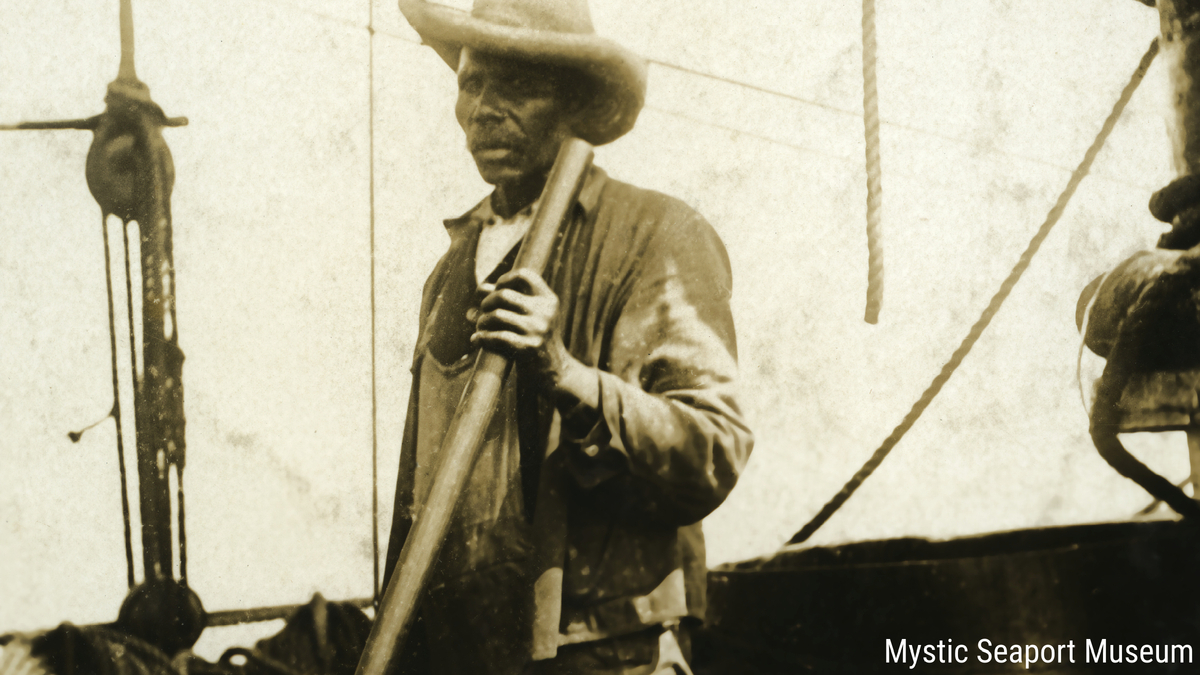
The impetus for the collaboration between Brown, Mystic and Williams came from Anthony Bogues, the director of the Center for the Study of Slavery and Justice in Providence, R.I., DeLucia said. He reached out to the Mystic Seaport Museum, which has a longstanding academic partnership with Williams, which regularly sends undergraduates to the Connecticut institution to study the sea.
"At the very outset of this project, we knew it would be important to seek and develop a method that was interdisciplinary," DeLucia said. "It is not just looking at written documents but also looking at and taking seriously oral traditions, the stories that families have maintained. It also will be important to look at objects, the land itself as a way of knowing, the arts, performance. That dimension is exciting about this. What happens when you look at the past through multifaceted lenses.
"Mystic has tremendous collections down there. Being able to put those into the conversation with resources from, potentially, Williams College and other institutions in the area is something we're very much looking forward to."
Among the tangible outcomes planned for "Reimagining New England Histories," are an online "decolonial archive," expanded courses on historical injustice at all three member institutions and an exhibition at Mystic Seaport Museum focusing on "race, subjugation and power." DeLucia said she also would like to see a public facing display of the research in Williamstown and Berkshire County.
DeLucia stressed that the research is not meant to be a "narrow version of the past" but rather an examination of "where we are right now and where we're going in the future."
In that vein, the new initiative will inform the work of the college's Committee on Diversity and Community, a collection of faculty, staff and students charged with making recommendations "on both curricular and extracurricular matters with the intention of promoting better understanding between and among groups on campus."
Haynes, who serves on the CDC, said that body already is engaged in the kind of work to be funded by the Mellon Foundation grant and will benefit from the new research the grant supports.
"Already people have found things in the archives and lifted up information people did not know previously about how the college has and Williamstown has engaged different communities," Haynes said. "We do look forward to sharing some of that work in the coming months."
An honest understanding of history is key to the work of both the CDC and Haynes' Office of Institutional Diversity, Equity and Inclusion.
"We do that work every day, but how we do that is often affected by what we know," she said. "Often, we want to solve the problem but don't know the root of the problem. I like to say to people, there was 400 years of racial segregation in this country. It can't be undone 70 or 80 years after the Supreme Court handed down Brown vs. Board of Education.
"As people come to understand more, it often helps us understand how we address certain concerns, how we make sure we're advocating for social justice and racial justice. We never say we're going to wait [until the historical record is completely corrected]. There will always be more that comes to light. But the additional information helps shape how we address the challenges in our society."
Tags: historical, Williams College,