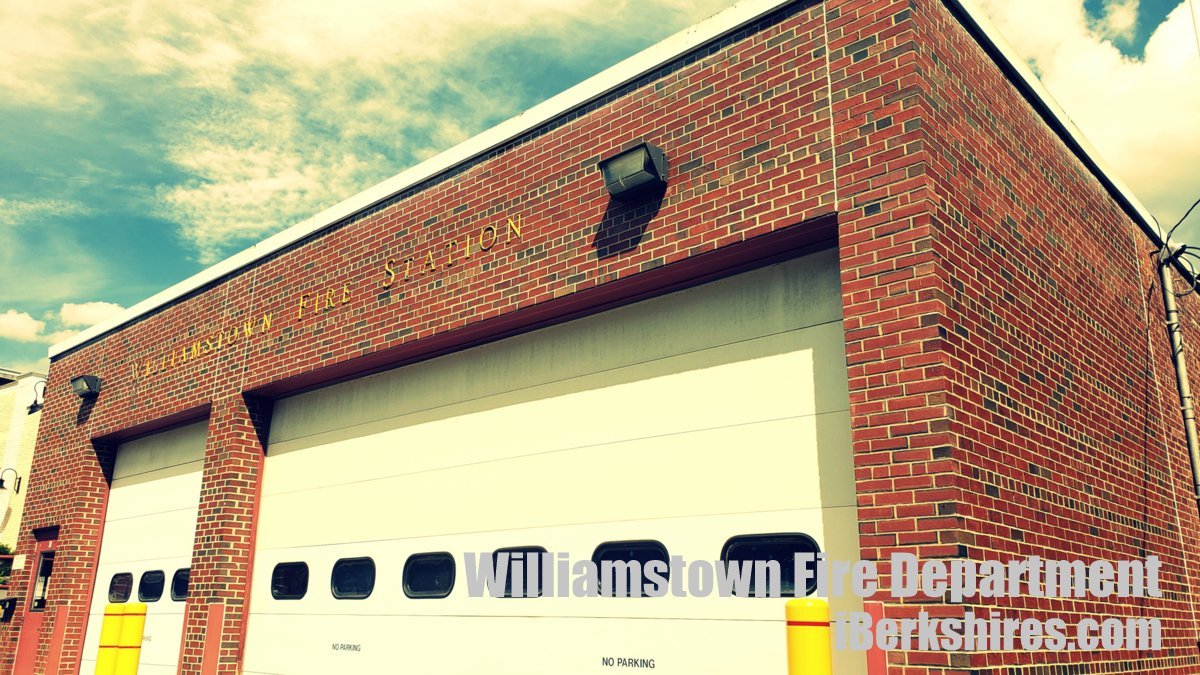
Williamstown Fire District Building Committee Recommends Owner's Project Manager
WILLIAMSTOWN, Mass. —The Williamstown Fire District's Building Committee Friday chose to recommend the district appoint Colliers International to serve as the owner's project manager on the district's planned project to build a new fire station.
Six of the eight committee members in a virtual meeting selected Colliers, which has offices in Boston and Agawam and throughout the country, from among three firms the panel interviewed.
"Colliers stood out," said committee member James Kolesar, an emeritus vice president for public affairs at Williams College. "Their presentation was thoughtful, crisp, to the point. They highlighted things that the other groups had to be asked about; one was sustainability and greenness. They told a plausible story about how that's pretty important to them and they have a lot of experience in that.
"The other one, as Elaine [Neely] mentioned, that I think is really important to our project and to me, is outreach. They convinced me that they could give concrete examples of being creative and specific in ways they helped communities do that work. They told a plausible story about exciting contractors to work in a remote location like ours, another detailed story about working in the time of COVID."
Kolesar joined Fire Chief Craig Pedercini, Assistant Chief Michael Noyes, firefighter Ryan Housman, Prudential Committee member David Moresi and Building Committee Chair Neely in naming Colliers their first choice for the OPM contract.
In a second round of voting, six members of the committee picked New Bedford's Architectural Consulting Group to be its second choice among the three finalists, in case the district cannot agree to a contract with Colliers.
Ultimately, the five-person Prudential Committee will decide whether to accept the recommendation of the Building Committee and approve a contract with Colliers. The Prudential Committee's plan is to use the expertise of an OPM to select an architect and general contractor for a new station on Main Street and, eventually, oversee the construction process.
Colliers, according to its website, was founded in Australia and expanded to the United States in 1978. Today, it has more than 150 offices in the U.S., operates in 67 countries and has $3.3 billion in annual revenue.
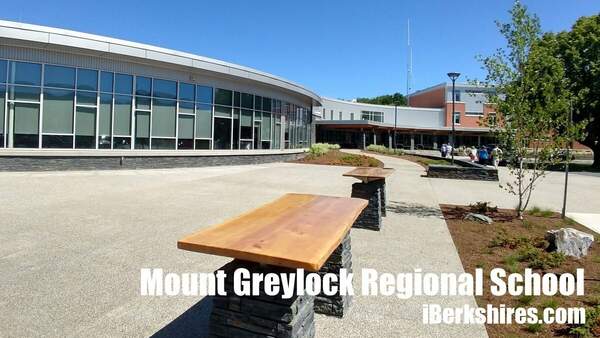
Locally, it managed the construction of the Williams Inn and the renovation of the Colegrove Park Elementary School in North Adams (as Strategic Building Solutions).
"I did speak to about eight people of varying scopes, all who had been engaged with Colliers," said Moresi, who was tasked with checking references for the firm. "Most of that came from Berkshire County. And as had mentioned at the last meeting, not only did I look to engage with public officials who utilized Colliers as an OPM, I also spoke to some of the larger contracting firms who have worked directly under Colliers.
"Overall, everyone had positive things to say. … I did speak with former Mayor [Richard] Alcombright of North Adams; Nancy Ziter, former business administrator; Jim Montepare, former superintendent of North Adams Public Schools. Nothing negative about Colliers. … They said they represented the interest of the city well. That was a challenging project, and they did make note of it. They had significant issues with the general contractor on that project. It was rather challenging at times, and they said Colliers did a good job. They really assisted the city through those challenges they experienced. Mr. Montepare said they were tenacious with respect to getting after the GC."
Later, during the deliberation phase of the meeting, Moresi said he thought the district would get the "whole package" from Colliers and added that he was concerned about what he was perceiving about another applicants' demeanor with general contractors.
"That can be very concerning on projects like this because that can create a toxic work environment when you have a GC and OPM butting heads," Moresi said. "Some of these OPMs can really be bulldogs. Yes, it's a fine line; they are representing the owners. But sometimes the way you present yourself and the way you go about it might yield better results. You've got to be careful you don't create these toxic work environments. … It seems like I heard that more than once in the feedback. That's something that raised a red flag with me."
Tags: fire station,