Reid Civics Class Holds Virtual Town Hall With Senator Hinds
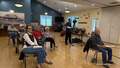
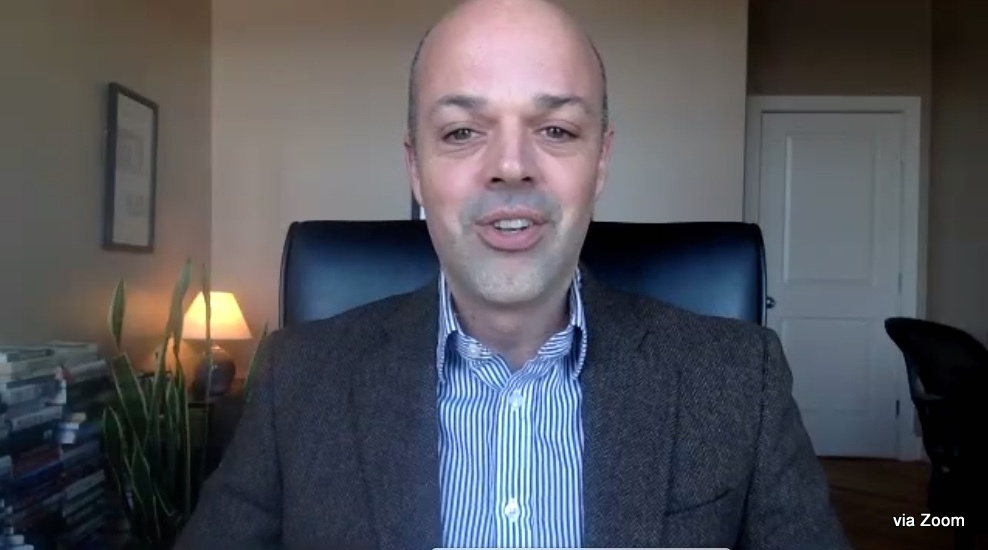
PITTSFIELD, Mass. — Reid Middle School students got a chance to quiz their state senator on Tuesday to kick off a student-led civics project.
The eighth-grade class prepared the questions for state Sen. Adam Hinds that were then vetted and chosen by the student civics leaders who represent each civics class.
Questions ranged from hate crime legislation, the First Amendment, the vaccination rollout, and getting back to a "new normal."
Principal Michael Henault said it was the changes made in 2018 to the state's history and social science curriculum framework that led to the virtual town hall with the senator. The core priority of the curriculum change was emphasizing and expanding civics education and supporting eighth-graders in a student-led civics project.
"Here at Reid, we value, and hope to inspire within our learning community, a lifelong commitment to informed and active participation in our democracy," he said in introducing the event.
Hinds, who was part of the legislation that passed the civic engagement bill, explained that he was first interested in governmental affairs when he ran for class president in the 8th grade. He worked for the United Nations and spent nearly 10 years focused on issues that are at the heart of the United States' national interest in the Middle East before returning to Pittsfield.
The town hall was moderated by teacher and civics Debra Guachione.
Hinds told the students in considering the Hate Crimes Reform bill he has proposed, he needed to look at which part of the current legislation needs to be strengthened to send a signal that hate crimes are not acceptable in the community.
He also had to consider how to deter people from engaging in a hate crime.
"We looked at the hate crimes statute and said, 'well, how are those the consequences articulated' and then we finally reached out to the attorney general and it turned out that they were also looking at this," Hinds said. "So we teamed up and kind of compared notes about what we were hearing and some ideas we had, and sure enough we found out that the ability to prosecute was undermined by a couple of things in the legislation."
Without clearly defined bounds for a hate crime, it was difficult to prosecute those who committed one. Because of this, Hinds and his team identified a definition of a hate crime so that judges can have a guide in the courtroom and committers can be sentenced properly.
"It's not acceptable and we're going to take a stand right here," Hinds said.
On the topic of First Amendment rights, Hinds told the students to be aware of false equivalence when it comes to protests.
"Let me define false equivalence: It's saying that because you have a similar activity that one group would have the right to do it or not, or that you can combine groups into a similar group, just because they're groups, without thinking about what's the background, what are the circumstances in which they're acting, how are they acting, why are they acting that way."
Without being asked about the attack on the U.S. Capitol on Jan. 6, Hinds said the riot did not strike him as an equivalent to the Black Lives Matter protests that took place over the summer because it was a violent protest that deliberately disturbed democracy based on a false theory of a fraudulent election.
"Those are very different things because we have very clear evidence in the Black Lives Matter protests of disparate treatment of people of color by police and injustice in our system, and so, standing up, on the one hand, to fight for justice and equal treatment and equal justice and recognizing that our country has a history of oppression on the one hand, and saying that's the same as 'well I don't like the election outcome and I'm going to go disrupt a democratic process.' Those are not equivalent," Hinds said.
The senator said he did not support violence because he's seen how powerful nonviolent protest can be.
"I've seen how, when you organize effectively, you can stop a country, you can stop the negative outcomes and bring attention to change and create change," he said. "And so, honestly, we have the examples right here in this state with last summer and the Black Lives Matter protests and immediate police reform in the commonwealth. And those are all nonviolent protests."
Students raised concern for the safety of themselves and their families in the vaccination rollout. Hinds was clear on his stance that the rollout was not being as supplied as expected but was excited to announce that the Berkshires are in the top three counties for both the percentage of doses received and administered per capita.
"One of the most frustrating parts of the pandemic has been the vaccine rollout quite honestly because it feels like these are literally life and death situations, there are changes that are happening so quickly," he said, adding that he had criticized Gov. Charlie Baker on the process during a radio interview Monday.
Hinds confirmed that there is a supply problem from the federal government, as the 7 million residents of Massachusetts only receive 130,00 doses a week and said teachers should be moved forward in the rollout.
"It's a lot of frustration confusion and raising questions about the logic of some of the steps so that said the governor is clearly in a very difficult position," he said.
Guachione explained that students are "genuinely concerned and eager" to get back to some kind of normalcy within their educational and social lives, asking when people are expected to go back to work full time and how it will play out locally.
The state is now focused on areas such as better child care for when folks do return to work, Hinds reported, and he supported remote positions with infrastructure so that companies nationwide can pick from a larger talent pool.
"It's also giving us a glimpse at what the future could be in terms of where you can live and still get access to jobs anywhere in the globe," Hinds said. "You can live in Pittsfield, live in the Berkshires, I think we're all here because we love it here, and guess what? You can also work for Microsoft in Seattle, probably because more and more companies are going to have that ability to say look we can draw from the talent pool anywhere in the country or anywhere in the globe. And so I think that's the exciting thing it's that when you all are entering the workforce is going to look very different from when Mrs. Guachione and I did."
Curriculum department lead Judy Rush wrote a grant that allowed the school to partner with the Democratic Knowledge Project, a Harvard-based initiative aimed at strengthening civic education. This gave the students access to professional learning through their teachers, specifically around strengthening civics education.
Henault credited the school's social studies teachers, Guachione and David Demary for their work in making civics "come alive" by integrating it into the new curriculum along with the social justice work that's been done with the Anti-Defamation League.
"We have a history here at Reid of community action we're trying to build off of that, especially as we slowly emerged from the pandemic, and we're ready to take action," he said.
Demary told Hinds that his students are asking if they will be able to vote for him as president when they are eligible in eight years and Hinds joked that he claims himself as "President of the local dog catching association" with a nod to his compassion for furry friends.
On a serious note, Hinds hopes that in eight years he won't have 100 opponents running for state Senate, which is a bigger concern to him than running for president.
He said it was rewarding to be involved in service and civic engagement and being able to address how people are treated or troubles in a neighborhood or community and saying, "what can we do differently?"
"We've given a couple of examples of how powerful it is when all of you join forces, or even as an individual and say, 'here's how this is impacting us and here's what we want to see change,'" he concluded. "It gets attention."