Williamstown Town Meeting Will See Article on Greenhouse Gas Emissions
WILLIAMSTOWN, Mass. — June's annual town meeting will be asked to reaffirm a goal of net zero greenhouse gas emissions in the town of 7,700.
Representatives of the town's Carbon Dioxide Lowering (COOL) Committee met with the Select Board on Monday to discuss a warrant article the grassroots group is preparing to put before voters.
The resolution points out that the town already adopted the net zero goal in 2008. But it lags 30 other municipalities around the commonwealth in adopting "comprehensive, cost-effective plans to achieve these goals."
"We feel like the timing is really good because the state has come forward with a goal, a net zero goal by 2050," Nancy Nylen said. "It issued a report in December, and now it's in the process of creating legislation. There are other towns already ahead of us — about 30 towns have passed this goal and are working on plans to reach the goal. Williams College right now is embarking on their plan, so there's a great partnership we could be working with at the same time.
"We've really been a leader in Williamstown. It's great to be out in front a little bit. We have a good track record. It positions us well for resources that support these efforts. … Yes, we do have a history of setting goals, but the last time was in 2008."
While the town has accomplished a lot in the interim, the climate crisis that the '08 resolution was meant to address only has gotten more severe, with 2020 tying 2016 for the warmest year on record, according to NASA, and with nine of the 10 warmest years in recorded history occurring since 2005, according to National Oceanographic and Atmospheric Administration.
"The time is right," Nylen said. "Climate change is here, and it's time to act."
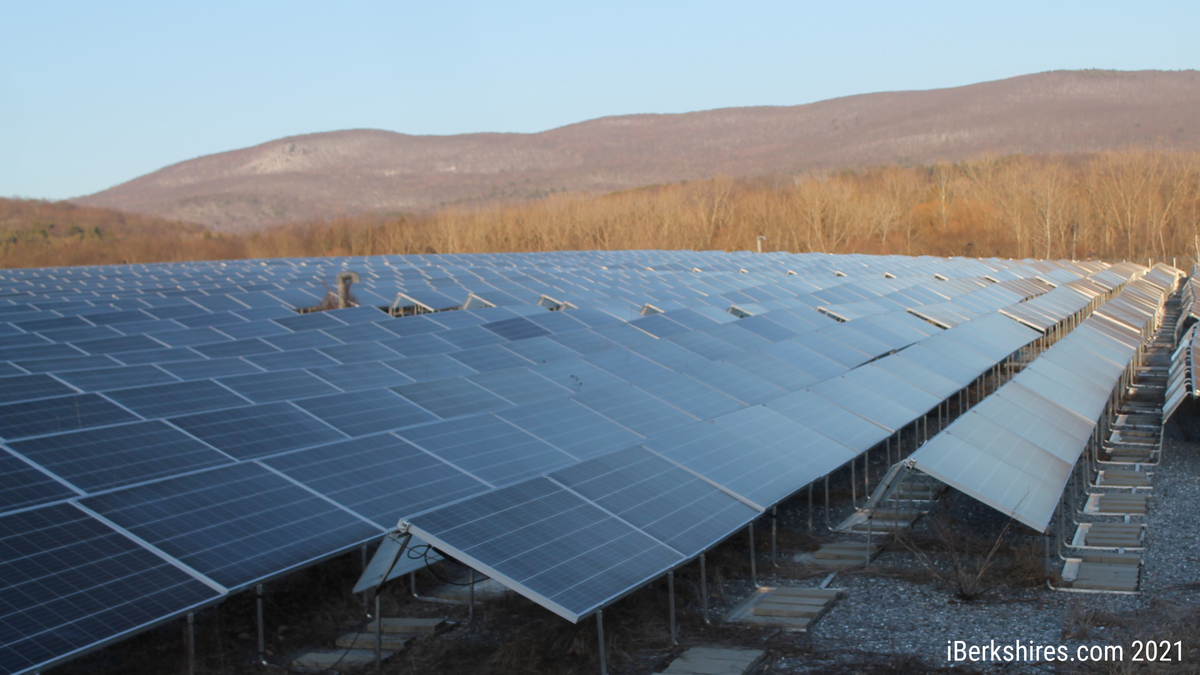
Nylen and Stephanie Boyd pointed to some of Williamstown's accomplishments over the last decade and a half, including two successful Massachusetts Solarize campaigns that helped more than 150 homeowners install solar photovoltaic arrays, a municipal solar project at the capped town landfill and a municipal electricity aggregation program with a green energy option.
The draft warrant article the pair brought to Monday's meeting calls on the town by 2023 to have a plan in place to prepare for the impact of climate change, include the net zero GHG emissions goal in all municipal decisions and, "take action to support clean, efficient, affordable, renewable technologies and approaches to heating, cooling and powering our homes and businesses; fueling our vehicles; minimizing and disposing of waste; and other activities."
Organizers say implementing the measures needed to achieve the net zero goal will create opportunities for local investment, save money, improve air quality and give town and its residents energy independence.
"One of the things we want to be thinking about when we think about net zero and climate is it can seem overwhelming," Nylen said. "We want to make it as practical and step-by-step as possible. So we've given ourselves a couple of years to come up with a comprehensive plan.
"And the way to net zero is going to be looking at a few areas: heating and cooling our homes and our businesses … transportation is a big nut to crack, but we're beginning to see electric vehicles are here and coming more and more … and then waste management also plays a part. In thinking about how to reduce our carbon, it's by the combustion of fossil fuels, and that's heating our homes and driving our cars and making goods. The less waste we create and the more we can recycle it, the better."
Boyd said the COOL Committee set a goal of generating a comprehensive plan by 2023 because it did not want to have town meeting pass a resolution that would "sit on a shelf."
"It would be a combination of volunteers like the COOL Committee, students working with us, and we're exploring funding for a consultant to help work on the plan," Boyd said. "Planning is the key. We're also looking at ways we can find synergies with the Master Plan that the Planning Board will be working on this year.
"We're looking at next year to find funding and the year after to do the plan."
Select Board member Andrew Hogeland said that plan might benefit from a paid consultant.
"There are a lot of talented, smart people around here, but it might be nice to have outside help," Hogeland said. "If you're looking for funding, I'm all for that."
Tags: climate change, greenhouse gases,