Williamstown FY22 Town Spending Expected Not to Impact Property Taxes
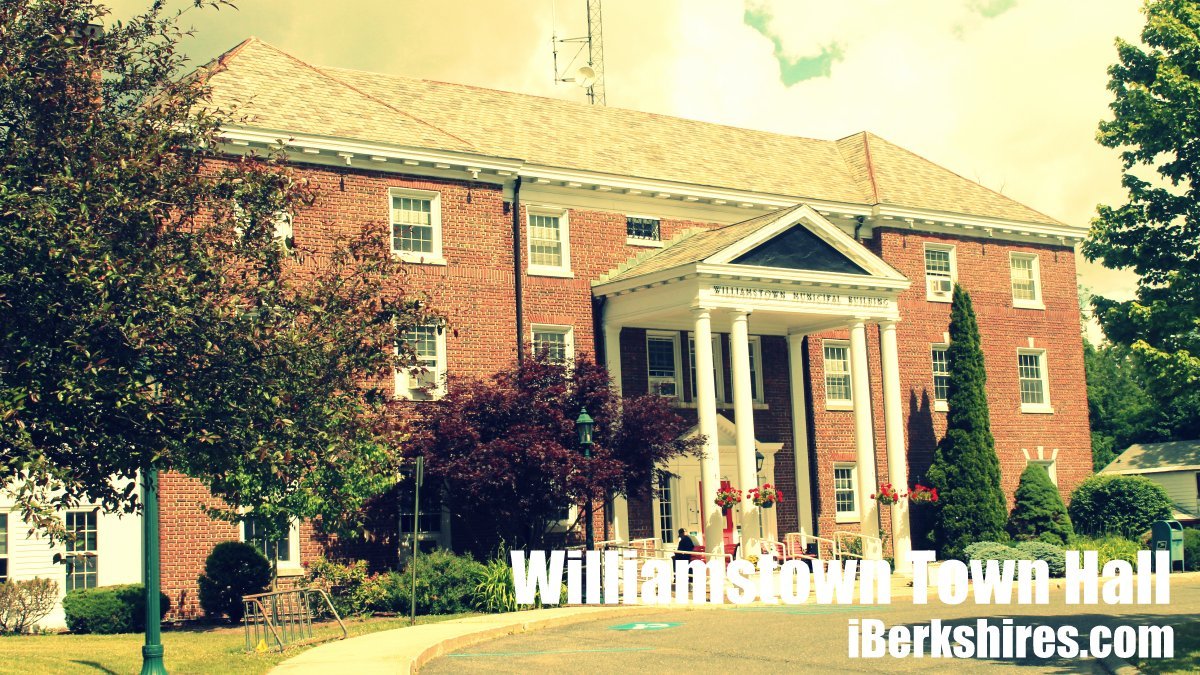
WILLIAMSTOWN, Mass. — The town is anticipating no net increase in taxation as a result of the town's operational budget in fiscal year 2022.
That was the bottom line takeaway last week when Town Manager Jason Hoch presented the FY22 budget to the town's Finance Committee.
What is unknown at this point is the size of an increase in the assessment from the Mount Greylock Regional School District. Total education outlays (which includes a much smaller assessment from McCann Tech) accounts for about 52 percent of the revenue raised by property taxes in FY21.
One day after Hoch's presentation to the Fin Comm, the Mount Greylock School Committee heard from the administration that it will be proposing a budget that seeks 1.67 percent more from Williamstown in the coming fiscal year.
Hoch projected the cost of total government services in FY22 to $25.9 million.
That includes a projected $12.4 million schools budget, $2.3 million for "enterprise funds" (water, sewer and the transfer station) and a $570,000 budge for the Williamstown Fire District, which falls outside the authority of Town Hall.
On the town spending part of the ledger (not including the enterprise funds), spending is budgeted to increase by about $458,000, with much of the increase due items like a 1.5 percent cost-of-living increase in the salaries of town employees and a $70,521 increase in the town's assessment from the Berkshire County Retirement System. Other increases include a $21,000 increase (35 percent) for the line item on mental health services and a proposed $50,000 allocation to the Williamstown Community Preschool, which would make it the fourth non-profit to receive town support.
In past years, annual town meeting voters have approved annual expenditures to support the operational budgets of the Williamstown Youth Center, Williamstown Chamber of Commerce and Sand Springs Recreation Center. If $50,000 for the preschool is added, non-profit spending would account for 1.79 percent of town spending ($191,000) in Hoch's proposed budget.
While Town Hall spending is expected to be up by just under $500,000, Hoch also is expecting non-property tax revenues to be up by about $484,000.
In budgeting for FY21 in the worst of the COVID-19 pandemic, the town planned for a steeper drop in non-property tax revenue (state aid, licenses and fees, rooms and meals tax, etc.) than it actually has seen. And it is returning non-tax revenue projections closer to pre-pandemic expectations for the fiscal year that starts July 1.
"All of our [spending] increases are largely offset by revenues," Hoch said. "The remaining 20 percent of articles will largely be offset by free cash."
Last Wednesday's presentation, the first in a series of weekly meetings for the Finance Committee in the winter and spring, also included a look at a budget center liable to draw interest from many in the community: public safety.
That accounts for 14 percent of the Town Hall budget (6.5 percent of total town spending through taxation once schools are factored in), and the vast majority of the public safety budget goes to the Williamstown Police Department, which has come under heavy scrutiny in the last year.
"Staff is the largest component of this budget, $1,117,657," Hoch said. "Applying a cost of living increase generates an increase of $59,851. This does reflect no net change of the staff level of chief, 12 full-time officers and a part-time officer. The staffing is really based on a model that has at least two officers per shift. We would prefer, where possible, to allow for two patrol officers and one supervisor."
Hoch said the commonwealth's recently passed police reform legislation likely will have a budget impact for municipalities, particularly around training, but the impact currently is unknown. The proposed spending plan does include the standard 40 hours per year of training that the WPD already requires.
Hoch, who will be leaving his position this spring, also noted that the town is studying the future of its public safety needs. That reflects a national conversation about the role of policing and whether law enforcement officers ought to be responding to mental health crises.
"We are engaged in an ongoing discussion about the future of policing, what it looks like, what's the right fit for this community, what we might want to use a different solution for," he said. "[What may] come with it is a conversation about an increase in overall spending or changing the 24/7 [police] coverage model.
"I can clearly see scenarios where we would like to land in a future place where things are not being handled by police. That's great. The challenge is, there isn't a lot of excess capacity to say: If I just pull two people out of rotation, I can cover this and move those dollars."
Randall Fippinger, addressing the Fin Comm in the public comment portion of its meeting, challenged the notion that altering public safety coverage requires a choice between more spending or reduced police coverage.
"I'd love it if there was a more creative solution," Hoch said.
"I raised that because based on everything we've seen so far, that's probably the conversation. That's not to exclude that there may well be a perfectly comfortable reason why people land where something different than 24/7 is a decision that is made. …. Even in the FY21 budget, when I looked and said, 'I have to get a starting point to start having a conversation on mental health, there wasn't a place to say, 'I can move these dollars over to here.' So we did it as new dollars."
Hoch's FY22 budget presentation included a data point that was requested by Fin Comm member Melissa Cragg, a benchmarking exercise that compared Williamstown's town budget priorities with those of four other Berkshire County municipalities: Great Barrington, Lenox, North Adams and Pittsfield.
According to data pulled from the commonwealth's Department of Revenue, Hoch compared the percentage of each community's spending for FY19 in seven areas: schools, police, fire, general government, public works, culture/recreation and debt service.
Williamstown was within the range for seven budget centers, including right in the middle, 6 percent, for police, which ranged from 5 to 7 percent in the four municipalities studied.
"One of the things that struck me as interesting is that … across broad categories, Williamstown falls at the upper end of schools (60 percent versus a range of 42 to 65 percent), in the middle for police and fire, general government at the higher end, public works at the higher end, culture and recreation, we're at the high end. Debt service (3 percent versus a range of 1 to 7 percent), it's nice to be at the lower end."
Tags: fiscal 2022, williamstown_budget,