image description
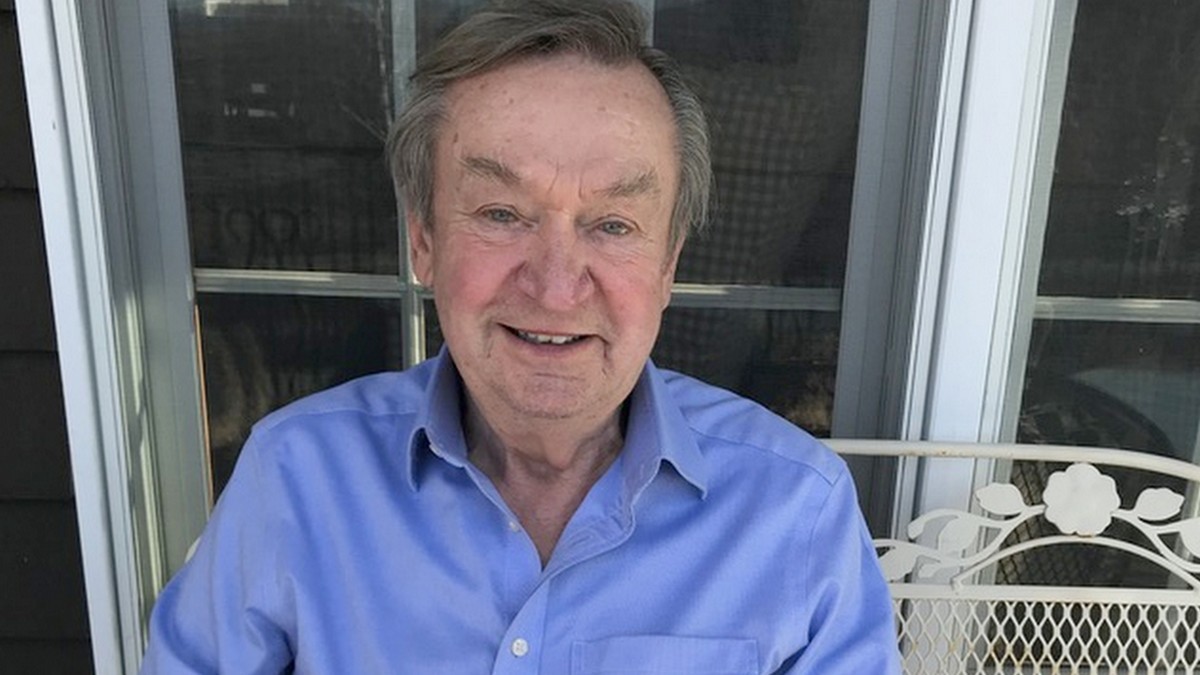
Selectman candidate Donald Sommer hopes to right the select board with past experience.

Sommer Wants to Bring Experience to Adams Selectmen

By Jack GuerinoiBerkshires Staff
Print Story | Email Story
ADAMS, Mass. — Selectman candidate Donald Sommer hopes to right the select board with past experience. 
 
"I have a great deal of experience, and I think that is very important  but successful experience should be mandated," Sommer said. "I think my background shows that I have successful experience in every board or commission that I have been on." 
 
He is one of three candidates vying for two three-year seats in the Board of Selectmen in the Monday, May 3, election; the other two are incumbent John Duval and newcomer Howard Rosenberg.
 
Sommer served as a selectman from 2007 to 2010 and before that was a member of the School Committee and the Redevelopment Authority. He ran unsuccessfully for selectman in 2019.
 
A business owner, he is involved with the Haflinger Haus Restaurant and Inn, the Greylock Apartments, and the Sommer Center for Music and Art 
 
Sommer said he decided to run again because he does not think the current board has delivered. 
 
"I don't think the board has moved fast or efficiently enough to get the town back economically and to be a pleasant place to live," he said. "Downtown has been stagnant for years and we haven't seen any movement."
 
Specifically, he felt the board members needed to show up to meetings more prepared.
 
"I think the board, especially some members, simply come to the meetings and say yes or no and then go home and forget about it," Sommer said. "I have never done that. When I was on the board I would show up with 15 to 20 questions. The board needs to be more active."
 
The tax rate is top in Sommer's concerns and he said the town needs to do a better job of attracting new business to grow the tax base. 
 
He suggested hiring a single employee who would work as a liaison between the town and potential businesses.
 
"We need a person whose sole purpose is to bring business to Adams," he said. "Someone with the contacts who can go around selling the town ... we need to show that Adams is an open community."
 
Sommer said he was concerned people in town were not as informed as they should be. He added that he thought the Board of Selectmen needed to be more transparent. He said if elected, his positions will be clear.
 
"You need people who have the qualifications and who are willing to do the work. I think I have that," he said. "I am pretty outspoken, and I think that some people may not like that but at least they know where I stand and they will know what is happening on the board."


Tags: election 2021,   town elections,   


If you would like to contribute information on this article, contact us at info@iberkshires.com.

State, Local Leaders Celebrate Funding Boost For Ashuwillticook Rail Trail Extension

By Sabrina DammsiBerkshires Staff

ADAMS, Mass. — State officials and local leaders kicked up their kickstands and took a ride along the final stretch of the Ashuwillticook Rail Trail on Thursday to celebrate new investments in rural communities.

Federal Funds and Infrastructure Office (FFIO) Director Quentin Palfrey joined local leaders, including State Rep. John Barrett III and Berkshire Regional Planning Commission (BRPC) Executive Director Laura Brennan, in Adams to highlight the newest round of FFIO funding. The grant will provide BRPC with $64,700 in state funds to help advance the Ashuwillticook Rail Trail expansion.

"When Governor Healey came into office, one of her big day-one commitments was to make sure that Massachusetts was fighting for every dollar possible coming out of Washington," Palfrey said, speaking about FFIO, a program created in 2023 to help the state aggressively pursue and coordinate federal funding opportunities.

This builds on a $17.3 million federal award secured last year for the project, dubbed the A2A project, which supports the design of a 9.3-mile shared-use path connecting the existing Ashuwillticook Rail Trail to the Williamstown Mohican Path.

"One of the things that she emphasized to me when we set up the Federal Funds and Infrastructure Office was that we need to make sure that these resources not only come into Massachusetts, but benefit all of Massachusetts," Palfrey added.

The additional $64,700 will allow BRPC to gather information about transportation needs in northern Berkshire County to help inform the design of the trail expansion. BRPC will partner with Williams College and Luminary Evaluation, LLC to use the University of Michigan's Transportation Security Index (TSI).

Brennan said BRPC will deploy a 16-question survey that will allow them "to research local and regional perspectives and surface the needs of our neighbors when it comes to transportation in the Berkshires."

"The best-case scenario would be if the survey turned up results that all needs are met and that everyone has access to the places and the things that they need to travel to – but we know that is not true," Brennan said. "We know that folks in Berkshire struggle to get to their place of employment, to be able to access important medical appointments, [and] other engagements. So, the transportation security index is going to help us really hone in on those specific needs, identify pockets of needs or areas where there is a strong concentration or depth of need."

She said FFIO's investment offers a "wonderful augmentation" to BRPC's current plans for the bike trail extension. It's also an investment that will make the region more competitive for other transportation opportunities.

"This is an incredibly multifaceted and valuable investment, and we deeply appreciate it," she said.

Barrett said these investments drive growth in the Berkshires.

"I've always found that if you're going to grow an area, you grow with what you have here to grow. You don't bring something in. We have a natural beauty. We have an environment that's second to none, and that's what we are going to grow on," he said.

Barrett said that in the First Berkshire District alone, 4,000 new people moved to the area.

"We're seeing that migration here. They're going to have activities. They're going to have jobs, and we're going to have a great educational system that goes with it with our two colleges that are here," he said.

Palfrey said it was clear during the initial creation of FFIO that federal funding often went to wealthier and more urban communities with larger planning departments and greater access to consultants. He added that FFIO helps reverse this trend and get projects in rural communities off the ground.

View Full Story

More Adams Stories