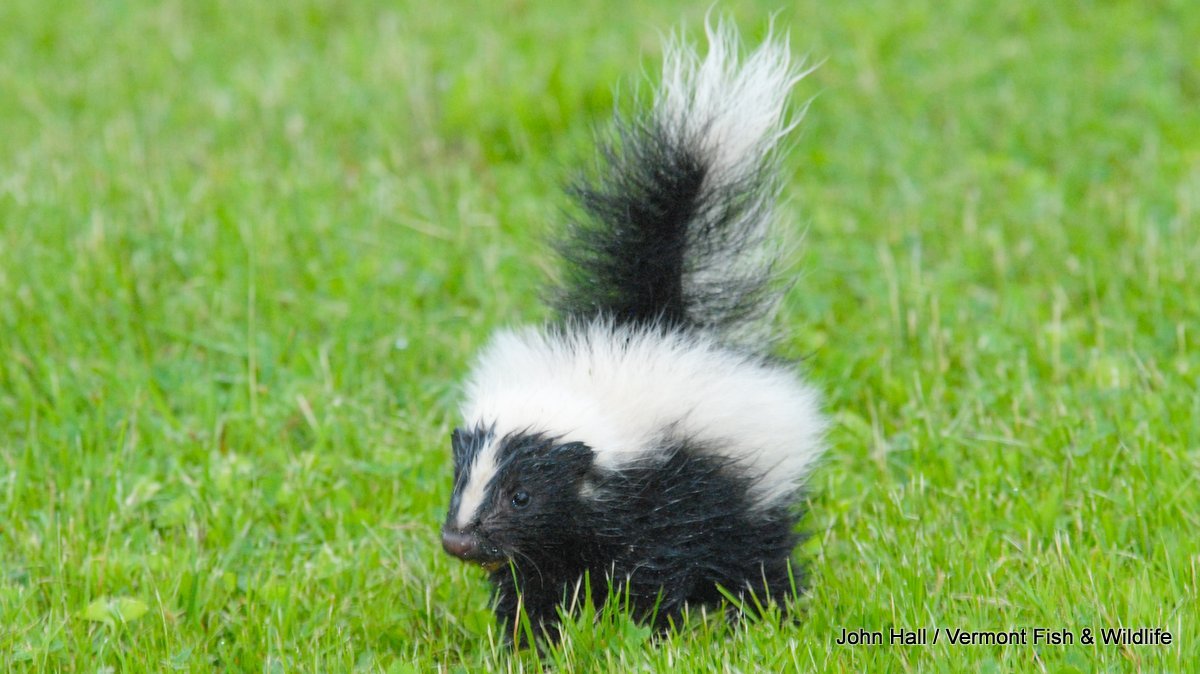
MONTPELIER, Vt. — Watching wildlife is enjoyable, especially when young animals appear in the spring. But it is best to keep your distance. Picking up young wildlife can do more harm than good, according to the Vermont Fish and Wildlife Department, and it is also against the law.
When people see young animals alone, they often mistakenly assume these animals are helpless or lost, in trouble or needing to be rescued. Bringing young wildlife into a human environment often results in permanent separation from their mothers and a sad ending for the animal.
Handling wildlife could also pose a threat to the people involved. Wild animals can transmit disease and angry wildlife mothers can pose significant dangers.
Department scientists encourage wildlife watchers to respect the behavior of animals in the spring and early summer, and to resist the urge to assist wildlife in ways that may be harmful. Here are some helpful tips:
• Deer and moose nurse their young at different times during the day, and often leave young alone for long periods of time. These animals are not lost. Their mother knows where they are and will return.
• Young birds on the ground may have left their nest, but their parents will still feed them.
• Young animals such as fox and raccoon will often follow their mother. The mother of a wildlife youngster is usually nearby but just out of sight to a person happening upon it.
• Animals that act sick can carry rabies, parasites or other harmful diseases. Do not handle them. Even though they do not show symptoms, healthy-looking raccoons, foxes, skunks, and bats may also be carriers of the deadly rabies virus.
• Many wildlife species will not feed or care for their young when people are close by. Obey signs that restrict access to wildlife nesting areas, including hiking trails that may be temporarily closed.
• Keep domestic pets indoors, leashed or fenced in. Dogs and cats kill many baby animals each year.
• Avoid projects that remove trees, shrubs and dead snags that contain nests during the spring and summer.
For information about rabies and wildlife conflicts, or truly orphaned wildlife (i.e. the adult has been hit by a car) call the Vermont Rabies Hotline at 1-800-4RABIES (1-800-472-2437) or, in Massachusetts, call your animal inspector or animal control officer.
For the safety of all wildlife, taking a wild animal into captivity is illegal, even one you suspect is sick, injured or has been abandoned.
If you would like to contribute information on this article, contact us at info@iberkshires.com.
Your Comments
iBerkshires.com welcomes critical, respectful dialogue. Name-calling, personal attacks, libel, slander or foul language is not allowed. All comments are reviewed before posting and will be deleted or edited as necessary.
No Comments
Companion Corner: Bandit at Second Chance
By Breanna SteeleiBerkshires Staff
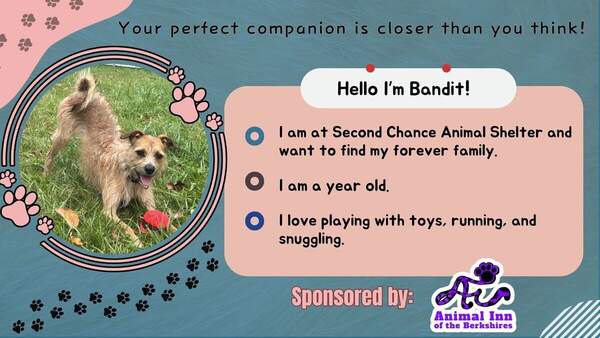
ARLINGTON, VT. – There is a "spunky" dog waiting for his new forever home at Second Chance Animal Shelter.
iBerkshire's Companion Corner is a weekly series spotlighting an animal in our local shelters that is ready to find a home.
Bandit is a one-year-old terrier mix who has been at the shelter since June.
Lead canine care technician Alaura Lasher introduced us to her.
"He came to us from a pretty neglectful home. He was living with quite a few other animals."
Bandit is a very playful guy who runs and jumps around once he is outside. He has an affinity for squeaky toys and ball to fetch with.
"He is very energetic, loves to play. He loves his canine friends and cats. His favorite thing is just going outside to run and play and explore. He also does love to snuggle once he gets some of that energy out."
Bandit would love another animal to play with and he is good to go home with cats as well. He would also love someone who can take him outside for lots of playtime and adventures.
"The perfect home for Bandit is one that is probably moderately active, so he can go on plenty of walks and adventures to get some of that energy out and explore things. He would definitely probably benefit from having like another canine friend to play with, and we suggest slightly older kids just because he can be a little nervous at times. But other than that, he's a pretty easygoing guy, and he loves all people and animals."
He will play fetch with you and showcase little hops when he gets very excited as well. It would be best that he is not alone the shelter wants to emphasize as he would love another to play with.
"His favorite things are definitely playing. He is again just an energetic young dude who's used to again having other animals around. So, Spunky is what we like to call him. Yeah, he loves the game."
The shelter hopes to find him a home he can be himself and start a new life.
"We're just trying to find him a good happy family. You know, get him used to normal life since he came from a pretty not great situation," she said.
If you think Bandit might be the boy for you, reach out to Second Chance Animal Shelter and learn more about him on their website.
Second Chance Animal Shelter is open Tuesday through Sunday 11 a.m. to 3 p.m. and Sunday from noon to 3 p.m. It is located at 1779 VT Route 7A. Contact the shelter at 802-375-2898 or info@2ndchanceanimalcenter.org.
The Cooperative Hoosac Valley football program will resume football related activities on Monday, Sept. 28, after being on “pause” for the past nine days. click for more
Hoosac Valley High School has postponed this weekend’s football games following a reported alleged hazing incident involving a large number of football players, the athletic director announced Friday afternoon. click for more
Cassidy Flynn scattered five hits in a complete-game effort in the circle as Lenox upset top-seeded Hoosac Valley, 3-2, in the quarter-finals of the Division 5 State Tournament. click for more
Brayden Durant struck out seven and walked one in a complete-game effort on the mound Saturday to pitch the Drury baseball team to a 6-0 win over Keefe Tech in the quarter-finals of the Division 5 State Tournament at Joe Wolfe Field. click for more