Environmental Studies Professor Talks about Benefits of Fire for Forests
WILLIAMSTOWN, Mass. — Not all forest fires are bad for the forests, and sometimes those blazes are part of the natural order of things, a Williams College professor noted last week.
"I think the automatic response people have is, 'This is devastation, this is apocalypse,'" Henry Art said. "Yet, it's not. It's part of what that system is adapted to do.
"For me, it's part of nature. I think it's entirely appropriate to make fire lines around Mass Avenue where the fire could really do some harm."
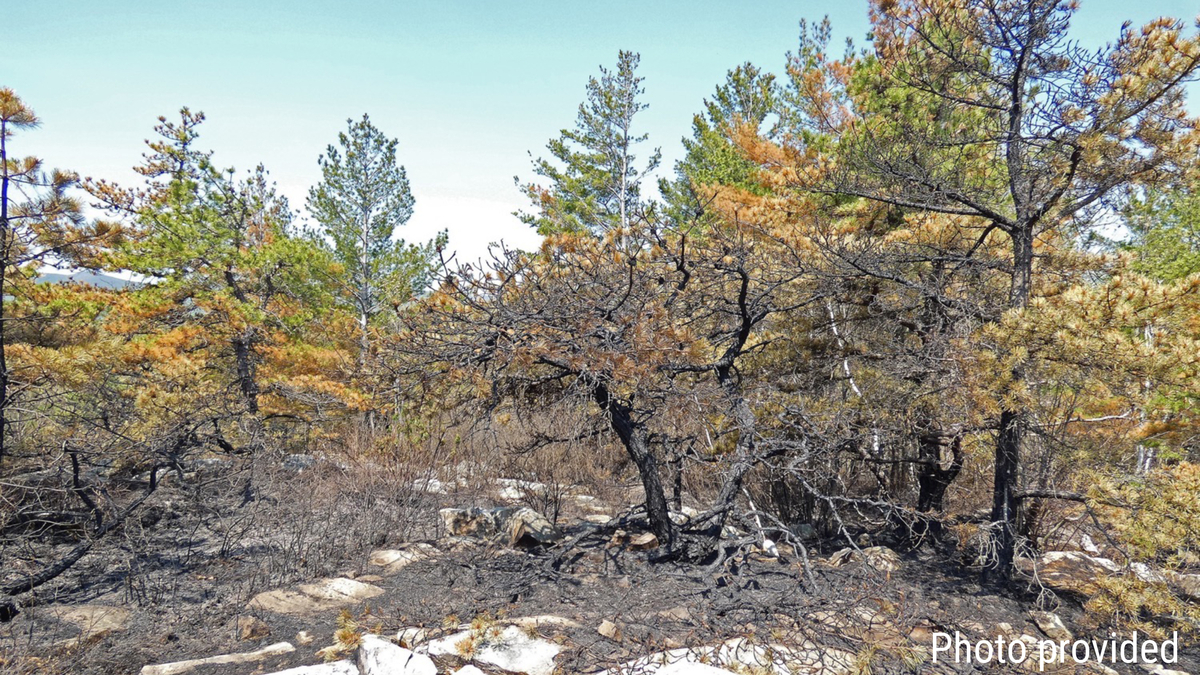
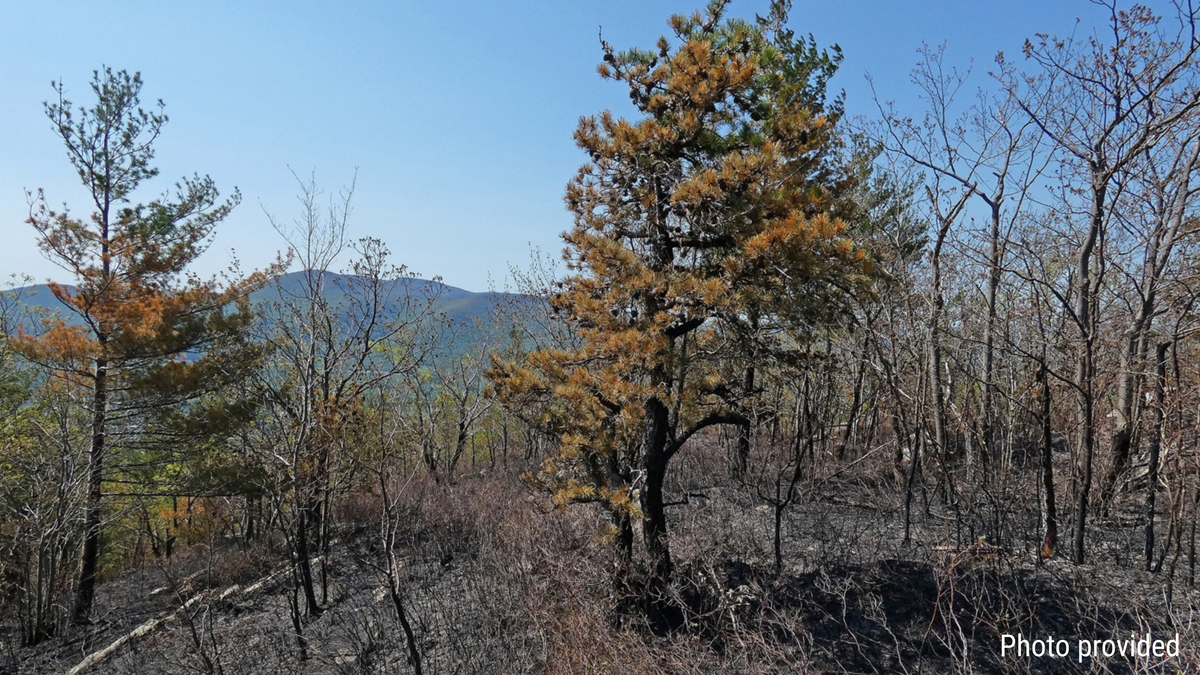
But deep in the woods of East Mountain and Pine Cobble, where firefighters battled a wildland fire for four days this month, fire can be restorative to the ecosystem and beneficial to a particular species of pine tree.
Art, an emeritus professor of biology and environmental studies and a longtime member of the Williamstown Conservation Commission, was not criticizing the efforts of those firefighters and was as thankful as anyone for their efforts to keep the fire from encroaching on inhabited areas, like Massachusetts Avenue in North Adams.
He also is hoping that ongoing discussions between property owners will lead to a more thoughtful forest management plan that could include controlled burns.
Art pointed to recent examples of prescribed burns in the Green Mountain National Forest of Vermont.
"There are people in the state who have technical expertise on how you manage forests, and it's not all fire," he said. "Some of it is chainsaws and cutting down competing big trees. They will be the people involved in developing a plan of attack."
But fire can be a tool in forest managers' toolboxes. Art said the response of suppressing all fire can allow fuel to accumulate on the forest floor.
"And you have a huge fire that is devastating because it's not the kind of fire forests have evolved with," he said.
Fires in this particular corner of Northern Berkshire County are not unusual and have been a boon for some species, like blueberries, azaleas, mountain laurel and the pitch pine.
"This area is the home of an incredibly unusual geography, a forest community dominated by pitch pines," Art said. "We have our own local pine barrens up there. The importance of this is it's a patch of pitch pines that has endured for 10,000 years and maybe longer and is isolated from the rest of its species by probably 40 to 50 miles."
Like the specimens found on Cape Cod and in the Pine Barrens of New Jersey, the pitch pine in Williamstown requires fire to survive over the long haul, Art said.
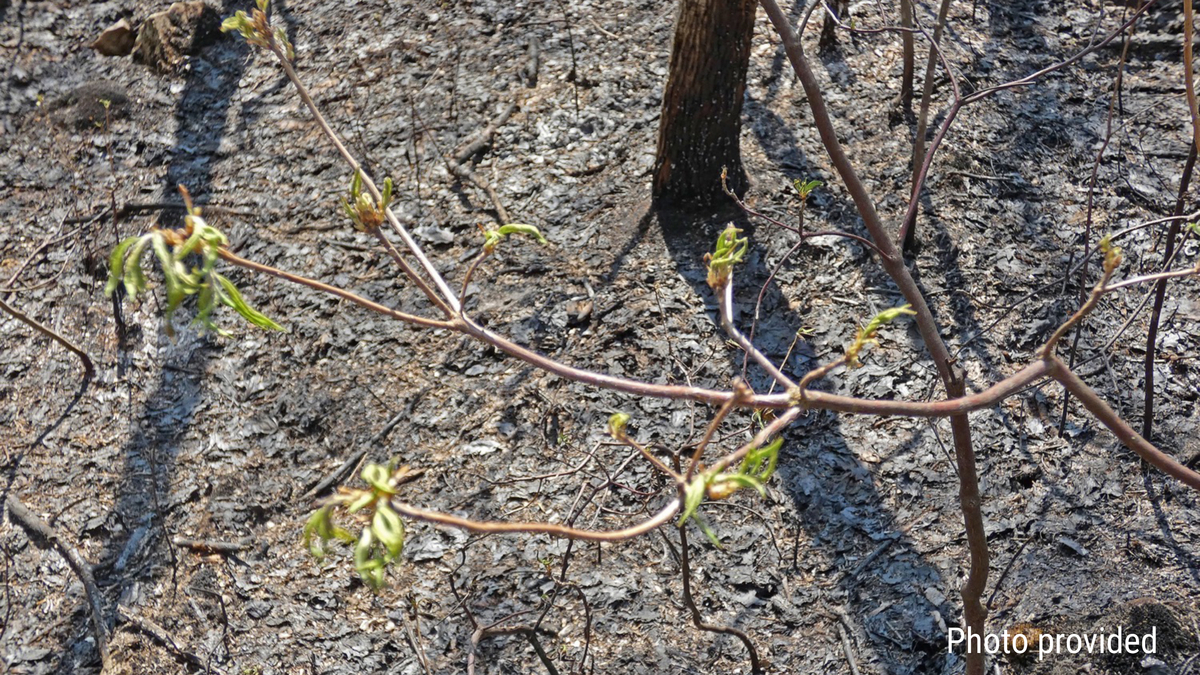
"After the fire, pitch pine isn't dead," he said. "Many competing species are. The pitch pine has burns. But like a phoenix rising from the ashes, it starts growing again. All of a sudden, along blackened, charred bark, you see tufts of needles coming out. Some varieties of pitch pine have cones that are opened up by heat."
Art said there are pitch pine stands in Greenfield to the east, Albany's Pine Bush to the west (that had a prescribed burn on Monday) and on Mount Everett and Monument Mountain in South County. But the population on Pine Cobble is an island separated from the rest of its species.
"It owes its presence there to periodic fires and some encouragement that the forest was cut over the last 200 years but in the last 25 years as part of old historic oak lots that go back to the European colonization of the town," Art said.
Art last week hiked in the area of the most recent fire and found tree mortality to be minimal. He added photos from his hike to an ongoing conversation with officials at the Massachusetts Division of Fisheries and Wildlife who visited local pitch pine stands in December.
"The plan is to get back up in the summer, and, by then, I should be finished mapping distribution of pitch pine on East Mountain and Pine Cobble," he said. "I have not seen a single pitch pine seedling anywhere. All the trees are 6 inches or larger, and they don't tend to get too large. If you find one a foot in diameter, that's a big one.
"The pitch pine seedlings are not establishing. White pine is taking over, and pitch pine can't compete unless there's a fire."
None of which is to say out-of-control fires near populated areas should not be extinguished.
"My gut reaction is, if I have a fire in my house, I want to call 911," Art said. "I love the Fire Department, and they've done a fabulous job. … I don't begrudge them the response [to this month's brush fire]. I think it is marvelous the ability to get that number of people coordinated doing anything these days.
"But I would love to see it applied to — as they've been doing in parts of the Green Mountains — a controlled burn.
"We think of that as being something that just happens in California and the Pacific Northwest. There may be real reason to think about doing controlled burning here in a way to mimic what the natural cycle of frequency and intensity of fires would have been and, at the same time, protect human lives and property."
Tags: forest fire, forestland,