Berkshire Museum Scans Ancient Funerary Reliefs for Preservation and Education
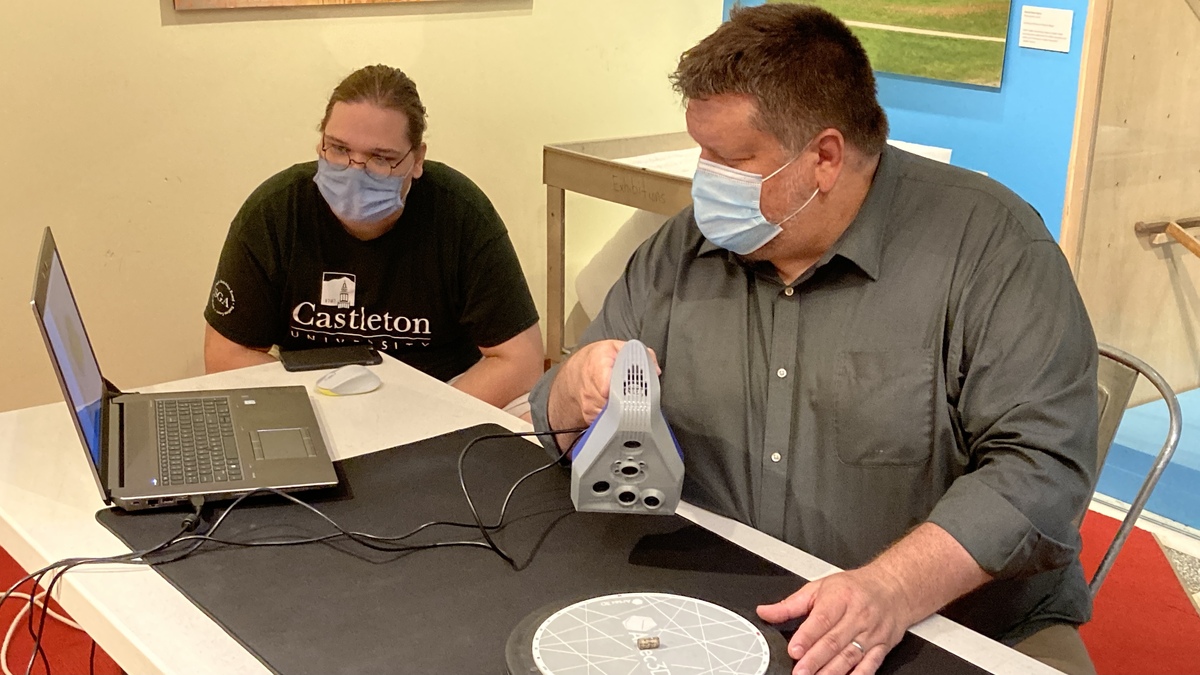
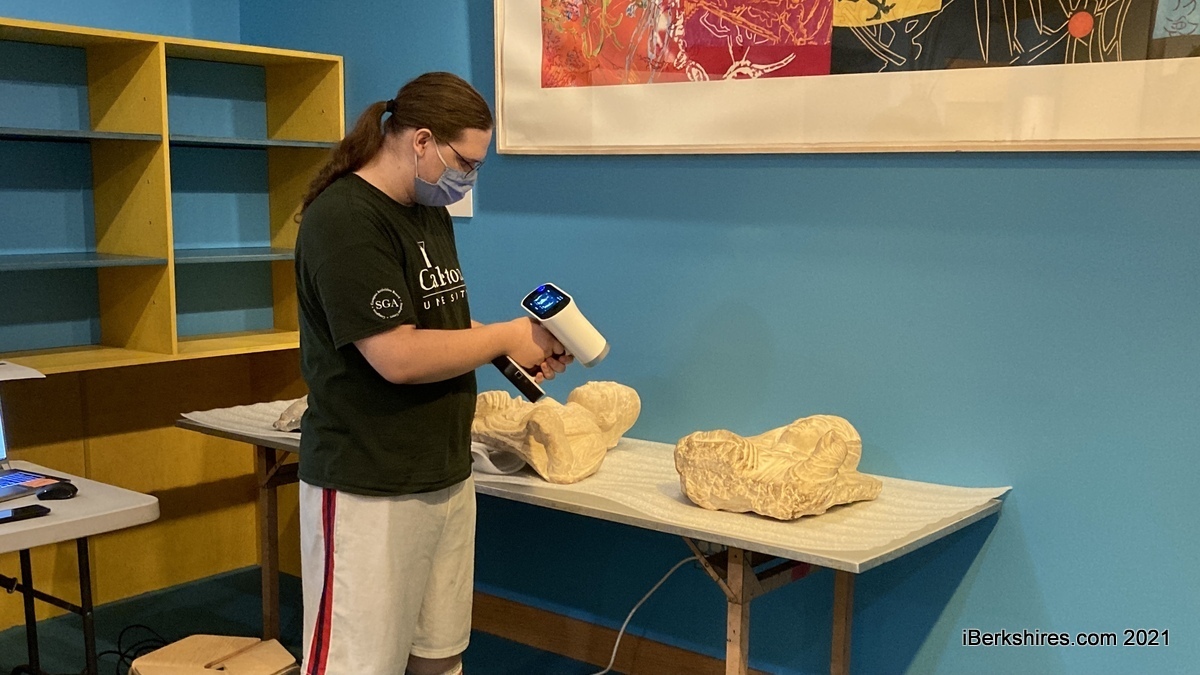
Philip Williams and professor Matthew D. Moriarty scan a cylinder seal made of clay which is 'highly likely' to be from ancient Mesopotamia.
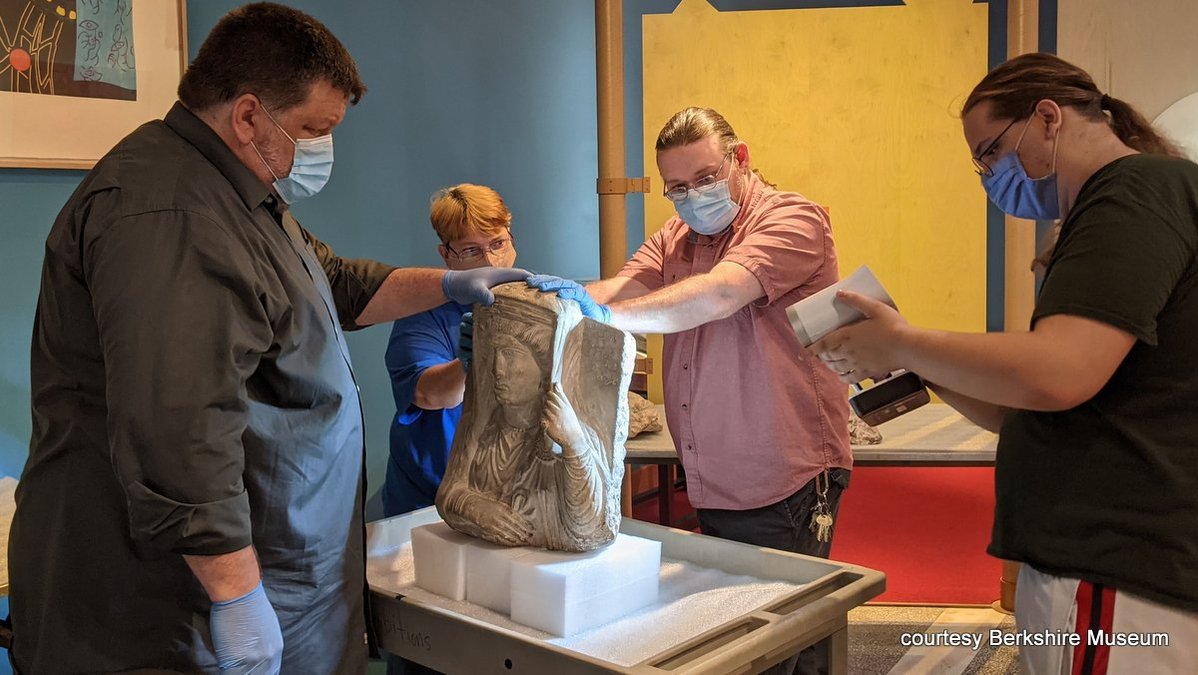
On Tuesday and Wednesday, researchers from the Castleton (Vt.) University's Digital Archeology Project documented the museum's collection of six Palmyrene funerary reliefs with a series of 3D scans.
"We've been talking about digitizing the collection for some time," Collections Associate Registrar Sandra Williams said. "This is really was a great way for us to see everything in action."
Documenting these reliefs is one part of both the museum and project's efforts to curate digital cultural heritage resources that preserve history and can be utilized by scholars. The scans can also be made into three-dimensional prints to use as teaching tools in classrooms and The Berkshire Museum will be receiving one in the coming months.
Professor Matthew D. Moriarty, director of archaeology at Castleton, and intern Philip Williams of Pittsfield completed the work in the museum's Feigenbaum Hall.
"We're basically creating an extremely high-resolution 3D model so you can zoom in, you can rotate it around and see some of the details," Moriarty explained. "What's great about this is it creates a permanent record, It's accessible to anyone around the world, if someone was researching Palmyra and relief, they could look at this online rather than having to go to every single museum."
The archaeology project was created in 2019 to research and document Vermont's cultural heritage in new ways.
The use of the technology in Pittsfield was due to Williams, who is doing the project as an undergrad summer research grant and learning how to use the 3D scanner as part of his archaeology degree.
The funerary portraits were purchased in 1903 by founder Zenas Crane from Dr. Azzeez Khayat and are the second largest collection of such works outside Syria after the Metropolitan Museum of Art's collection of more than 20.
The pieces are made of limestone and represent the likeness and status of the individuals they represent. Being from the early centuries CE, they are in good condition and are reportedly considered some of the finest examples of Palmyrene reliefs outside of Syria.
Palmyra was located in Mesopotamia and came under the control of a variety of empires. Its location at the crossroads of Europe, Africa, and Asia made it a key location along the Silk Road. Because of this, ancient Palmyrene art and culture blended elements of Greek, Roman, Levantine, Persian, Christian, Arab, and Semitic influences.
The six busts in the museum's collection are from sometime between the first and third centuries CE, a period in which Palmyra was a part of the Roman Empire. Much of the historical artwork and culture of the region has been destroyed in recent years under occupation by the Islamic State group, which makes conservation and accessibility of the surviving works all the more important.
The museum's marketing and brand manager Kim Donoughe added that this project increases accessibility to the pieces, which is a goal that the museum consistently strives for in its collection.
Tags: Berkshire Museum,