Williamstown Planners Consider Comprehensive Changes to Zoning Bylaw
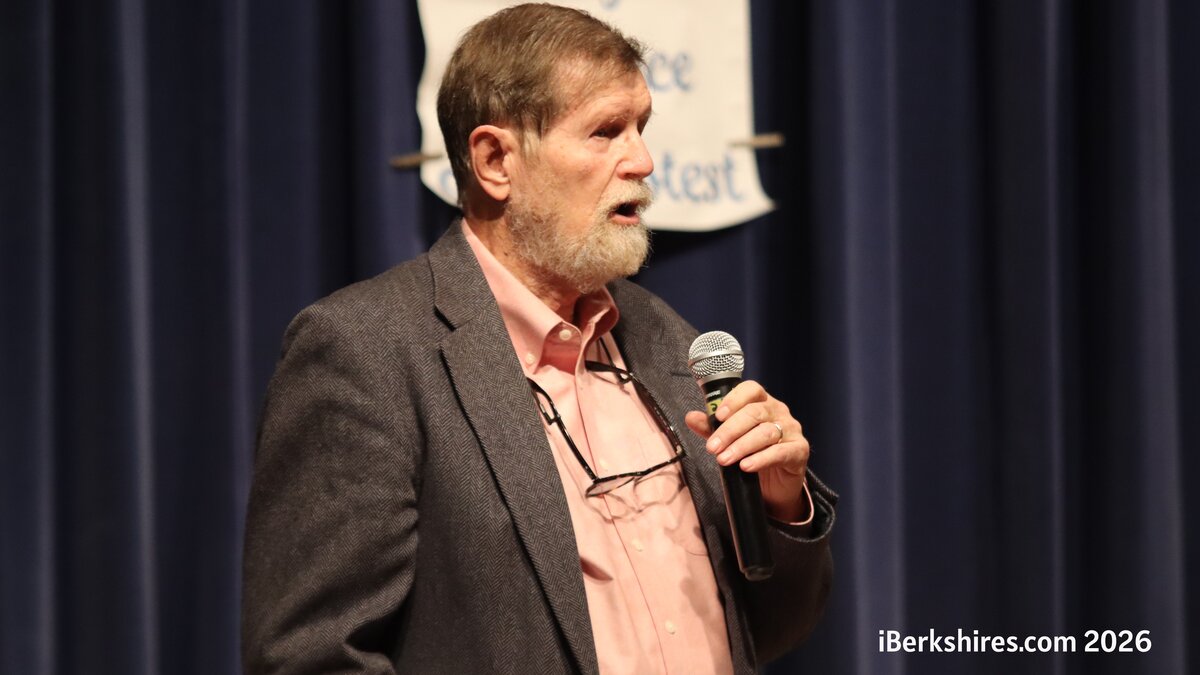
WILLIAMSTOWN, Mass. — The chair of the Planning Board last week told his colleagues that he will bring them a comprehensive markup of the town's zoning code in hopes that the body might propose some of the changes to this spring's annual town meeting.
"What I'm going to do is be the maverick opinion on the fringe and let you guys talk me back," Chris Winters said. "I will take a redline, track changes version of Chapter 70, go through the whole thing, which I haven't done in many years because it's 138 pages long, and I'm going to make changes to it that I think would make progress of not the 'low-hanging fruit' variety but the mid and upper fruits that are left, that are available to us.
"That will be something for all of us to react to. I think that would be helpful."
Winters kicked off the board's 2021-22 meeting cycle with a "maverick" proposal to slash the current code's requirements for frontage, setbacks and lot size in the residential districts in an effort to increase the number of available lots and, he hopes, increase the housing stock in an effort to make housing more affordable in the town.
"What we would have to decide as a Planning Board is where's the most bang for the buck from a proposal or, maybe a series of proposals, to town meeting," Winters said. "I really would like to move something forward, or maybe some things, in the spirit of supply. Because I've been on this board a long time, and we've made nibbles at the edges of this.
"If you can imagine, it used to be even harder to do two-family or multi-family [housing] than it is today, and it's still not easy. But we've never addressed … creating more lots, more usable lots through changing our setbacks and lot sizes. We've never talked about changing district boundaries."
Town Planner Andrew Groff advised the board that there are three ways town meeting could allow for more housing supply: changing the dimensional table as Winters has proposed, addressing the major residential development bylaw or addressing the subdivision rules.
Stephanie Boyd advocated for changes that would allow more dense development of the town's residential core.
"I think we probably require a discussion on why we need more density, what do we want that more density to achieve," Boyd said. "I think what we want to do is have more density so people of a variety of incomes can live in town. I could be wrong on that. But let's just say that's what our desire is, as a board.
"I think that can lead to different ways of allowing more density to occur. For example, if we choose to go the way of allowing more single family homes, we could have more expensive homes built in Williamstown that, only on the margins, lowers property values to the point that some people can move here who can't afford to do so today. If we, for example, focus on allowing denser units, smaller units, more variety of units from apartments to town houses, I think that we can more directly address the issue of income disparities and access to Williamstown."
Peter Beck pointed out that whatever changes the Planning Board proposes — and town meeting approves — to the zoning bylaw would be aspirational at best. Simply allowing for an increase in the housing stock does not guarantee it would increase.
"Our blunt tool is: What do we allow to exist in Williamstown?" Beck said. "I think we should allow for all the things we'd like to see in town without having the hubris to expect we know what will be the exact size and shape of the development 20 years from now.
"I think we should allow houses to be built on two-thirds the size lot, I think we should allow houses to be built with two-thirds the frontage, and I think we should allow people to convert one family [houses] up to two, two-families up to three … I think we should allow those, but not because I can pretend to say, 'Ten years down the line, you're going to have 14 ADU lots, these underutilized lots will be converted to a larger development, someone is going to come in and build four-unit affordable housing.' I think that's a little bit pretend.
"But I think any of these housing types that think should exist in Williamstown, we should make sure the bylaws allow them to exist."
Dante Birch said he was interested in addressing the bylaw's current limitation on multifamily housing, particularly as it relates to adaptive reuse of existing structures in town.
Roger Lawrence said he has been compiling an inventory of "dozens" of underutilized properties in town that could be converted to multifamily dwellings.
Lawrence also, not for the first time, pushed back against Winters' contention that reducing lot size requirements to allow homes on smaller parcels will lead to increased supply and, thus, lower prices. Winters replied by asking Lawrence to provide evidence that the basic precept of microeconomics does not apply to the Williamstown housing market.
"We know, empirically, that simply increasing housing supply will not do anything to increase affordability," Lawrence said. "We know that because the population of Williamstown is continuing to drop, and we know the housing supply in Williamstown is continuing to increase. That means we have more supply and fewer people. By definition, if there were only a linear relationship between supply and cost, that would mean that the cost of housing would drop, and that is not the case. The cost of housing is going up."
"What you're ignoring is the unmet demand, Roger," Winters replied. "I don't care how many people live here. I care how many people want to live here and don't."
Boyd encouraged all of her colleagues to do some "homework" before the September meeting and read through Chapter 70 of town code themselves, perhaps with an eye toward improvements they might make, in anticipation of a discussion of Winters' suggested changes.
Winters noted that all of the discussion around opening up housing options and creating opportunities for new residents to come to town relates to the "Equity" article, Article 37, passed overwhelmingly by town meeting in August 2020.
"[Article 37] speaks to boards and committees in town tackling issues related to affordable housing, accessible housing, and trying to increase the communication of those efforts across boards," Winters said. "The Planning Board is tackling these issues currently and, for as long as I've been on the board, has tackled it annually — moving incrementally in the right direction, not often in leaps and bounds. But there has been progress there, and there continues to be progress.
"And I welcome conversations with other committee members, chairs, townspeople about the Planning Board's past and current efforts in that direction at any time."
In other business on Tuesday, Boyd said she and Beck have identified a slate of nine residents to serve alongside the two of them on the Master Plan Steering Committee. She was waiting to hear back from three of those selections to confirm that they are still interested in serving, and she hopes to bring the full slate to the board for confirmation at its next meeting.
Boyd said that just more than 40 people indicated an interest in participating in the Master Plan process in some capacity, not necessarily on the steering committee, and the opportunity to volunteer is still available.
Tags: Planning Board, zoning,