Mount Greylock School Committee Moves Forward with Artificial Turf Field
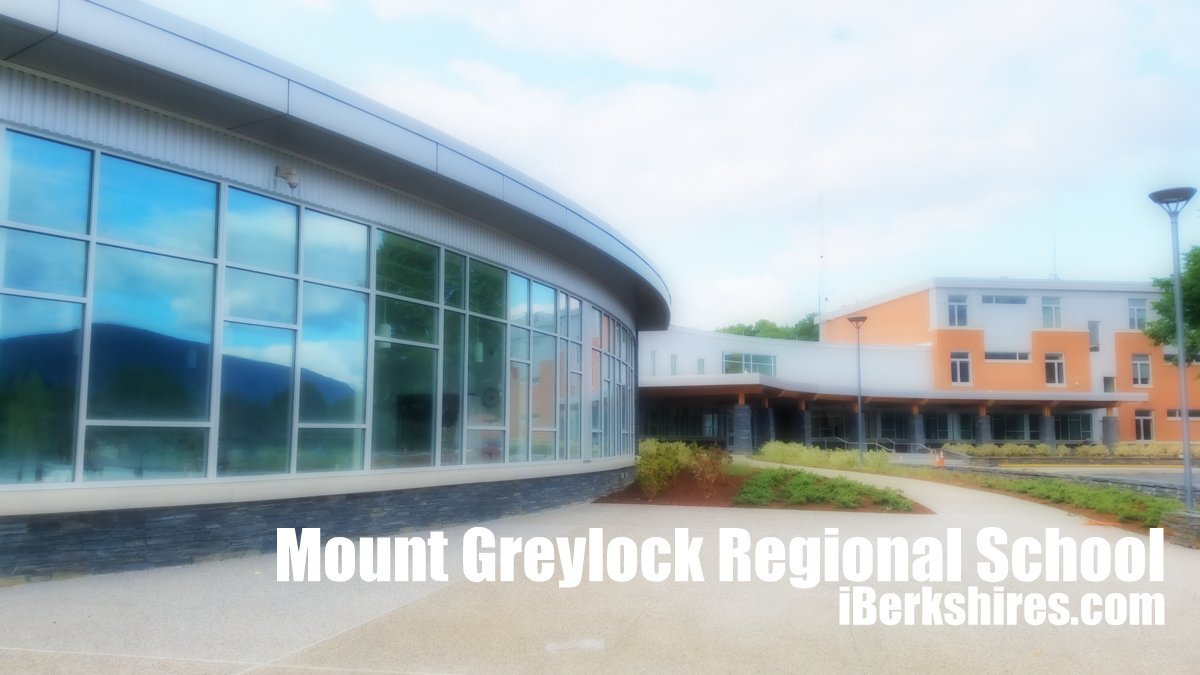
WILLIAMSTOWN, Mass. — The Mount Greylock School Committee on Thursday voted to move forward with a long-discussed project to build an artificial turf playing field at the middle-high school.
On a vote of 5-2, the committee decided to direct the district's administration to have its architect finalize bid documents and conduct cost estimates in anticipation of putting to bid later this fall a project to install a synthetic multi-sport field and a track on the Cold Spring Road campus.
Three committee members, Curtis Elfienbein, Carolyn Greene and Steven Miller, repeated their yes votes from December, 2020, the last time the committee voted to prepare the bid documents.
Julia Bowen and Jose Constantine each switched their votes — in opposite directions. Constantine, who voted against the artificial turf field last December, voted in favor of it on Thursday night. Bowen, who voted to advance the project nine months ago, voted against it this time around.
The committee's newest member, Ursula Maloy, who was named to the panel in April to fill an unexpired term, cast her first vote on the project in favor of moving forward with the turf field.
The second no vote came from Chair Christina Conry, who also voted against the project in December.
Constantine spoke about the unanswered questions surrounding the project before making a motion that the School Committee again move down a path that would end with a synthetic turf field.
"In following on how Julia [Bowen] put it, the number of unknowns that we still haven't sorted out for ourselves were mainly unknowns the committee had before itself when it made a vote to continue on this path [in December]," Constantine said. "I only bring that up because I fell on the short end of that vote, but I respect my colleagues now as I did then, and I respect the fact that you considered the many unknowns regarding this possibility, this opportunity for artificial turf.
"I think it's important for us to have a vote on this motion, because I presume if we don't pass it as a committee, that will speak clearly and publicly about our interest to pursue artificial turf or not. It seems like it would take it off the table — or not — in a very public way."
Miller, long one of the most consistent and vocal advocates for an artificial turf field, stressed on Thursday the benefit it would provide to the school's students.
"For me, I think things have changed a lot since we started the building project," Miller said. "The pandemic has shown us how important it is to have outside options. For me, playability is such an important part of this conversation.
"This is why I strongly support the artificial turf, as well as the track. We've waited more time to let the [Williams College] endowment grow. The longer we wait, the less opportunity children will have to take advantage of this."
The district's plan is to pay for further improvements to Mount Greylock's playing fields with the proceeds of a $5 million capital gift from Williams College that resides in the institution's multibillion-dollar endowment.
Before discussing the merits of the synthetic field question, Greene and Business Administrator Joe Bergeron reviewed some new information that the district had accumulated since its August meeting.
Responding to community members who argued that the district should focus on continuing to rehabilitate its natural grass playing surfaces, Bergeron said he solicited expert opinions on what that strategy might look like.
Bergeron said there are a range of options for grass fields, ranging from minimally-graded fields that already exist on the campus to highly engineered grass fields with extensive drainage systems that work a lot like artificial turf fields below the surface.
"In the middle would be a natural grass field where you don't put in significant drainage, but you replace the top soil, you carefully grade it, you add drainage around the field to encourage water to run off the field and away," Bergeron said.
The least expensive option would cost in the neighborhood of $50,000, the "middle option" would be on the order of hundreds of thousands of dollars, and the "high end" solution would cost about $1 million, Bergeron said. The most expensive option would approximate the numbers the district has seen for a synthetic turf field.
Bowen argued that whatever the committee chooses to do with its playing fields, the course of action should be in line with the values of the middle-high school building project, which included sustainability and cost containment.
"I think about: How do we optimize across all the variables?" Bowen said. "Or, if we only choose one, such as playability, then negative impact on the other variables that the district had committed to back in 2016, optimize at a much lower level.
"Maybe playability drops to 70 percent or 80 percent, maybe we do more than one [grass] field so we get maximum playability across multiple fields, and maybe we get playability to 80 percent, but we keep our commitment to other values that were set. My concern about only responding to the need for playability means we are not responding to the express desire to respond to needs around financial responsibility and the environment."
Bowen said her December vote to move forward with the fields project was out of a sense of pressure to advance what, at the time, was a project that included work to bring Mount Greylock's playing fields into compliance with Title IX and the Americans with Disabilities Act. After the cost estimates for the turf field came in too high in January, the School Committee opted to address the Title IX and ADA work in a separate project that got underway this summer.
Constantine talked about the feedback he has received from constituents in the past few months.
"I have, I think, been pretty consistent in voicing skepticism about moving toward the use of artificial turf on our campus," he said. "We have heard, I think, from a wide range of voices in our communities about pros and cons of turf vs. organic grass. They all seem to reflect what we all seem to know to be a truth about the importance of athletics to our district, to our students and to our parents. We've heard from [Athletic Director Lyndsey von Holtz] today that … there is a substantial number of our kids who do play sports, who do utilize the fields that we have.
"We also heard from folks who are orthopedists about the number of injuries that have occurred on the poor surfaces as they stand now. We also heard from our community about the difficulty of managing grass and maintaining a playable surface, principally during the spring months. … There's a precedent for kids playing on these [artificial] surfaces. It's a potential community resource. You can imagine a whole wide range of events.
"It seems to me there's a lot of momentum."
Tags: turf field,