Dalton Tax Rate Estimated to Drop by 4%
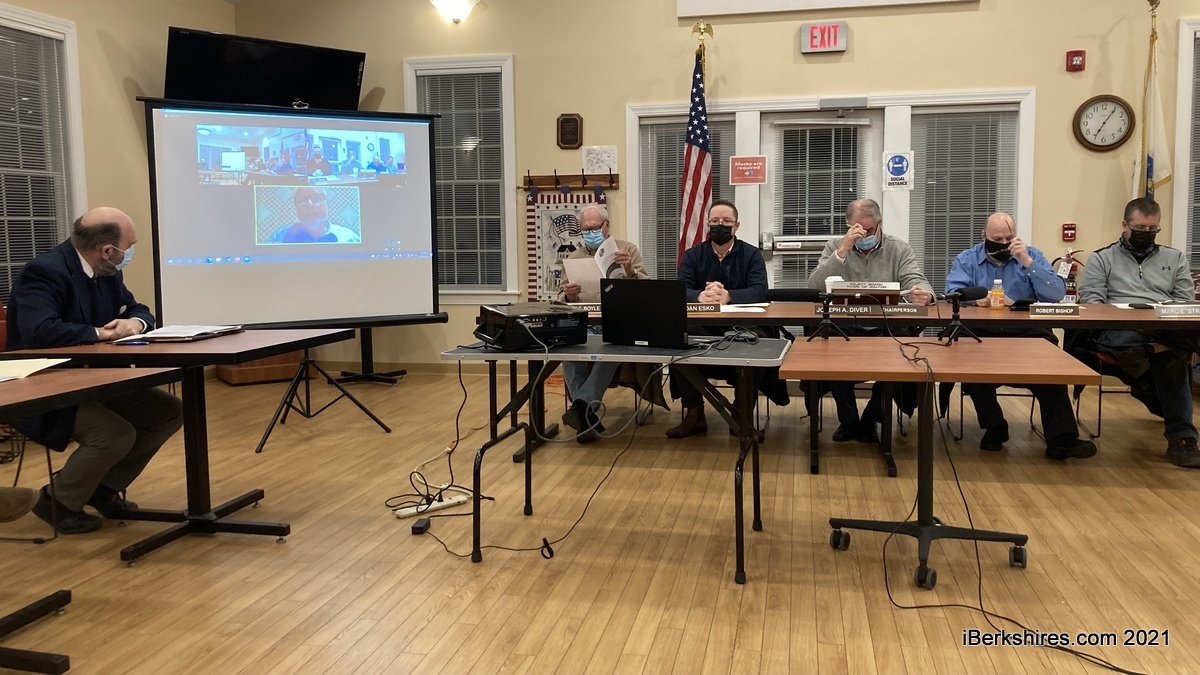
DALTON, Mass. — The Board of Selectmen on Monday voted for a single tax rate for residential and commercial properties.
It was a quick and unanimous decision that did not yield much conversation.
The estimated single tax rate for fiscal 2022 is $20.74 per $1,000 valuation, a nearly 4 percent decrease from last year's tax rate of $21.51.
The average single-family home is valued at $234,700 for a tax bill of $4.868, which represents a $37, or 0.8 percent increase. This was said to be a "very modest" increase.
"I want to just point out that the classification hearing comes at the end of a very long assessment process begins early in the year with the abatement season," said Harald Scheid of Regional Resource Group, adding that the assessors look for any new construction during the spring and summer months because it translates into new revenue to the town.
The town's total worth is about $684 million; the bulk of that is in residential property, about $578 million or 85 percent of the value.
He also said the assessed values lag behind the current market because they were appraised from 2020.
"The sales period that I focused in on was the calendar year 2020, year and market period, and that largely predates the big surge in property values that we've seen of late, actually by my measurements, the big surge in the market occurred at the very end of calendar year 2020 and rolled right into calendar year 2021 with quite a surge in market values, market appreciation," Scheid explained.
"That body of sales will be translated into valuations for next fiscal year, so the valuations that we're contemplating, or that actually have been approved at this point, are modest relative to what we're going to see next year."
The town saw $52,052 in new growth revenue. This includes newly taxable properties such as construction, additions, subdivisions, and personal property.
This was not due to new homes, as Scheid said there were only about three houses built during this time and the remaining new growth was from the other possible venues.
"I have to say that there wasn't a whole lot of construction," Scheid said. "Especially new homes."
Based on the town's aggregate valuation of $683,768,362, the levy ceiling — or the highest amount of taxes it can impose — is $17,094,209.
Of that, $14,181,356 in property taxes will be collected. This has increased $34,905 or a quarter percent from the fiscal 2021 levy of $14,146,451.
The levy limit, or the maximum allowable levy, is $15,559,814.
Going over the levy limit triggers an override of Proposition 2 1/2, a Massachusetts law enacted in 1980 that imposes limits on the amount of property tax revenue a community can raise through real and personal property taxes.
Select Board members stressed the importance of advertising the town's tax work-off program for senior residents and other programs on the town website and at the senior center.
Select Board member Daniel Esko was impressed with the tax document that was put before them.
"This is absolutely a very well done documentary that makes a very strong case for keeping the tax factor the same for residential, commercial, industrial, personal property," he said.
In other news, the 26th annual Light up the Holiday Parade is on Saturday, Dec. 11 from 5 to 8 p.m. The parade will begin on Depot Street and go down Main Street, ending with a tree lighting ceremony at the Dalton CRA.
Tags: tax classification,