BRPC, 1Berkshire to Release Regional Housing Strategy
PITTSFIELD, Mass. — Berkshire Regional Planning Commission and 1Berkshire are preparing to release a regional housing strategy to address one of the county's greatest struggles.
The effort began almost two years ago when the entities partnered to address the countywide housing crisis they were hearing about from businesses and communities. A practitioners group consisting of local planners, realtors, bankers, developers, and nonprofit employees was assembled and got to work.
Because a majority of the region's homes are either too old, too expensive, or too scarce, it was clear that housing is a problem.
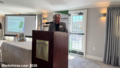
"So what we came up with is that, in fact, we are in a housing crisis in Berkshire County, I don't think this is a surprise to this group, we've been talking about it for several meetings," BRPC Executive Director Thomas Matuszko said to the commission on Thursday.
He explained that it is affecting economic growth, the ability to attract new people to the area, personal health and wellbeing, and communities as a whole.
"I don't know if that's the type of community that we all want, but I think we're heading in that direction if we don't take some action on the housing crisis," Matuszko added.
The regional housing strategy will be soon released to the public but Matuszko gave BRPC a sneak peek of it.
The group first highlighted key issues within the crisis: a shortage of all types of housing, a non-welcoming framework for housing development, lack of large developers, old housing stock, and housing insecurity.
Matuszko reported that there was some neighborhood opposition for developments in the county, particularly with affordable housing. On top of that, the group conquered that the county has limited advocacy from the state for housing development projects.
Though Pittsfield has the majority of housing insecure people, homelessness was identified as a countywide issue.
"I think that we identified that homelessness is a countywide issue, it seems that Pittsfield is the location that has to deal with homelessness, but that shouldn't be the case, that all communities need to get engaged in the homelessness issue," Matuszko said.
"And this has only been made worse with the impact of COVID-19 and the unemployment situation, the evictions, and even the reduced income of landlords, which is going to really contribute to further disinvestment in the properties."
The regional housing strategy includes educating the region about housing needs and opportunities, building a supportive environment for housing development, and advocating for housing programs that meet the needs of The Berkshires.
Matuszko said a regional housing rehab program is "desperately" needed in Berkshire County to address older housing stock. He also identified a need for additional state and federal resources for rural areas.
1Berkshire, BRPC, and Berkshire Housing Development Corp. will be the leaders in pushing the agenda of the strategic plan. There is also a goal to turn the practitioners group into a regional Housing Task Force that would meet on a regular basis.
They have secured a grant from the Citizens' Housing & Planning Association (CHAPA) for a municipal engagement initiative to help build a strong coalition and that work will start in the next couple of weeks.
Windsor delegate Doug McNally said this problem is not new and finds that the problem is two-pronged.
"Number one is there's a lot of concern about the drop in population, and part of the reason for the drop population is it's not affordable to live here," he said.
"And the second is the employers not being able to do recruitment. I'm on the Berkshire Workforce Board also, and it's been a perennial problem for the workforce board, employers cannot get entry-level employees because they can afford to live in the Berkshires."
McNally added that the problem cannot be solved without involving the smaller communities.
Sheffield alternate Rene Wood suggested that development corporations are created to push the effort.
"I think this is just so incredibly overwhelming, and if you did it to the point that you could start to set aside money and you actually have a plan, who is it that's going to do it? So I think we need to build up a nonprofit, non-town specific development corporation," she said.
"I think the more those corporations would incorporate other towns, such as Sheffield, so that when we get to the point where we are reasonably well endowed we don't have to face ‘well now how do we act actually do it?' because if you don't have an implementation plan, I would argue that you don't have a plan."
Lanesborough delegate Barb Davis-Hassan, who is also a real estate agent, highlighted the impacts of the housing crisis.
"I live every day in this crisis that you're talking about, that's what I do for a living, and it is horrific," she said.
"I don't know how companies are surviving, it's sad, I sit on the rental housing board and work in the real estate industry so you can only imagine the conversations, but it's just sad and scary that people can't get affordable housing, forget affordability, now we're at the level of availability, and that's even worse."
Tags: affordable housing, BRPC,