image description

A Top College, Again: The MCLA Community Reflects on Success

Print Story | Email Story
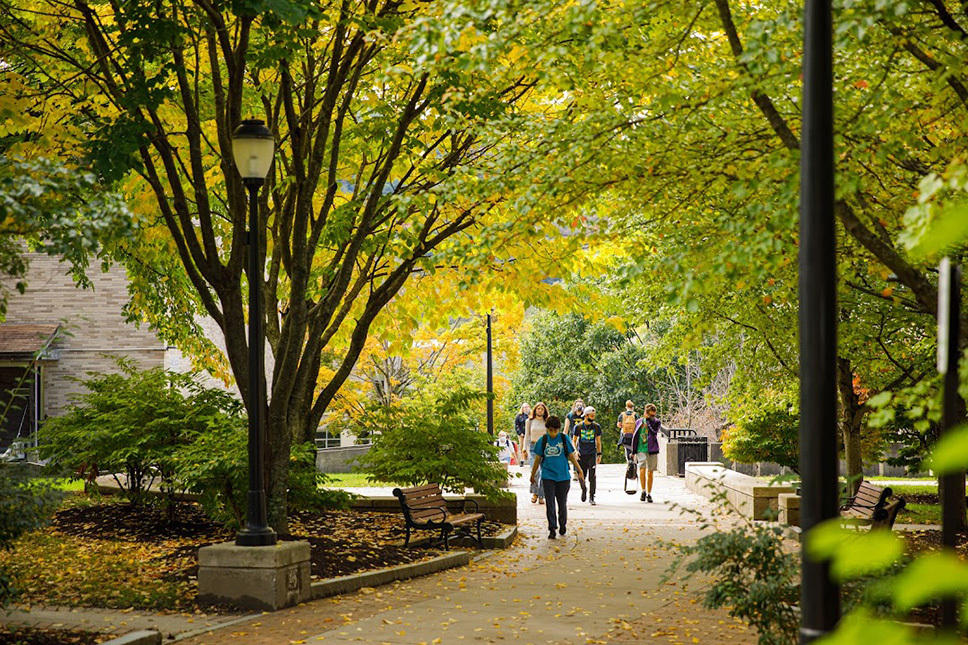
As a top ten public college, MCLA has a lot to offer: more than 100 scholarships, a liberal arts curriculum that helps students learn across academic disciplines, tons of student activities, and support ranging from student-led tutoring to the TRIO Program, which focuses on helping low- income, first-generation, or disabled students get the most out of their college experience.
 
These are all important facets—and no doubt part of why MCLA also continues to appear on U.S. News’ list of best colleges for social mobility—but the MCLA community, who work here, live here, and learn here, has more to say about why MCLA has been named a Top Ten College for nine of the last 11 years, and keeps climbing the rankings lists each year.
 
"I think MCLA is a top college because of the quality of education it provides," said Domenica Gomez ’23, who attends MCLA while working as an admission ambassador, giving tours to prospective students. "Throughout my college experience I have had the opportunity to receive one-on-one assistance from professors that genuinely care about your educational success and
make long-lasting connections that will help shape my future."
 
Kayla Hollins ’12, MCLA’s director of admission, came to MCLA from New York City and has helped thousands of students learn more about the College before they apply. 
 
"MCLA is a top ten college because it is filled with true trailblazers—first generation students, students who live far from campus, undeclared students, and more," she said. "These are students who took a chance on our small community—and our community continues to deliver a quality education. MCLA is a place for all students to learn how to be a leader. As an alum, I pride myself on being a Trailblazer, and as the director of admission, I hope to recruit more of us to the institution."
 
MCLA professors bring their classes to experience everything in the Berkshires, from tracking salamanders in the MCLA forest and Mount Greylock State Reservation to working with museum staff on arts and education projects. 
 
"We have incredible access to the arts," said Professor of Art Melanie Mowinski. "MASS MoCA, the largest contemporary art museum in the country, is one of our teaching labs. I think that experiential element related to the arts, the environment, and the beauty of the land is what continues to make us a top ten school."

 
"I think the institution, meaning the people who are at its core, understand and stay true to the ultimate mission: providing a quality affordable liberal arts education to a student population that is not especially advantaged," said Dennis Ducharme ’82, president of the MCLA Alumni Association. "The college provides amazing support through a great student to faculty ratio and with many layers of services geared to maximize retention and graduation rates. The result is an educational experience that puts our students on an upward trajectory, both financially and as engaged members of their communities."
 
Want to learn more about MCLA? Talk to the Office of Admission, or plan a visit, at www.mcla.edu.

View All Business Profiles


Tags: MCLA,   


North Adams Finance Committee Warned of Coming Sludge Costs

By Tammy Daniels iBerkshires Staff
NORTH ADAMS, Mass. — Waste treatment plan supervisor Brad Furlon warned the Finance Committee last week to expect a future 500 percent increase in sludge disposal.
 
"Even though the district is still has the approval of suitability to apply compost to land, we no longer do it, primarily because of the contaminant, PFAs," he said. "Compost plant supplies is a $200,000 increase this year. There's no way around this cost whatsoever. ...
 
"Unfortunately, these costs are going to go up. They expect this sludge disposal cost in the next five to 10 years to increase 500 percent."
 
PFAs, or per- and polyfluoroalkyl substances, are considered "forever chemicals" because of how long it takes for them to breakdown. They are used in numerous products and have become endemic in air, soil and water.
 
The Hoosac Water Quality District, a shared regional waste treatment system between North Adams and Williamstown, had planned to accept sludge from other communities and sell off the resulting compost through waste hauler Casella. But that proposal ran into opposition; Williamstown has a citizens petition on its annual town meeting warrant this year that would prohibit the use of contaminated compost. 
 
The district is still producing compost, which has to be removed. 
 
"We had a backlog of about 2,500 yards of compost that was on site," Furlon said. "We worked on a plan to dispose of our compost. Even though the district is still has the approval of suitability to apply compost to land, we no longer do it, primarily because of the contaminant, PFAs. ... the most feasible way and economical that we looked at was to be able to take our compost to a landfill in Ontario, N.Y."
 
View Full Story

More North Adams Stories