Two-time Olympian Lea Davison joined Dr. Trey Dobson on Medical Matters Weekly to discuss the rigors of training, overcoming injuries, and the power of happiness.
Loss of memory and cognitive function are not normal parts of aging. Internal Medicine Specialist Lisa Downing-Forget, MD, explains. Read On.
Community Health Needs
SVHC releases the results of a major study that assesses the health needs for the region as determined by community members. Learn More.
Nutrition Spotlight: Fats
Registered Dietitian Kristin Irace says, despite a bad reputation, certain types of fat can actually help reverse risk factors for major diseases. Read More.
Positive Spin on Medical Matters Weekly
Join Trey Dobson, MD, and positivity expert Jerry Posner for ideas to refresh your outlook on March 2. Read On.
Mom's Day Off is On!
Don't miss Bromley's Mom's Day Off, where mom's ski for $25 and all proceeds benefit the Cancer Center at SVMC.
If you would like to contribute information on this article, contact us at info@iberkshires.com.
Your Comments
iBerkshires.com welcomes critical, respectful dialogue. Name-calling, personal attacks, libel, slander or foul language is not allowed. All comments are reviewed before posting and will be deleted or edited as necessary.
No Comments
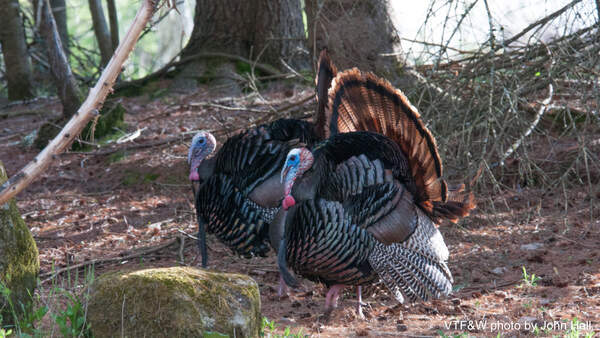
The Wild Turkey’s Contribution to Thanksgiving
Submitted by Vermont Fish & Wildlife
MONTPELIER, Vt.— One of our native wildlife species historically played an important role on Thanksgiving Day.
North America's native wild turkeys were the ancestors of the Thanksgiving turkey on our dinner table.
Originally found only in the wild, turkeys now exist as meat-producing domesticated varieties -- the broad breasted white, broad breasted bronze, white Holland, bourbon red, and a host of other breeds – all of them descended from our native wild turkey.
More than 140,000 servings of Vermont wild turkeys are harvested each year by hunters – that's 140,000 servings of free-ranging, wild and sustainably harvested protein.
Wild turkeys exist throughout Vermont today, but that was not always the case. Wild turkeys disappeared from Vermont in the mid-to-late 1800s due to habitat destruction when land was cleared for farming and only 25 percent of the state was covered by forest.
The wild turkeys we see in Vermont today originated from just 31 wild turkeys stocked in Southwestern Vermont by the Vermont Fish and Wildlife Department in 1969 and 1970 when Vermont's forest habitat was once again capable of supporting turkeys. State wildlife biologists moved groups of these birds northward, and today turkeys are well distributed throughout the state.
This is just one of many wildlife restoration success stories we can be thankful for in 2026. Funding for Vermont's wild turkey restoration was derived from the sale of hunting licenses and a federal tax on hunting and shooting equipment.
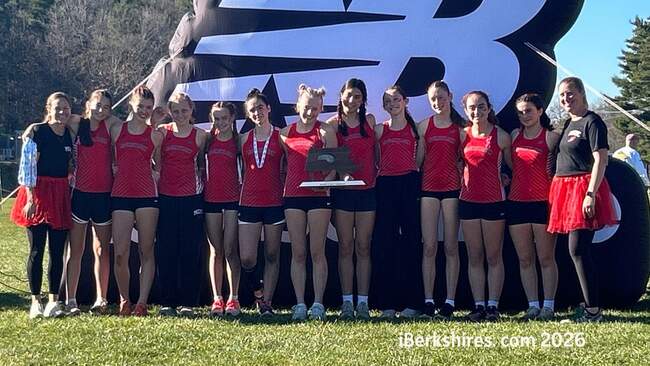
The Mount Greylock girls placed second in the state behind a sixth-place finish by Brenna Lopez, who brought home an individual medal along with Lenox's Nora Schoeny, who placed 13th in a 187-girl field. click for more
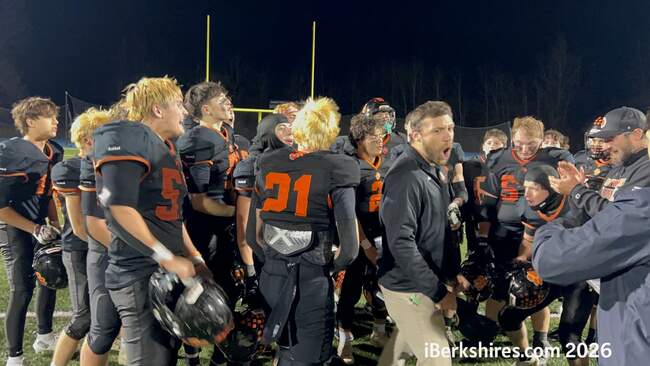
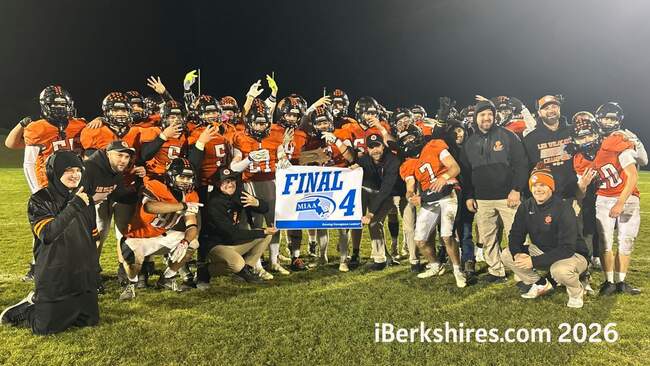
Jaydee Reber ran for 102 yards and a touchdown, David Kirchner ran for two scores, and the top-seeded Wildcats beat Lynn Vocational, 28-8, in the Division 8 State Semi-Finals on Friday night at Assabet Valley Tech. click for more
Jaydee Reber ran for 128 yards and three touchdowns, and the Lee defense pitched a shutout until the final minute of a second half played entirely under running time. click for more
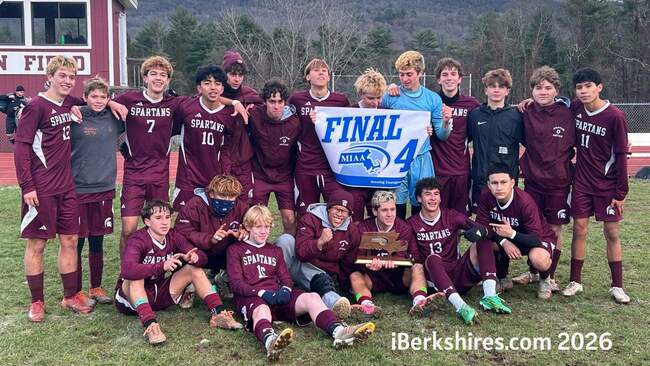
Lucca Hernandez headed home Silas Heck's cross from the right wing in the waning minutes of the first half to send the third-seeded Spartans to a 1-0 win over Westport in the Division 4 State Quarter-Finals. click for more