image description
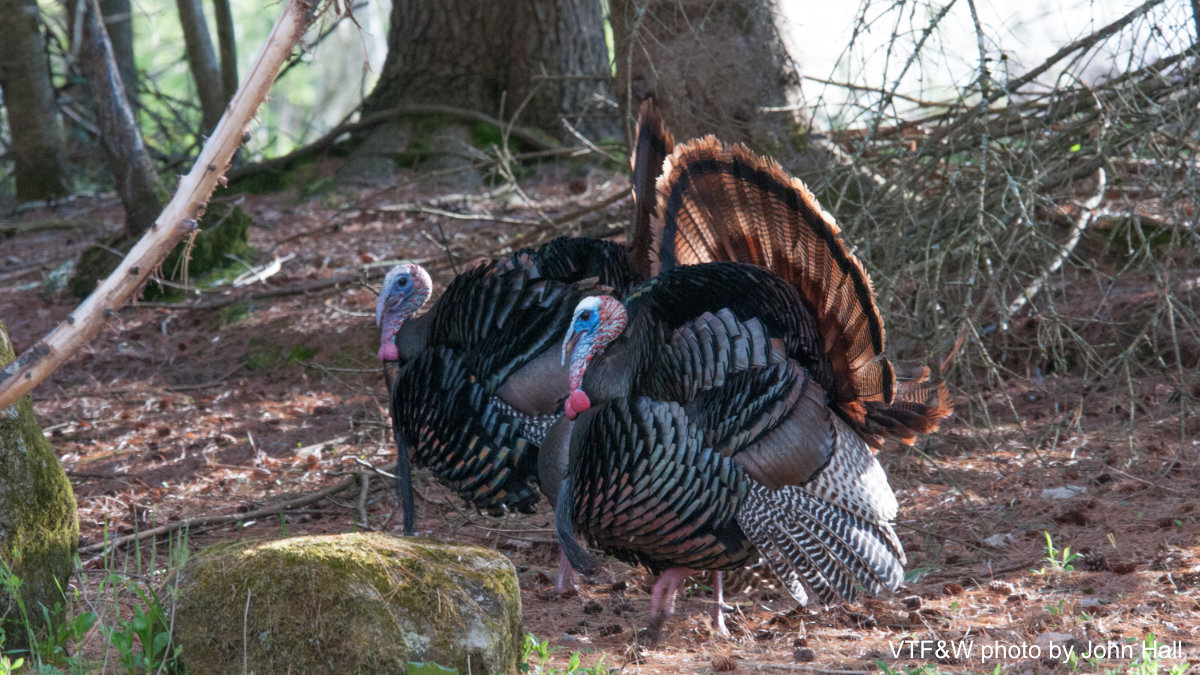
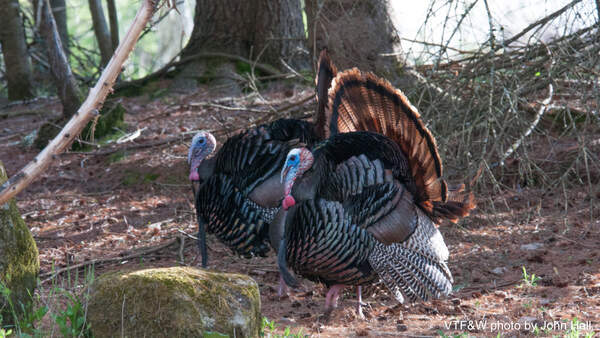
The Thanksgiving turkeys on our tables this holiday originated from native wild turkeys whose populations have been restored across much of North America thanks to scientific wildlife management by state fish and wildlife agencies.

The Wild Turkey’s Contribution to Thanksgiving

Submitted by Vermont Fish & WildlifePrint Story | Email Story

MONTPELIER, Vt.— One of our native wildlife species historically played an important role on Thanksgiving Day.  

North America's native wild turkeys were the ancestors of the Thanksgiving turkey on our dinner table. 

Originally found only in the wild, turkeys now exist as meat-producing domesticated varieties -- the broad breasted white, broad breasted bronze, white Holland, bourbon red, and a host of other breeds – all of them descended from our native wild turkey. 

More than 140,000 servings of Vermont wild turkeys are harvested each year by hunters – that's 140,000 servings of free-ranging, wild and sustainably harvested protein. 

Wild turkeys exist throughout Vermont today, but that was not always the case.  Wild turkeys disappeared from Vermont in the mid-to-late 1800s due to habitat destruction when land was cleared for farming and only 25 percent of the state was covered by forest.

The wild turkeys we see in Vermont today originated from just 31 wild turkeys stocked in Southwestern Vermont by the Vermont Fish and Wildlife Department in 1969 and 1970 when   Vermont's forest habitat was once again capable of supporting turkeys.  State wildlife biologists moved groups of these birds northward, and today turkeys are well distributed throughout the state.

This is just one of many wildlife restoration success stories we can be thankful for in 2026.  Funding for Vermont's wild turkey restoration was derived from the sale of hunting licenses and a federal tax on hunting and shooting equipment. 


Tags: thanksgiving,   
If you would like to contribute information on this article, contact us at info@iberkshires.com.

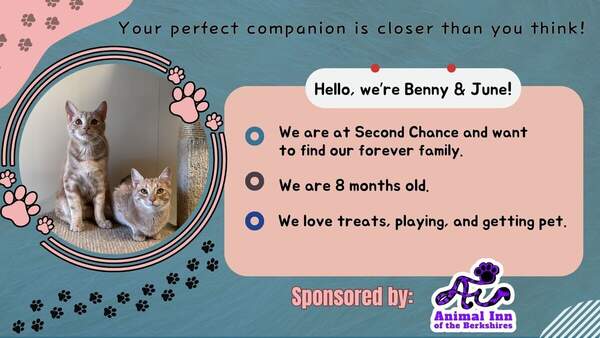
Companion Corner: Benny and June at Second Chance

By Breanna SteeleiBerkshires Staff

ARLINGTON, Vt. — There is a sibling pair waiting for their new home at Second Chance Animal Shelter.

iBerkshire's Companion Corner is a weekly series spotlighting an animal in our local shelters that is ready to find a home.

Benny and June are a brother and sister duo who are eight months old.

Feline program administrator Santana Snyder introduced us to them.

"Benny is quite a bit larger than June," she said. "June went through a little stint when she was little, not really growing, so we do believe she'll probably be a little bit of a petite cat most of her life. Benny, on the other hand, is quite large for his age."

The two have been at the shelter since May after being born outside of the shelter.

"Their mom was a stray kitty and gave birth to the kittens outside," she said. "Someone found them, took them in, and cared for them until they could come here, just because they couldn't care for them long term. They did have other siblings, but the other siblings have been adopted, and mom has been adopted as well." 

The two are bonded and would need to go home together, as being together is their favorite thing.

"They love to play. They are bonded. They do need to go home together," she said. "They love cuddling up in their bed and playing together, cleaning each other. They haven't ventured out onto the patio yet. Since they are little, we try to keep them inside until they're at least a year old. But they like watching out the window. That's for sure." 

The two are quite independent but can go home with other cats and kids and possibly a dog.

"Benny is definitely more outgoing than June," she said. "She's a little bit more reserved, but he definitely helps her come out of her shell. They're both very sweet, a little bit independent for being kittens."

It is important that you keep up with the vet for the two.

"Just because June did go through that stint of not really growing, and she's still growing, but very slowly," she said. "We've done all the tests that we can possibly think of to do for her, and we've not found anything that would cause that to be an issue. But that just seems to be her. So just working with your vet closely to make sure that she continues to grow and doesn't develop any other health issues." 

The two are on a prescription diet that can be a bit expensive, but they will need to stay on it. 

"They are on a prescription diet. They do have some gastrointestinal issues that we've worked through and been able to find something that works well for them. So that is prescription," she said. "You'll have to work pretty closely with your vet to maintain their issues and continue that food. Otherwise, very healthy kitties."

View Full Story

More Vermont Stories