Du Bois Freedom Center Launches New Scholars Series
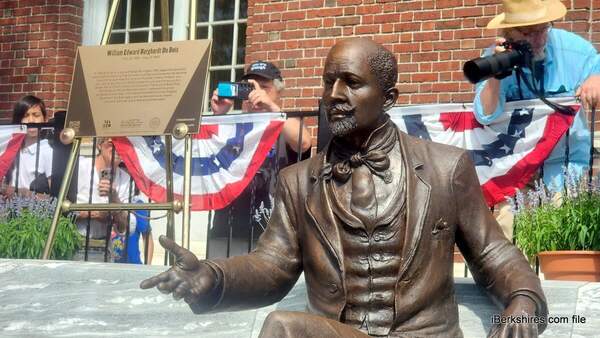
GREAT BARRINGTON, Mass. — The Du Bois Freedom Center is launching a new series that explores the life and legacy of civil rights activist W.E.B Du Bois and examines how the people, ideas and movements of the past continue to shape society today.
Starting in February, the Scholars Series will feature historians, authors, artists, and researchers that will introduce new and past scholarships that foster meaningful public engagement with Black history, culture, and intellectual life in the Berkshires and beyond.
The center plans to explore virtual and hybrid formats for the series, allowing audiences both within and beyond the Berkshires to participate in discussions with scholars.
"The Du Bois Scholarship Series brings scholars and the public together to kind of explore the life, scholarship, and legacy of W. Du Bois alongside the people, ideas, and movements connected to his work and influence," said Marcus Smith, the center's deputy director.
The goal is to host discussions every other month, approximately six regularly scheduled events annually, with additional programming as opportunities arise, he said.
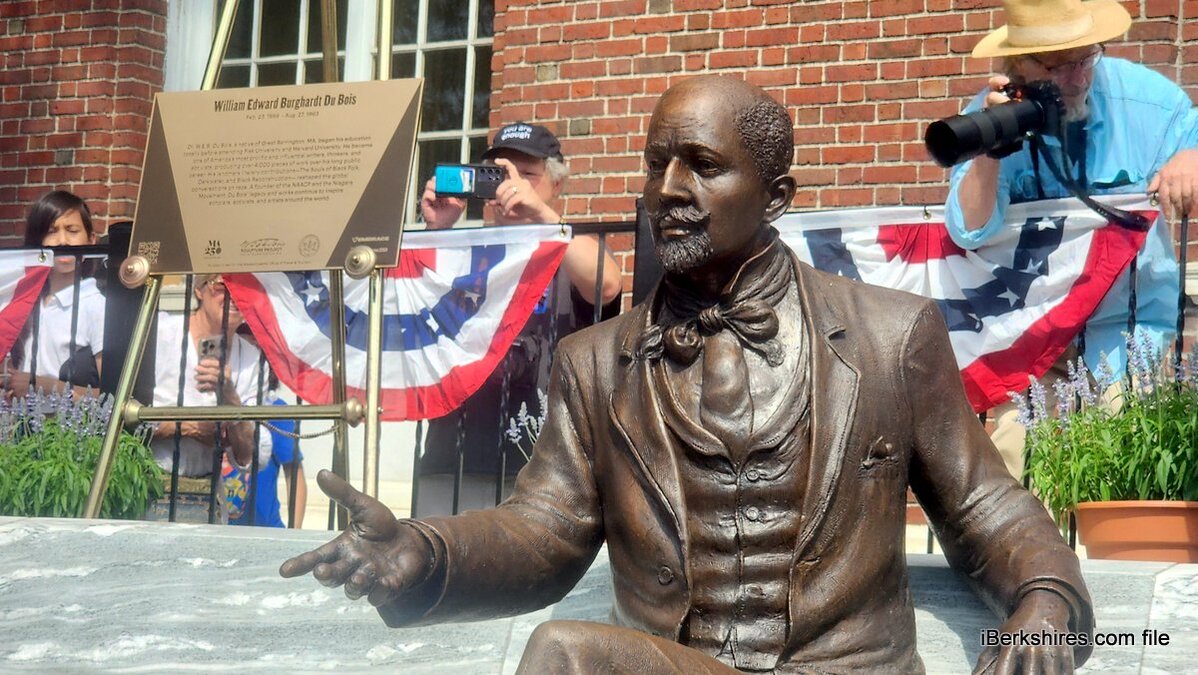
The center is not only working to preserve Du Bois' accomplishments but also to examine how his community influenced his success and how those lessons can continue to shape the area's future.
Du Bois' influence extended far beyond the civil rights movement, shaping historical research, sociology, political activism, social activism, the study of African American life and culture and the impacts it has internationally, Smith said.
Understanding Du Bois' upbringing in Great Barrington as "Willie Du Bois" is an important part of understanding his later accomplishments, he said.
Following the death of his mother, Mary Silvina Burghardt Du Bois, members of the town's Black and white communities helped raise funds for him to attend Fisk University.
Smith also pointed to Du Bois' early exposure to the historically black community in the church, which is one of the first churches to ordain black women to eldership and pastorate, which may have influenced his advocacy for women's suffrage.
However, his legacy offers more than an example of his intellectual contributions to civil rights. It's also an example of how communities can support and inspire future generations to make similar contributions, he said.
Public discussion will be a central component of the series to consider what a more effective democracy looks like from his writings and how other people have engaged with his legacy, Smith said.
"We don't see the study of the past or the study of a particular figure as disconnected from the questions and challenges and opportunity for the present," he said.
"We hope people will come to the series and take away something [that will] help them know themselves in the world a bit more, and then use that to carry forward towards the democracy that we continue to aspire to be."
While the series will resume in February to coincide with W.E.B. Du Bois' birthday on Feb. 23, the center kicked off the initiative earlier this month with a discussion commemorating the 130th birthday of Shirley Graham Du Bois.
The series has received a lot of support with about 61 people registering for the inaugural event within weeks of its announcement, Smith said.
Shirley Graham Du Bois was an award-winning playwright, composer, author and political activist whose contributions extended upon all the creative genres: arts, literature, civil rights, Pan Africanism, and international liberation movements, he said.
She married W.E.B. Du Bois in 1951 and became one of his closest political and intellectual collaborators.
"Even though 'Du Bois' is in the name, we've been trying to take really important steps to showcase Black history in the Berkshires more broadly, but also focus on the ways that Du Bois' legacy, the people he had relationships with, also influenced not only his work but also had a greater impact in the world," Smith said.
The discussion featured Annette K. Joseph-Gabriel, associate professor of Romance Studies at Duke University, and Phillip Luke Sinitiere, professor of history at the College of Biblical Studies in Houston and senior research fellow at the W.E.B. Du Bois Center at the University of Massachusetts at Amherst.
The two scholars co-edited "Shirley Graham Du Bois: Artist, Activist, and Author in the African Diaspora," published in 2025. The book is the first scholarly collection dedicated to examining her life and legacy, according to the authors.
The center hopes to make the commemoration of Graham Du Bois an annual event to celebrate "this remarkable woman" and "what better way to start with a volume that was recently published," Smith said.
Located at the historic Clinton A.M.E. Zion Church in Great Barrington, the Du Bois Freedom Center is working to restore the building and establish a museum dedicated to W.E.B. Du Bois and the region's broader Black history.
The organization is targeting a 2030 to 2032 opening, although restoration and development of the multi-phase project remains ongoing, he said.
"The North Star is always going to be the restoration of the church and to have the first museum in North America devoted to the life and legacy of Du Bois and Black history in the Berkshires more broadly," Smith said.
"I think my dream is for anyone, regardless of age, gender, nationality, or demographic, to be able to come to Berkshire's and then see the kind of rich Black history that exists here and be inspired by that."
A new copper roof was installed last year, and the center continues to seek community support and funding to complete the project and expand its educational programming, Smith said.
While discussions of Black history during the 18th, 19th and early 20th centuries often focus on enslavement and segregation, it is equally important to recognize the vibrant communities that existed despite those injustices, he said.
"One of the things I want people to see here is that even within that context, people were able to create joy and people were able to aspire and to pursue, and that there existed a vibrant community here that deserves celebration and hopefully inspires," Smith said.
The community can support them by coming to the organization's events, continue to look at Du Bois' legacy, understand its impact, be advocates on the ground, and donate to their efforts, he said.
Enough donations could help the center increase their staff so they can offer more regular and effective programing and bring the church restoration to fruition, he said.
While restoration remains a long-term priority, Smith said the center is already working to make Black history more visible and accessible throughout Berkshire County.
"We're not just resting and saying that we'll wait till the church is up. We're working to physically impact the landscape of Great Barrington and the Berkshires to make Black history more visible, more accessible and inspirational to visitors and the community" he said.
Its programming includes educational tours for middle and high school students, rotating historical exhibitions and partnerships with organizations across the country.
"One of the connections we see is that we're also connecting the history of what we're doing here in Great Barrington in the Berkshires with other histories across the nation, showing the ways that they're interconnected," Smith said.
"And there's so much fruitful opportunities that can come out of that relationship that we hope to continue to explore."
Tags: W.E.B Du Bois Center,