Pittsfield City Council Endorses Body Cameras for Police
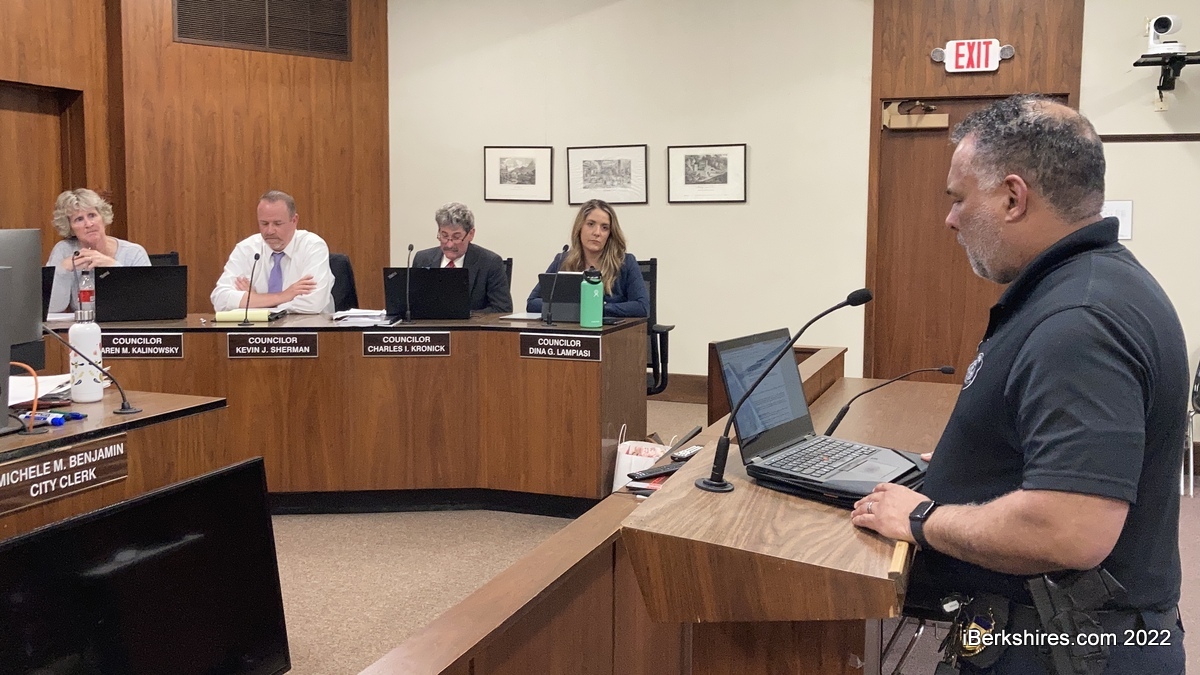
PITTSFIELD, Mass. — The City Council has voted to support body cameras on Pittsfield Police officers.
Councilors on Tuesday endorsed two petitions pertaining to the equipment and referred them to local and state officials.
There have been calls to implement body cameras, as residents have taken to open microphone at council meeting to advocate for them after Miguel Estrella was shot and killed by police in late March.
Councilor at Large Earl Persip III said this is probably one of the easier votes he will take this year, speculating that the community is in support of body cams and Police Chief Michael Wynn has reported no opposition from the department.
"It seems like everybody's in agreement. What we disagree is policy issues, law issues, and we'll work those things out," Persip added.
"And I think Ordinance and Rules had a great discussion about how some of the local communities are doing certain things, state police are doing it, the governor is giving grants, this is a slam dunk, this is easy, this should be a 10-0 vote because all the support for this has been at the podium."
One petition was from local attorney Rinaldo Del Gallo requesting to equip the city's police officers with body and dash cameras and the other was from resident LeMarr Talley, who requested an act establishing body cameras for all law enforcement within Berkshire County.
Both received support from the Ordinances and Rules subcommittee last week.
A preliminary investigation by the Pittsfield Police Department has found the responding officers to have been in compliance with established guidelines for use of force. The incident is also under separate investigation by the State Police.
The vote on both petitions was 10-0 with Ward 7 Councilor Anthony Maffuccio absent. Ward Ward 2 Councilor Charles Kronick did express concern about privacy issues if body cameras were to be deployed.
Kronick said he supports body cameras when police are "conducting the business of apprehension in interaction with a suspect, for lack of a better word" but that the language of the petition does not address the cameras in situations such as well-being calls.
Wynn said he does not think those concerns should be addressed in the petition but in policy development.
Del Gallo reported that Ward 1 Councilor Kenneth Warren is writing a draft body cam petition based on a model act for regulating the use of body-worn cameras by law enforcement from the American Civil Liberties Union.
"I don't want to stall this, there are a lot of moving parts of this and there's a lot of programs that we show support for, and the administration then puts in place. They're the executive, we're the legislative, so there's a lot of things going on, but I don't want to delay this," Warren said.
"This was mentioned years ago, a couple of years ago, and here we are sitting figuring out whether we're going to tell the administration that we support it, we want to let them know whether we support it or not, so we should.
"Now the other thing is it's not a problem, it’s not a big issue in the sense that this has been done. Boston does it, Amherst does it, the state police do it, they take it into account some of the some of the issues regarding this."
Councilor at Large Karen Kalinowsky asked Wynn how long it would take to implement a body camera program.
"I can give you a solid number around that, if we were to put together a request for proposals this week we probably wouldn't have a vendor selected before mid-summer and that's assuming that all the funding was in place, the grant funding so that's not a barrier," Wynn said, adding that the downstream issue is personnel to manage the footage.
He said it will not be a quick fix but it will not be years.
Wynn has previously spoken about barriers to a body cam program such as concern about how to have use them within the legal framework that you find in the commonwealth and records retention.
The number one hangup is that Massachusetts is a two-party consent in terms of recording and "nobody seems to be willing to take a look at that," he said at the Ordinances and Rules meeting.
Jacquelyn Sykes, the girlfriend of Daniel Gillis who was killed by police in 2017 following a domestic disturbance call, vowed to keep attending city meetings to advocate for police accountability.
"I came to spoke the last two meetings about the subject of cameras and dashboard cameras, I also came and spoke in favor of the [Police Advisory and Review Board]. After that passed, I stopped coming to the meetings and that was clearly a mistake. When the community doesn't stay consistent, things just get brushed under the carpet, if this does get passed tonight and please know that my commitment coming to meetings will not stop," she said.
"There are many changes that need to be made in this city, body cameras aren't the end-all solution, it’s quite sickening there hasn’t been any changes yet, policies and procedures are thrown together."
Resident Tonya Frazier spoke in support of body cameras and about systematic issues within the city.
"Three minutes up here isn't nearly enough time to try to speak on the heavily rooted issues that are in this city, it ranges from the lack of resources for our community members for housing, mental health, equality for all, there's also an increase of homeless people and not enough employment opportunities," she said.
"This is now the third meeting about this petition for the body cams, we need action now, not after another person is wrongfully killed."
The petitions were referred to Mayor Linda Tyer, Wynn, the state delegation, Gov. Charlie Baker, Attorney General Maura Healey, and the Law Enforcement Body Cam Task Force.
Tags: Pittsfield Police,